
Speed decides more estimate bookings than price, reputation, or even proximity. The data is consistent: GTA contractors response time close rate improves sharply the moment a callback happens inside sixty minutes instead of the next day. Homeowners rarely wait for the “best” contractor they book the one who reaches them first, while the project is still top of mind.
This piece breaks down what happens to a lead as time passes, why the one-hour window matters so much, and exactly what a fast response looks like in practice.
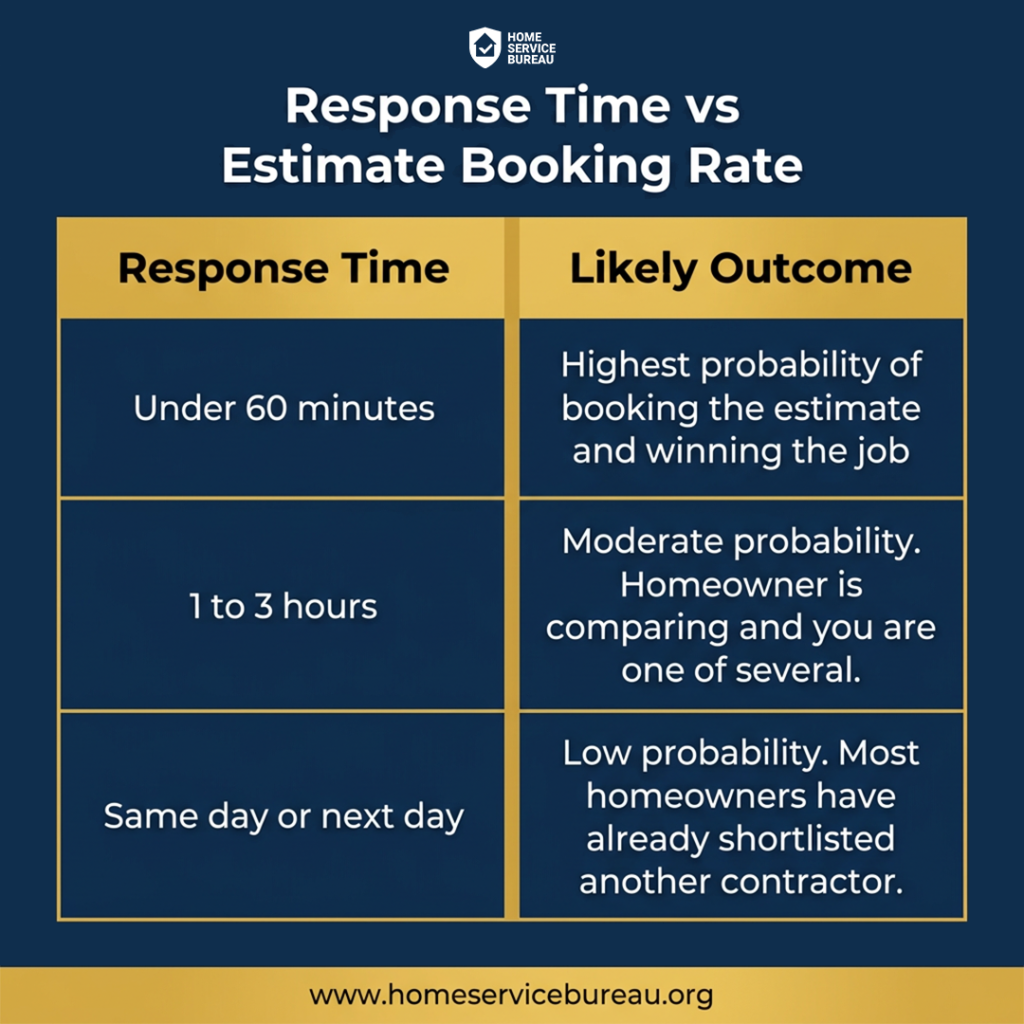
Response Time vs. Estimate Booking Rate
The relationship between speed and booking rate follows a predictable pattern across the home services industry.
When a contractor responds in under 60 minutes, the lead sits at its highest probability of booking the estimate and eventually winning the job. The homeowner submitted the request recently, hasn’t been contacted by competitors yet, and is still actively waiting for a call.
Responding within 1 to 3 hours drops that probability to moderate. By this point the homeowner is comparing options, because at least one other contractor has likely already called. The response still lands the contractor in the running, but no longer first.
Waiting until the same day or the next day puts a contractor at low probability. Most homeowners have already shortlisted someone else by this stage, and the estimate call becomes a courtesy conversation rather than a genuine opportunity.
This pattern is what drives the broader GTA contractors response hour conversation across the industry the first hour isn’t a nice-to-have, it’s the window where the job is actually won or lost.
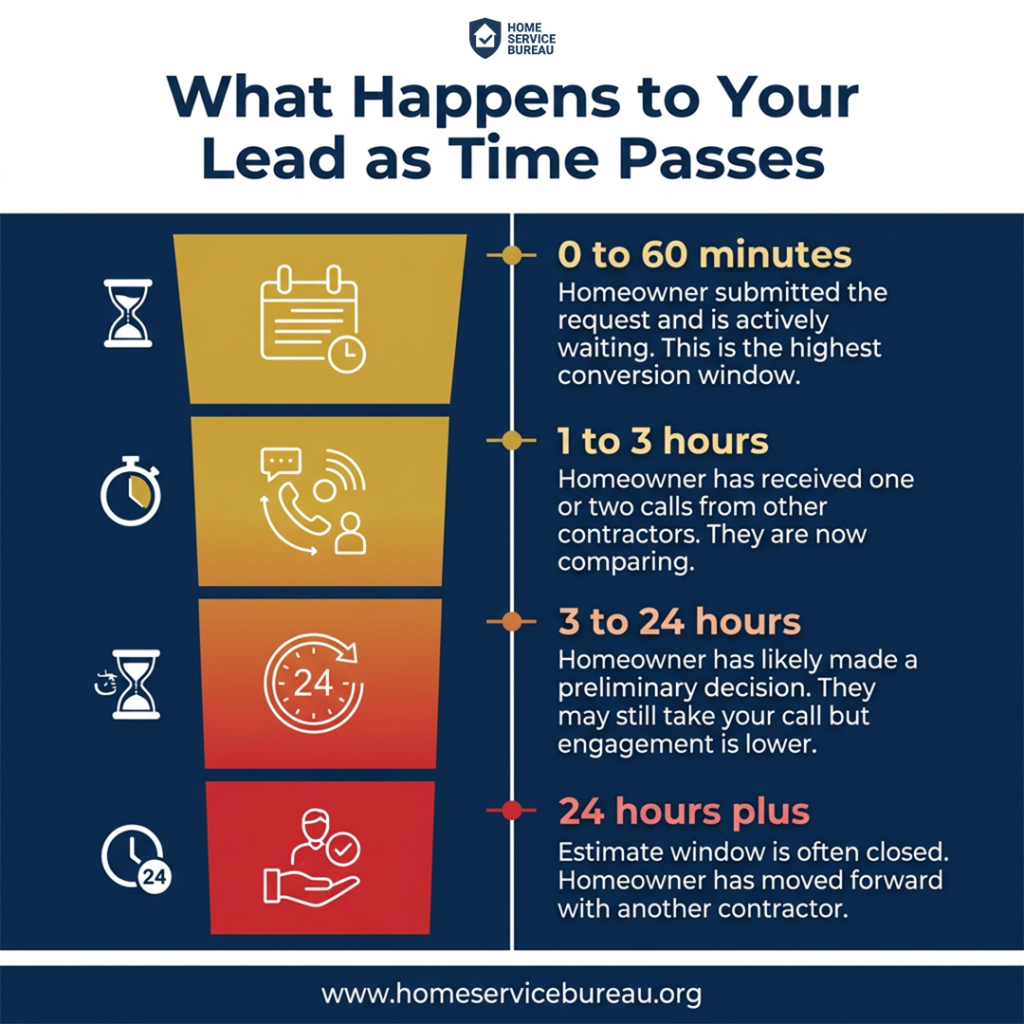
What Happens to Your Lead as Time Passes
Understanding the full lifecycle of a lead makes the urgency clearer.
0 to 60 minutes: The homeowner has just submitted the request and is actively waiting. This is the highest conversion window available to any contractor.
1 to 3 hours: The homeowner has now received one or two calls from other contractors and has entered comparison mode. Every additional hour of delay adds another competitor to that comparison list.
3 to 24 hours: A preliminary decision has often already formed in the homeowner’s mind. They may still answer the phone, but engagement drops noticeably, and the conversation shifts from booking to persuading.
24 hours plus: The estimate window is frequently closed by this point. The homeowner has moved forward with another contractor, and no callback script recovers that lost opportunity.
This lifecycle explains why Canadian home services response rate benchmarks increasingly treat the first hour as the entire game, not just the opening move.
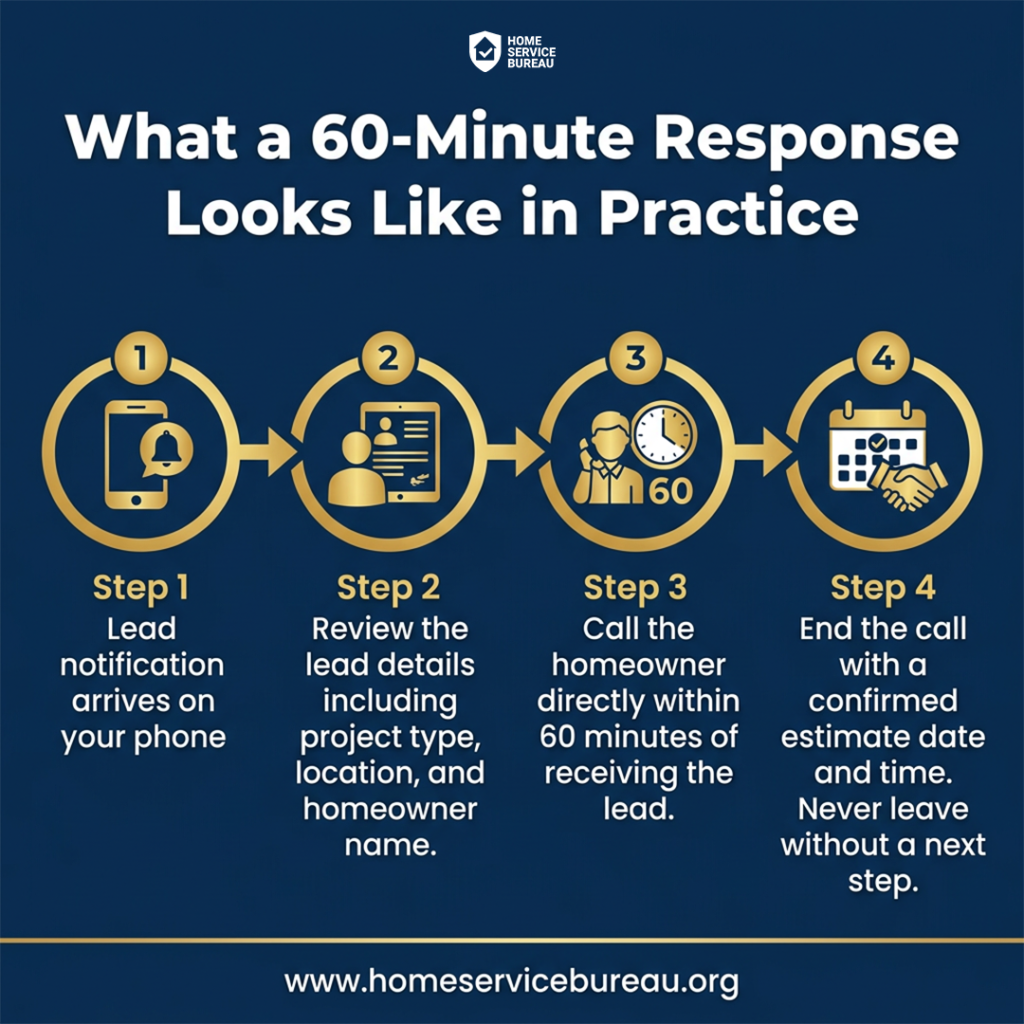
What a 60-Minute Response Looks Like in Practice
Knowing the target isn’t enough the process has to be repeatable. A reliable one-hour response follows four steps:
- The lead notification arrives on the contractor’s phone the moment the homeowner submits a request.
- The lead details get reviewed immediately, including project type, location, and the homeowner’s name.
- The homeowner receives a direct call within 60 minutes of the lead coming in not a text, not a callback request, an actual phone call.
- The call ends with a confirmed estimate date and time. No call should end without a next step locked in.
This sequence is what separates a contractor one hour response Canada standard from a best-effort attempt. It removes guesswork from the process and turns speed into a habit rather than an occasional win. Contractors who build this into daily operations see the difference reflected directly in their booking numbers, and eventually in signed jobs.
Why Response Time Outweighs Almost Everything Else
Price, reviews, and portfolio quality all matter but none of them matter if the homeowner has already committed to someone else. A homeowner comparing three contractors typically books with whoever reaches them first and sounds competent on the call. The other two, regardless of how strong their pricing or reputation might have been, often never get the chance to compete at all.
This is the core insight behind every close rate response time GTA discussion worth having: speed doesn’t just win the estimate, it removes the competition before it starts. Licensed contractors in Ontario who build a strict one-hour response habit consistently outperform slower competitors on lead-to-job conversion, independent of skill or price point.
Turning Speed Into a Standard Operating Procedure
Fast response only works if it’s systemized, not occasional. Contractors serious about improving their numbers should:
- Set up instant lead notifications so no request sits unnoticed.
- Assign a single person responsible for callbacks during business hours.
- Call within 60 minutes every time, without exception, regardless of how the lead arrived.
- End every call with a locked-in date and time, never a vague “I’ll follow up.”
Treating this as policy rather than a best effort is what separates contractors with strong booking numbers from those who lose jobs they were fully capable of winning.

Disclaimer
Winning more estimates in a competitive market comes down to a simple operational habit. Responding within the hour, every time, without exception. Contractors who build this into their process consistently outperform slower competitors, regardless of price or portfolio.
Home Service Bureau helps contractors formalize this exact standard through verified response benchmarks. And a trust framework that homeowners recognize before the first call. Contractors looking to strengthen their lead response process and improve booking rates can learn more at HSB.
Frequently Asked Questions
1. Why does responding within an hour matter so much for estimates?
Homeowners submit requests while they are still actively engaged and mentally committed to hiring someone quickly. Responding within the hour reaches them before competitors do. Positioning the contractor as the first real option before comparison shopping begins in earnest.
2. What happens if a contractor waits until the next day to respond?
By the next day, most homeowners have already spoken with several other contractors. And often formed a preliminary decision about who to hire. At that point, the estimate call frequently becomes a courtesy conversation rather than genuine competition for the job.
3. Does a text message count as a fast response?
A phone call consistently outperforms a text message for booking estimates, because it demonstrates urgency and lets the contractor lock in a specific date and time immediately, rather than leaving the next step vague, open-ended, or delayed indefinitely.
4. How does response time affect long-term business growth?
Faster response times consistently produce higher booking rates, which directly increase the number of signed jobs over time. Contractors who systemize speed as a habit also see compounding gains in referrals, repeat business, and overall reputation within their market.
5. What information should a contractor review before calling a lead?
Reviewing the project type, location, and homeowner’s name before calling allows the conversation to sound informed and personalized rather than generic. This small preparation step increases the likelihood of booking the estimate and building early trust with the homeowner.
6. Should every lead get a phone call, regardless of source?
Yes. Regardless of where the lead originated, a direct call within 60 minutes consistently outperforms delayed callbacks or text-only responses when it comes to converting the lead into a booked, confirmed estimate appointment that homeowners are far more likely to keep.
7. What should end every response call?
Every call should end with a confirmed estimate date and time locked in before hanging up. Ending the conversation without a clear next step significantly increases the risk that the homeowner books with a faster-responding competitor instead, losing the job entirely.
8. Can a strong reputation compensate for a slow response time?
Reputation helps once a homeowner is already comparing contractors side by side, but a slow response often means the contractor never enters that comparison at all, regardless of how strong their reviews or portfolio might otherwise be in the local market.