
A home renovation should add comfort and value to your life, not drain your savings. Yet every year, dishonest operators target families who need repairs, upgrades, or emergency fixes. Learning the contractor scam warning signs Ontario homeowners face gives you the strongest defence before you sign a contract or hand over a deposit.
This guide explains how these scams work, which red flags to watch for, and what steps to take if something feels wrong. You will also learn how verified hiring protects you from the start.
Why Contractor Scams Keep Targeting Ontario Homeowners
Scammers choose Ontario because renovation demand stays high and many homeowners feel rushed. Storm damage, ageing roofs, and rising property values create constant pressure to hire quickly. Fraudsters exploit that urgency. They promise fast results, low prices, and friendly service, then disappear with your money or leave poor work behind.
Homeowner contractor fraud GTA cases often follow the same pattern. A stranger makes contact, offers an unbeatable deal, and pushes you to commit immediately. Once you recognise that pattern, you can stop it early.
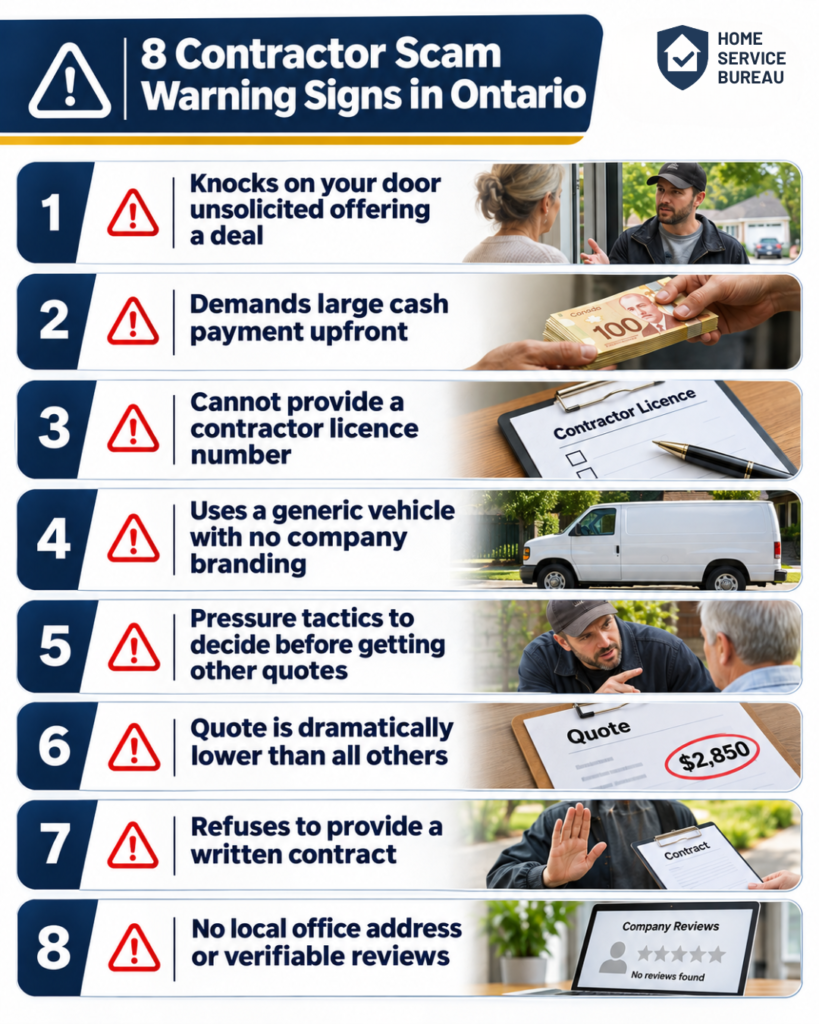
8 Contractor Scam Warning Signs in Ontario
Watch for these eight red flags. Even one deserves a closer look, and several together should send you looking for another contractor.
1. Knocks on Your Door Unsolicited Offering a Deal
Reputable contractors rarely cold-call homes with “special discounts.” When a stranger appears at your door claiming they “just finished a job nearby” and have leftover materials, treat the visit with suspicion. Politely decline and research before you respond.
2. Demands Large Cash Payment Upfront
A contractor upfront payment scam Ontario residents encounter often starts with a request for a big cash deposit. Cash leaves no paper trail and offers you no protection. Professionals accept traceable payment methods and tie payments to project milestones.
3. Cannot Provide a Contractor Licence Number
An unlicensed contractor scam Ontario homeowners report usually collapses when you ask for credentials. Honest contractors share licence details, insurance proof, and workplace safety clearance without hesitation. If someone dodges the question, walk away.
4. Uses a Generic Vehicle With No Company Branding
Established businesses usually brand their vehicles, uniforms, and paperwork. An unmarked van does not prove fraud on its own, but it removes one layer of accountability. Combine this clue with other warning signs before you decide.
5. Uses Pressure Tactics to Make You Decide Before Getting Other Quotes
Scammers manufacture urgency. They claim the price expires today or that your roof will fail tomorrow. Genuine professionals encourage you to compare quotes because they trust their value. Never let anyone rush you into a signature.
6. Offers a Quote Dramatically Lower Than All Others
A bargain feels exciting, but a price far below every competitor signals trouble. Fraudulent operators lowball to win your trust, then add “unexpected costs” mid-project or use cheap materials. Request an itemized breakdown and compare it line by line.
7. Refuses to Provide a Written Contract
A written contract protects both sides. It lists the scope, timeline, materials, and payment schedule. When a contractor insists a handshake is enough, they likely want to avoid accountability. Refuse to proceed without a detailed written agreement.
8. Has No Local Office Address or Verifiable Reviews
Search for a physical address and a genuine track record. A contractor with no office, no online presence, and no reviews gives you nothing to verify. These contractor scam red flags Canada wide share one theme: the scammer hides, and the professional stays visible.
How Bureau Verified Protects You From Scams
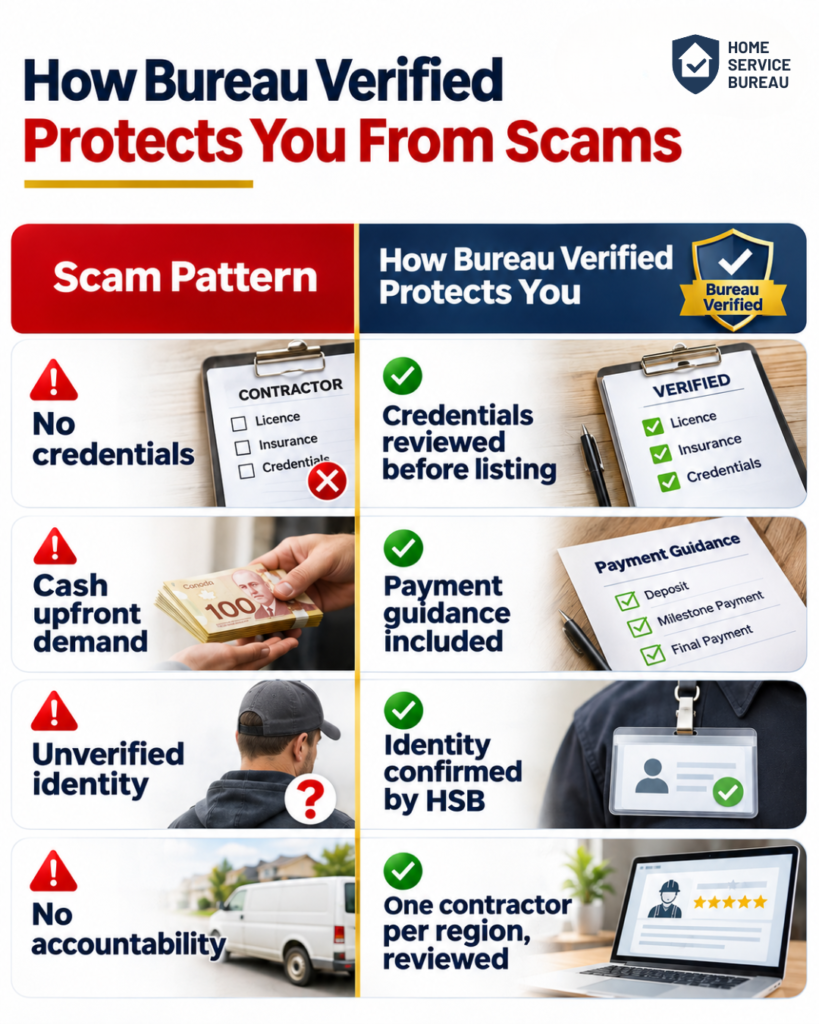
Spotting red flags helps, but verification removes the guesswork. Every scam pattern has a matching safeguard:
- No credentials? A verified platform reviews licence, insurance, and credentials before it lists any contractor.
- Cash upfront demand? Clear payment guidance explains safe deposit, milestone, and final payment steps.
- Unverified identity? The platform confirms each contractor’s identity before you ever meet them.
- No accountability? The platform reviews one contractor per region, so you deal with a vetted, accountable professional.
This structure shifts the burden of screening from you to a trusted team that checks the facts first.
What to Do If You Suspect a Scam
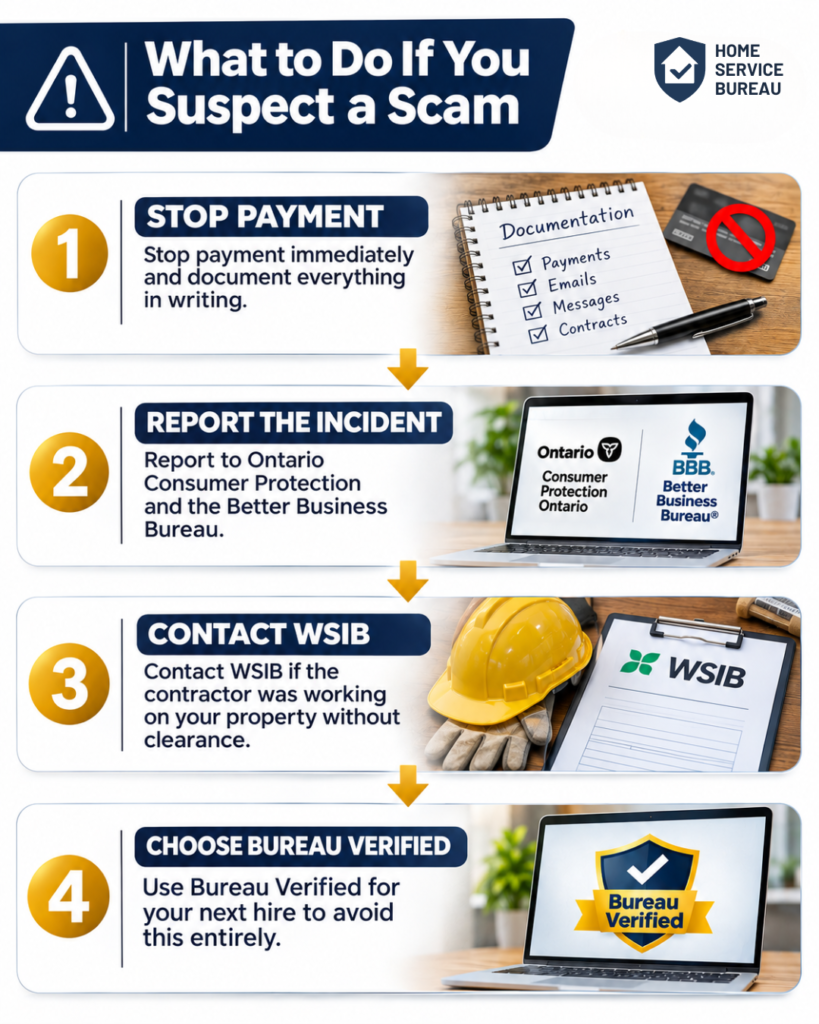
Act quickly if your instincts raise alarms. Follow these four steps:
- Stop payment. Halt any further payments immediately and document everything in writing, including receipts, emails, messages, and contracts.
- Report the incident. Contact Ontario’s consumer protection authorities and the Better Business Bureau. Your report helps protect other homeowners.
- Contact WSIB. Reach out if the contractor worked on your property without workplace safety clearance. You may face liability if an uninsured worker gets hurt.
- Choose a verified professional. Use a verified platform for your next hire to avoid repeating the experience.
Keep copies of every document, and write down dates and conversations while your memory stays fresh.
How to Avoid Contractor Fraud GTA: Smart Hiring Habits
Prevention works better than recovery. Build these habits into every renovation project:
- Collect at least three written quotes. Compare scope, materials, and timelines, not only price.
- Verify credentials directly. Confirm licence, insurance, and safety clearance with the issuing body.
- Insist on a written contract. Make sure it details the work, schedule, and payment milestones.
- Pay in stages. Tie each payment to completed work, and never pay the full amount upfront.
- Research the company. Check for a real address, a consistent online presence, and genuine reviews.
- Trust your instincts. If something feels off, pause the project and investigate.
If you follow these habits, learning how to avoid contractor fraud GTA residents struggle with becomes a repeatable routine rather than a stressful gamble.

Conclusion: Hire With Confidence Through Home Service Bureau
The contractor scam warning signs Ontario homeowners must recognise are clear: unsolicited offers, upfront cash demands, missing licences, unmarked vehicles, pressure tactics, suspiciously low quotes, refused contracts, and no verifiable presence. Spot these early, and you protect your money, your home, and your peace of mind.
Home Service Bureau (HSB) makes that protection easier. Its Bureau Verified program reviews credentials before listing, confirms contractor identities, includes payment guidance, and features one reviewed contractor per region. Skip the guesswork and start your next project with a professional who has already passed the checks. Visit Home Service Bureau today and hire with confidence.
Frequently Asked Questions
1. What are the most common contractor scam warning signs in Ontario?
Watch for unsolicited door knocking, large upfront cash demands, missing licence numbers, unmarked vehicles, pressure tactics, suspiciously low quotes, refusal to sign written contracts, and no verifiable local address or reviews before you sign anything.
2. How much deposit should I pay a contractor?
Pay a modest deposit tied to a written contract, then release money at agreed milestones. Never hand over large cash sums upfront, and always keep receipts for every payment you make and every signed document.
3. How can I check whether a contractor holds a licence?
Ask for the licence number, insurance certificate, and workplace safety clearance. Then confirm each document directly with the issuing body instead of trusting photocopies. Reputable contractors share these details willingly and promptly, every single time.
4. Is a very low quote always a scam?
Not always, but a quote far below every competitor deserves scrutiny. Request itemized pricing, compare materials and labour, and ask why the price differs. Genuine professionals explain their numbers clearly and confidently when asked directly.
5. What should I do if I already paid a suspected scammer?
Stop further payments, gather every receipt, message and contract, then report the incident to consumer protection authorities and the Better Business Bureau. Contact your bank to discuss options for disputing the transaction right away.
6. Does an unlicensed contractor put my home at risk?
Yes. An unlicensed contractor may skip permits, ignore safety codes, and carry no insurance. You could face costly repairs, failed inspections, and liability if a worker gets injured on your property, leaving you fully exposed.
7. Why should I choose a verified contractor platform?
Verified platforms review credentials before listing contractors, confirm identities, and provide payment guidance. This screening removes much of the guesswork, so you can compare qualified professionals instead of gambling on strangers with your hard-earned money.
8. How do I protect myself from door-to-door contractors?
Decline on-the-spot offers, request identification and a licence number, and collect at least three written quotes. Never sign or pay at the door, and research every company that approaches you before deciding anything at all.