
Hiring a contractor is an important decision for any homeowner. Whether you are planning a renovation, repairing your roof, upgrading your HVAC system, or completing electrical work, the professional you choose can directly affect your property’s safety, project costs, and overall experience.
However, comparing contractors involves more than collecting quotations. Homeowners need to understand a contractor’s qualifications, insurance coverage, work history, payment terms, and approach to project management. Asking the right questions before signing an agreement can help prevent misunderstandings, unexpected expenses, and disputes later.
If you are searching for the right professional, this guide covers 20 essential questions to ask before hiring a contractor. It also explains what confident, professional answers should look like so you can make a better-informed hiring decision.
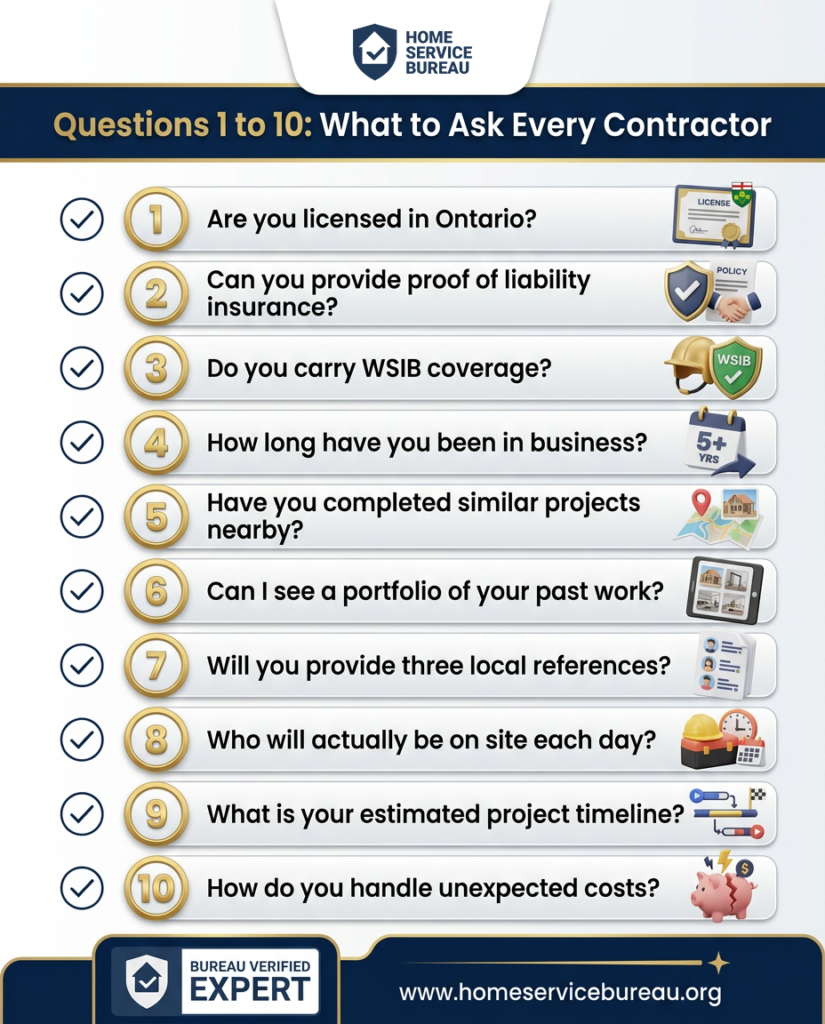
Questions 1 to 10: What to Ask Every Contractor
The first ten questions focus on a contractor’s qualifications, experience, work history, team, and project planning. These details help establish whether the professional has the necessary credentials and resources to complete your project.
1. Are You Licensed in Ontario?
Start by confirming whether the contractor holds the licences required for the work they perform. Licensing requirements can vary depending on the trade and type of project. Ask for relevant documentation and verify credentials with the appropriate regulatory authority where applicable.
2. Can You Provide Proof of Liability Insurance?
Contractor liability insurance helps protect against certain claims involving property damage or third-party injuries. Ask for a current certificate of insurance and review the coverage details. Do not rely solely on verbal confirmation when evaluating a contractor’s insurance arrangements.
3. Do You Carry WSIB Coverage?
Workplace Safety and Insurance Board (WSIB) coverage is another important consideration, particularly when a contractor employs workers or engages subcontractors. Ask whether the business has the required coverage and request a current clearance certificate where applicable.
4. How Long Have You Been in Business?
A contractor’s operating history can provide useful insight into business stability and industry experience. However, years in business alone do not guarantee quality. Consider this information alongside qualifications, previous work, references, and customer feedback.
5. Have You Completed Similar Projects Nearby?
Previous experience with similar projects helps demonstrate whether a contractor understands the work involved. Ask about completed projects within your area and whether the contractor can provide relevant details about the scope, materials, and challenges involved.
6. Can I See a Portfolio of Your Past Work?
A portfolio gives homeowners a clearer understanding of a contractor’s workmanship and service capabilities. Review photographs of completed projects and look for consistency in finishing, material quality, and attention to detail.
7. Will You Provide Three Local References?
Speaking with previous customers can help you understand how a contractor manages projects beyond the initial quotation. Ask references about communication, scheduling, workmanship, unexpected costs, and how the contractor handled concerns during the project.
8. Who Will Actually Be on Site Each Day?
The person preparing your quotation may not supervise the actual work. Ask who will manage the project, whether subcontractors will participate, and who will remain your primary point of contact throughout the job.
9. What Is Your Estimated Project Timeline?
A clear timeline helps homeowners plan around construction activities and household disruptions. Ask when the contractor expects to begin, how long the work should take, and what factors could affect completion.
10. How Do You Handle Unexpected Costs?
Changes in material prices, hidden damage, and unforeseen site conditions can affect project budgets. Ask how the contractor handles additional expenses and whether they obtain written approval before carrying out work outside the original agreement.
These initial contractor interview questions Ontario homeowners should ask help establish a contractor’s professional credibility before discussing the finer details of a project.
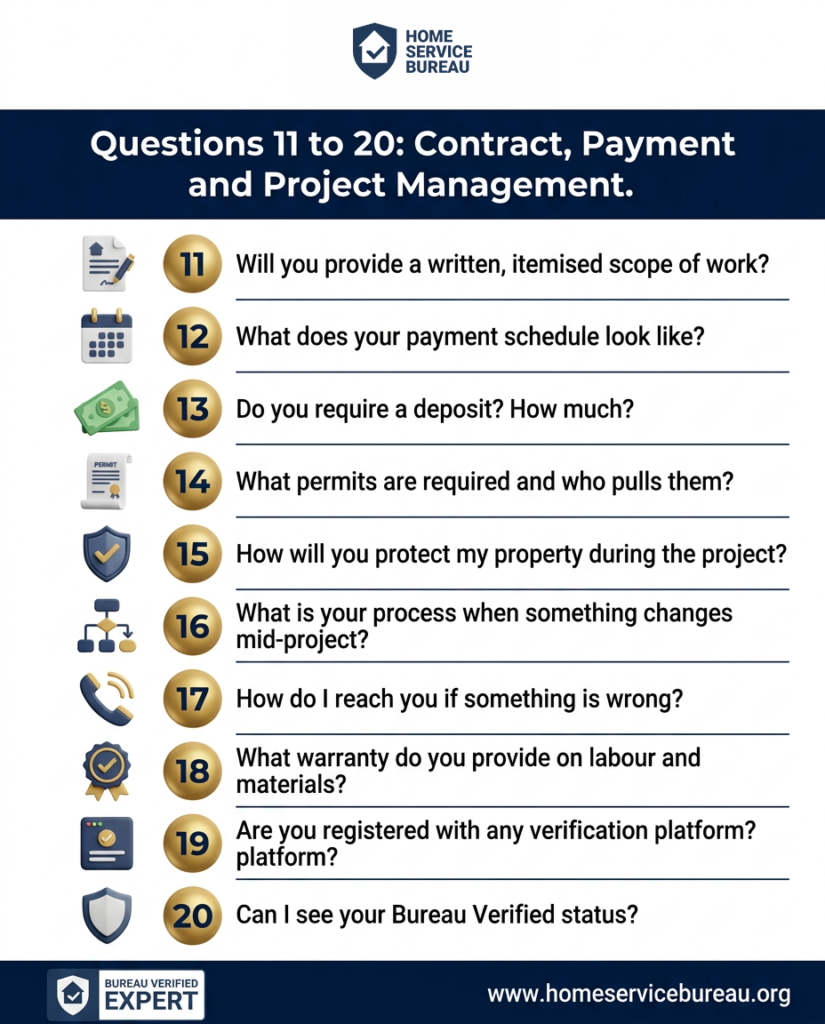
Questions 11 to 20: Contract, Payment and Project Management
Once you understand a contractor’s qualifications and experience, the next step is to examine how they manage agreements, payments, communication, and project responsibilities.
These questions help clarify expectations and reduce the risk of disagreements after work begins.
11. Will You Provide a Written, Itemised Scope of Work?
A written scope of work should explain exactly what the project includes. It should identify the services, materials, quantities, and major deliverables. Ask the contractor to clarify exclusions as well so you understand what the quoted price covers.
12. What Does Your Payment Schedule Look Like?
A professional contractor should explain the payment structure before the project starts. Ask how payments relate to project milestones, material purchases, and completed work. Review the terms carefully to ensure they match the written agreement.
13. Do You Require a Deposit? How Much?
Some contractors request deposits to secure project dates or purchase materials. Ask how much they require, what the deposit covers, and whether the amount complies with applicable consumer protection requirements. Avoid paying the entire project cost upfront without a clear contractual reason.
14. What Permits Are Required and Who Pulls Them?
Certain renovation, structural, plumbing, electrical, and other construction activities may require permits or inspections. Ask the contractor to identify the applicable requirements and clarify who will obtain the permits. Confirm the details with your local municipality or relevant authority.
15. How Will You Protect My Property During the Project?
Construction can create dust, debris, noise, and potential damage to surrounding areas. Ask what protective measures the contractor will use, how they will secure the worksite, and who will handle cleanup and waste removal.
16. What Is Your Process When Something Changes Mid-Project?
Project requirements can change after work begins. A reliable contractor should explain how they document variations, communicate their impact on costs, and obtain your approval before proceeding. Written change orders help prevent disagreements about additional work.
17. How Do I Reach You If Something Goes Wrong?
Communication should remain consistent throughout the project. Ask who handles urgent concerns, which communication channels they use, and how quickly they typically respond. Having a clear contact process makes it easier to address problems before they escalate.
18. What Warranty Do You Provide on Labour and Materials?
Ask the contractor to explain the warranty coverage for workmanship and materials separately. Understand the duration, exclusions, claim process, and responsibilities after project completion. Request the warranty terms in writing instead of relying on verbal assurances.
19. Are You Registered With Any Verification Platform?
Third-party verification can provide additional information about a contractor’s business credentials and professional standing. Ask whether the contractor participates in a recognised verification programme and what checks the platform performs before granting approval.
20. Can I See Your Bureau Verified Status?
Homeowners should ask contractors to provide evidence of their Bureau Verified status if they claim to hold it. Reviewing their status through Home Service Bureau (HSB) can help you understand their participation in its verification programme.
These final ten hiring contractor questions Ontario homeowners should consider focus on accountability, financial clarity, and communication throughout the project.
What a Confident Contractor’s Answer Should Look Like
Asking the right questions is only half the process. Homeowners should also pay attention to how contractors respond.
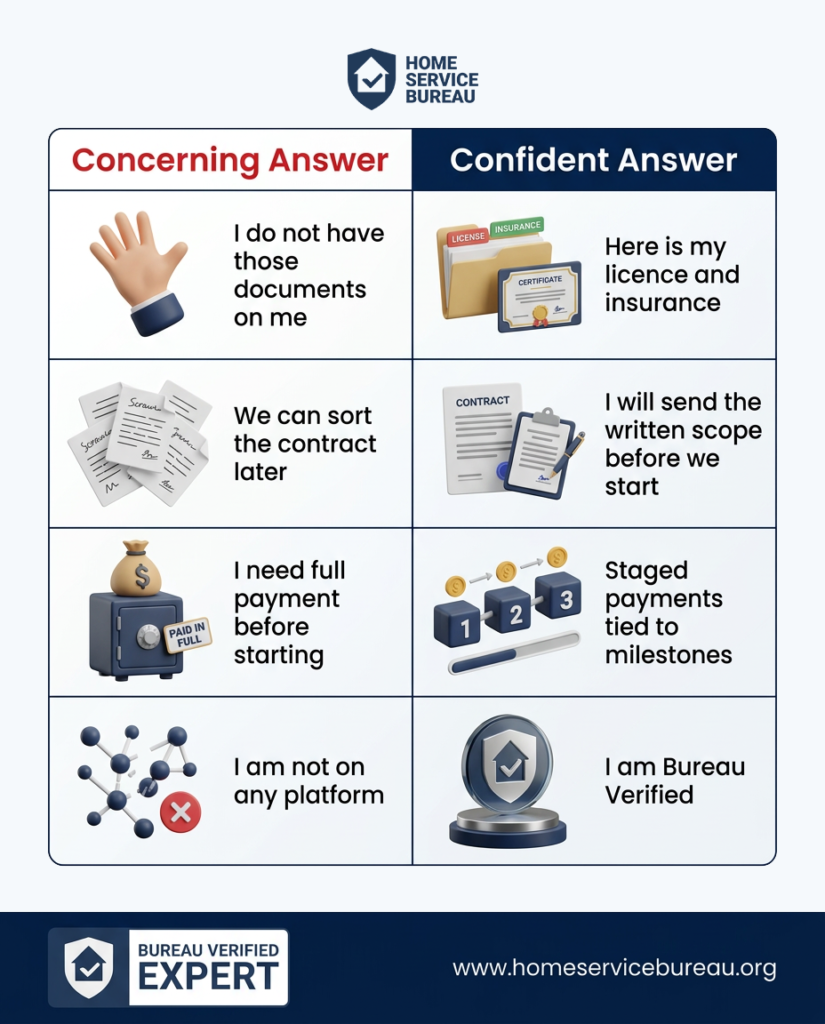
A professional contractor should be comfortable discussing qualifications, insurance, project documentation, and payment terms. They should provide supporting documents when requested and explain their responsibilities without avoiding important details.
For example, a confident answer includes providing current licence and insurance documents rather than promising to share them later. A contractor should also offer a written scope of work before starting and explain how they structure milestone-based payments.
Similarly, contractors who participate in recognised verification programmes should be able to demonstrate their status. Clear documentation gives homeowners something they can review rather than relying entirely on verbal claims.
Be cautious when a contractor refuses to provide basic documentation, avoids written agreements, demands full payment before starting, or gives unclear answers about additional costs.
A useful homeowner contractor checklist GTA residents can follow should cover qualifications, insurance, references, contracts, permits, payment schedules, and verification. Reviewing these areas helps homeowners compare contractors based on evidence rather than sales promises.
Why Contractor Verification Matters Before Hiring
Online directories and recommendations can help homeowners discover service providers, but visibility alone does not establish professional credibility. A contractor’s claims should always be supported by relevant documentation and independently verifiable information.
This is where verification programmes can offer additional value. Home Service Bureau’s Bureau Verified programme provides a framework for reviewing contractor information and establishing verified status within its network.
Homeowners can consider this information alongside trade-specific licences, insurance documents, WSIB requirements where applicable, references, and previous work.
For those researching what to ask contractor before hiring Canada, the key is to look beyond promotional claims. Ask for evidence, understand the terms, and make sure every important commitment appears in writing.

Conclusion
Hiring the right contractor requires careful evaluation. The 20 questions to ask before hiring a contractor covered in this guide help homeowners assess qualifications, financial transparency, project management, communication, and professional credibility before making a commitment.
However, asking questions should always go hand in hand with checking documents and verifying claims. A professional response is a good starting point, but supporting evidence provides greater confidence when making a hiring decision.
Home Service Bureau (HSB) supports homeowners through its Bureau Verified programme, which helps them identify contractors who have completed the platform’s verification process. It also encourages greater transparency and accountability within the home services industry.
Before starting your next home improvement project, take time to review contractor credentials and check their verification status. Explore Home Service Bureau to find Bureau Verified professionals and make a more informed decision about who works on your home.
Frequently Asked Questions
1. What are the most important questions to ask before hiring a contractor?
Start with licensing, liability insurance, WSIB coverage where applicable, previous projects, references, written quotations, payment terms, and warranties. These questions help establish professional credibility and clarify responsibilities before construction begins.
2. Should I hire a contractor without insurance?
Homeowners should request proof of appropriate insurance before hiring. Insurance can help address certain financial risks associated with property damage or third-party injuries. Always review coverage details and confirm their validity.
3. Is a written contract necessary when hiring a contractor?
Yes, a written agreement helps establish project scope, pricing, payment schedules, timelines, materials, warranties, and responsibilities. It also provides documentation if disagreements arise during construction or after completion.
4. How can I verify whether an Ontario contractor is licensed?
Check the licensing requirements for the specific trade and verify credentials through the relevant Ontario regulatory authority. Also request supporting documents directly from the contractor before agreeing to any work.
5. How much deposit should a contractor request?
Deposit requirements depend on the agreement, project type, and applicable consumer protection rules. Review the amount, payment conditions, and refund terms carefully before paying. Avoid unclear or undocumented upfront payment demands.
6. Why should homeowners check WSIB coverage?
WSIB coverage addresses workplace injury and occupational illness obligations where applicable. Homeowners should ask contractors about their coverage and request a valid clearance certificate when relevant to the work arrangement.
7. What does Bureau Verified status mean?
Bureau Verified status indicates that a contractor has completed HSB’s applicable verification process. Homeowners can consider this status alongside trade licences, insurance, references, and project documentation when evaluating professionals.
8. How can I compare multiple contractors before making a decision?
Compare contractors using the same criteria, including credentials, insurance, project scope, quotations, timelines, references, payment terms, and warranties. Review supporting documents and assess communication before making your final selection.