
Hiring a contractor involves more than comparing quotations and checking online reviews. Whether you are planning a home renovation, repairing your roof, upgrading electrical systems, or undertaking structural work, you need to know whether the professional you hire has the right qualifications, insurance, and experience.
Unfortunately, not every contractor provides accurate information about their credentials. Some may have outdated insurance documents, incomplete business records, or qualifications that do not cover the work they offer. Overlooking these details can expose homeowners to financial risks, property damage, and unnecessary disputes.
Understanding how to verify a contractor Ontario homeowners can confidently hire requires a systematic approach. From checking trade-specific licences to reviewing insurance certificates and third-party verification records, each step helps establish whether a contractor meets the requirements for your project.
This guide explains how to complete a contractor verification process before signing an agreement or making a payment.
Why Contractor Verification Matters Before Hiring
Contractor verification helps homeowners make decisions based on documented qualifications rather than marketing claims. A professional website, positive reviews, or an attractive quotation cannot independently establish whether a business meets the requirements for a particular job.
It also helps homeowners identify warning signs before committing money to a project. Missing documents, inconsistent business information, and reluctance to provide references deserve further investigation.
For homeowners researching contractor verification steps GTA, checking these details before signing a contract can prevent avoidable problems during construction.
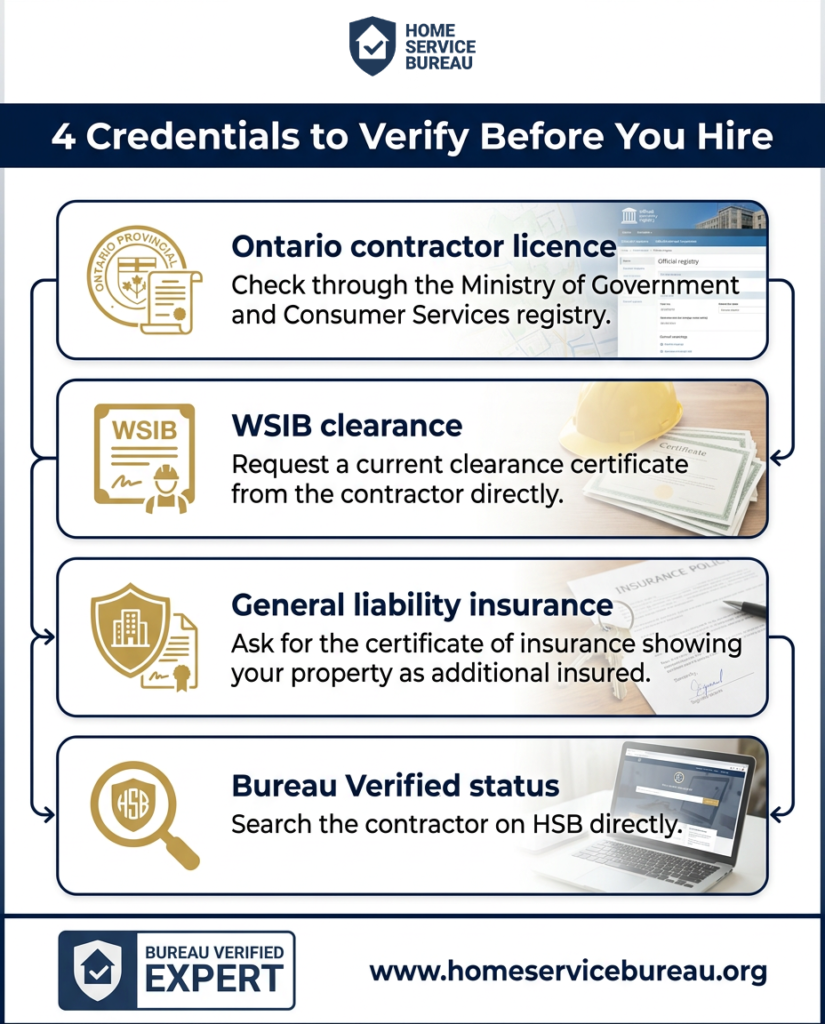
4 Credentials to Verify Before You Hire
Before discussing project timelines or payment arrangements, review four important areas of contractor documentation.
1. Ontario Contractor Licence
Start by checking whether the contractor needs a specific licence or certification for the work they perform.
Ontario does not require every general contractor or renovator to hold one universal contractor licence. However, certain trades and activities have specific regulatory requirements.
For example, electrical contracting businesses must hold an appropriate licence from the Electrical Safety Authority (ESA). Certain skilled trades also require certification through Skilled Trades Ontario.
If you are hiring a new home builder or seller, check their status through the Home Construction Regulatory Authority (HCRA). Ontario requires new home builders and sellers to hold an HCRA licence.
Ask the contractor for their licence or registration details, then verify them through the relevant regulatory body’s public directory.
This is the first step in learning how to verify contractor licence Ontario homeowners should check before approving work.
2. WSIB Clearance
The Workplace Safety and Insurance Board (WSIB) provides clearance certificates that confirm a registered business meets its applicable registration, reporting, and payment requirements.
Ask the contractor whether WSIB coverage applies to their business and request a current clearance certificate where relevant.
You can use the WSIB’s online clearance service to check a contractor’s status. Remember that clearance requirements depend on the work arrangement. WSIB identifies an exemption for certain contractors directly hired by occupants or family members for exempt home repairs or renovations.
Do not assume every residential project requires the same WSIB documentation. Check the applicable rules before proceeding.
3. General Liability Insurance
Contractors should carry appropriate insurance for the services they provide. General liability insurance can help address certain third-party claims involving property damage or bodily injury.
Ask for a current certificate of insurance rather than accepting verbal confirmation.
Review the policyholder’s business name, coverage period, and insurance limits. You can also ask your insurer or the contractor’s insurance provider to clarify whether the policy covers the proposed work.
If the project involves subcontractors, clarify how the contractor manages their insurance and responsibilities.
4. Bureau Verified Status
Third-party verification provides another way to assess a contractor’s professional standing.
Home Service Bureau (HSB) offers a Bureau Verified programme that reviews specified contractor credentials and business information. Its verification framework includes licence review, insurance documentation, identity verification, WSIB status, homeowner reviews, and regional allocation.
Homeowners can search for a contractor through HSB and review their Bureau Verified status.
However, third-party verification should complement your own checks. Always confirm that trade-specific licences and insurance remain current and apply to the work you plan to commission.
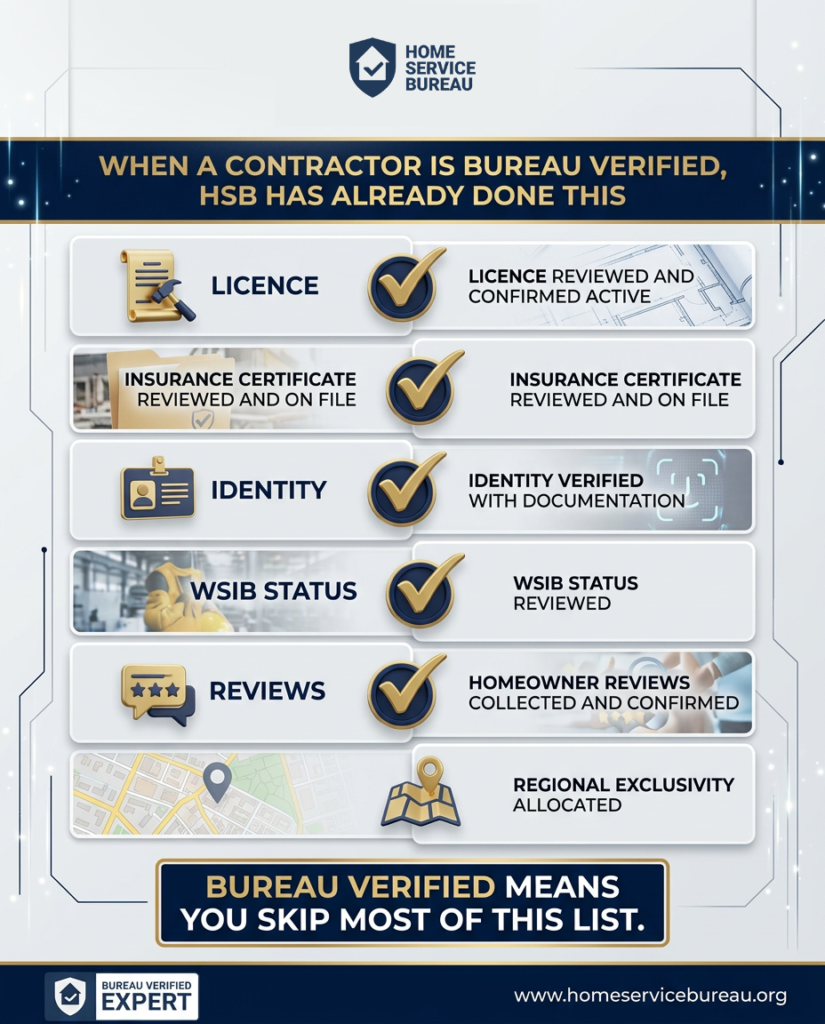
When a Contractor Is Bureau Verified, HSB Has Already Done This
Checking several documents individually can take time, especially when homeowners compare multiple contractors.
HSB’s Bureau Verified programme follows a structured verification process to review important aspects of contractor eligibility and business credibility.
According to HSB’s verification framework, the process covers six areas.
Licence review: HSB reviews the contractor’s applicable licence information and confirms its active status where required.
Insurance documentation: The programme reviews and keeps the contractor’s insurance certificate on file.
Identity verification: HSB checks the contractor’s business identity through supporting documentation.
WSIB status: The programme reviews the contractor’s WSIB status as part of its verification framework.
Homeowner reviews: HSB collects and confirms homeowner reviews to support the contractor’s professional profile.
Regional exclusivity: The programme also allocates regional access according to its availability and allocation process.
This framework gives homeowners additional information when evaluating contractors. However, Bureau Verified status should not replace checking project-specific permits, current documents, or regulatory requirements.
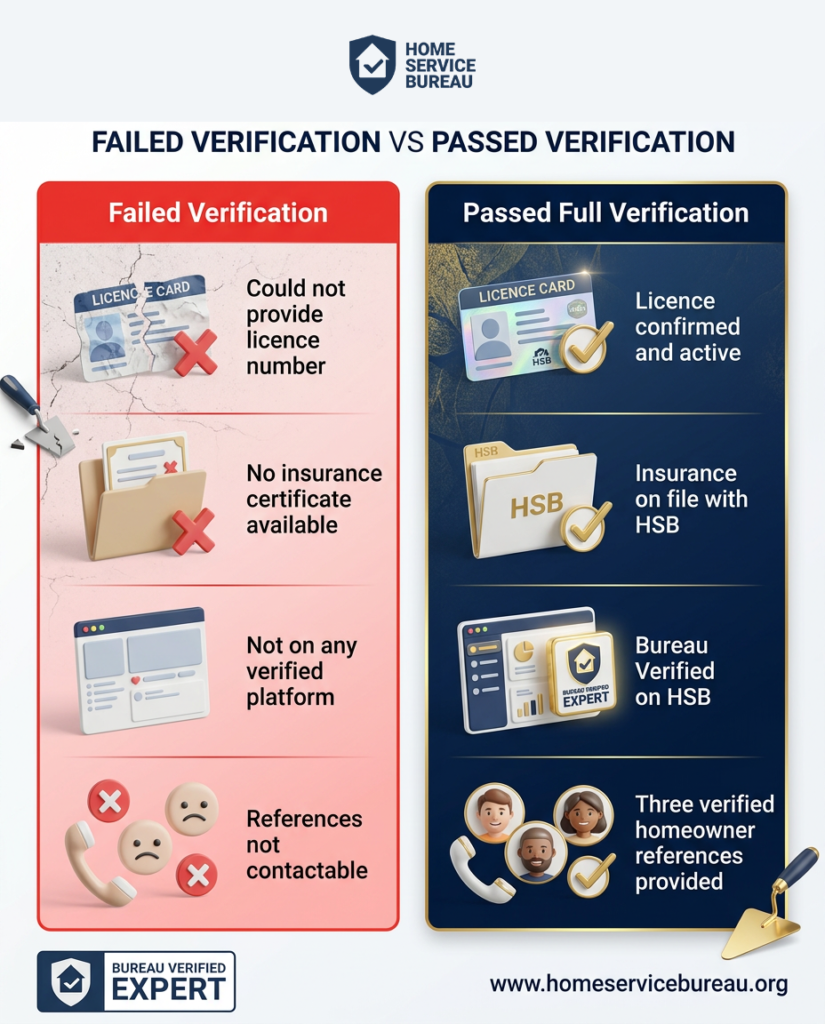
Failed Verification vs Passed Verification: What Should Homeowners Look For?
Understanding the difference between complete and incomplete verification records helps homeowners assess potential risks.
A contractor who cannot provide relevant licence information creates uncertainty about their eligibility to perform regulated work. Missing insurance documentation also makes it difficult to establish whether the business has appropriate coverage.
Similarly, an absence of verifiable business information or references makes independent assessment more difficult.
On the other hand, a contractor who provides current credentials, confirms insurance details, and shares verifiable references gives homeowners more information to assess their suitability.
HSB’s verification framework also distinguishes between contractors who complete its verification requirements and those who do not. Contractors who pass the applicable checks can receive Bureau Verified status, while incomplete verification does not establish that status.
Homeowners should remember that verification is one part of the hiring decision. Experience, workmanship, communication, written agreements, and project suitability still matter.
Step-by-Step: How to Vet a Contractor in Ontario
Once you understand the credentials involved, follow a consistent process to evaluate the contractor before hiring.
Step 1: Confirm the Business Identity
Ask for the contractor’s registered business name, contact information, and operating address. Make sure these details match the information on quotations, insurance documents, and other business records.
Consistent information makes independent verification easier and helps identify discrepancies before you enter an agreement.
Step 2: Check Credentials Through Official Sources
Do not rely entirely on documents supplied by the contractor. Use the appropriate regulatory directory to confirm their qualifications.
Electrical contractors can be checked through the ESA’s contractor locator. New home builders and sellers can be researched through the HCRA’s Ontario Builder Directory. Relevant skilled trades credentials can also be checked through Skilled Trades Ontario.
These checks form an important part of a contractor background check Canada homeowners should complete before hiring.
Step 3: Review Insurance and WSIB Documents
Request current insurance documentation and check the validity of any applicable WSIB clearance.
Pay attention to business names, dates, and coverage details. If something appears inconsistent, ask the contractor or issuing organisation for clarification.
Step 4: Check References and Previous Work
Ask for references from previous customers and review completed projects that match your requirements.
Look beyond photographs. Ask about workmanship, project management, communication, scheduling, and how the contractor handled unexpected problems.
Step 5: Search for Bureau Verified Status
Visit the Home Service Bureau website and search for the contractor’s profile.
Review their Bureau Verified status and available business information. This provides another reference point when comparing professionals.
These steps make it easier to check contractor credentials GTA homeowners need to review before making a hiring decision.
Common Warning Signs During Contractor Verification
Some warning signs deserve attention before you move forward with a contractor.
Be cautious if a contractor refuses to provide relevant licence details, cannot produce current insurance documentation, or gives inconsistent business information. Avoid relying on verbal promises when written evidence is available.
Unclear payment terms also deserve scrutiny. A contractor who demands full payment before starting work or refuses to document the project scope may expose you to unnecessary financial risk.
Similarly, be careful when a contractor discourages independent verification or pressures you to sign an agreement without reviewing its terms.
A professional contractor should be willing to answer reasonable questions and provide the documentation relevant to the project.

Final Disclaimer
Knowing how to verify a contractor Ontario homeowners can trust requires more than checking online ratings. You need to review relevant licences, confirm insurance coverage, understand WSIB requirements, assess previous work, and verify professional credentials through reliable sources.
A structured approach helps reduce uncertainty before you commit to a home improvement project. It also makes comparing contractors easier because you can evaluate their qualifications using consistent criteria.
Home Service Bureau (HSB) makes this process easier through its Bureau Verified programme. By reviewing contractor credentials, insurance documentation, identity, WSIB status, and homeowner feedback, HSB provides an additional reference point for homeowners researching service professionals.
Before hiring your next contractor, visit Home Service Bureau to search for Bureau Verified professionals. Combine that information with your own document checks and project discussions to make a more informed hiring decision.
Frequently Asked Questions
1. How can I verify a contractor in Ontario?
Request the contractor’s business details, relevant trade licences, insurance certificate, and references. Verify regulated credentials through official directories and check Bureau Verified status through Home Service Bureau before signing an agreement.
2. Do all contractors need a licence in Ontario?
No, Ontario does not require one universal licence for every contractor. However, certain trades and activities require specific licences or certifications. Always check the regulatory requirements applicable to your particular project.
3. How do I check a contractor’s licence in Ontario?
Identify the contractor’s trade and relevant regulatory authority first. Use official public directories, such as the ESA contractor locator or Skilled Trades Ontario public register, to confirm applicable credentials.
4. What insurance should a contractor have?
Contractors should maintain appropriate insurance for their services, including general liability coverage where relevant. Request a current certificate and review its policyholder details, coverage period, and applicable limits before hiring.
5. How can I check a contractor’s WSIB status?
Ask for a current WSIB clearance certificate when applicable. Use the WSIB’s online clearance service to confirm its validity and status. Requirements and exemptions depend on the contractor’s work arrangement.
6. What is Bureau Verified status?
Bureau Verified status indicates that a contractor has completed HSB’s applicable verification process. It provides homeowners with additional information about reviewed credentials, insurance documentation, identity, WSIB status, and homeowner feedback.
7. Can I hire a contractor without checking their credentials?
You can, but doing so creates avoidable risks. Checking relevant licences, insurance, references, and business information helps establish professional credibility and reduces uncertainty before committing to a project.
8. What should I do if a contractor cannot provide verification documents?
Pause the hiring process and request the missing documentation. Verify applicable credentials independently through official sources. If the contractor cannot establish their qualifications or insurance, consider another suitably qualified professional.