
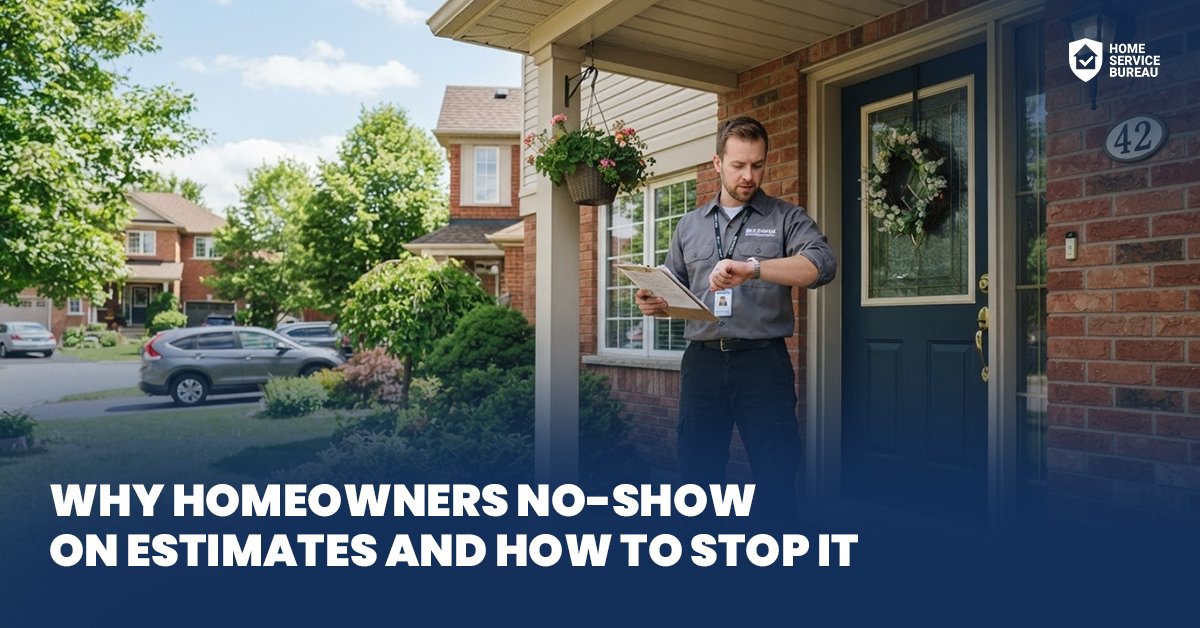
A missed estimate appointment costs more than a wasted hour. It costs a lead, a slot on the calendar, and often the job itself. For any contractor trying to grow, the ability to reduce contractor no-show rate Canada wide is not a minor operational tweak, it directly determines how many estimates turn into signed jobs. Homeowners across the country cancel or simply skip appointments for reasons that are almost always preventable, and the contractors who fix this consistently outperform the ones who treat it as bad luck.
This guide breaks down why homeowners no-show, the exact confirmation process that stops it, and how credential verification changes homeowner behaviour before the contractor even arrives.
Why Homeowners Skip Scheduled Estimates
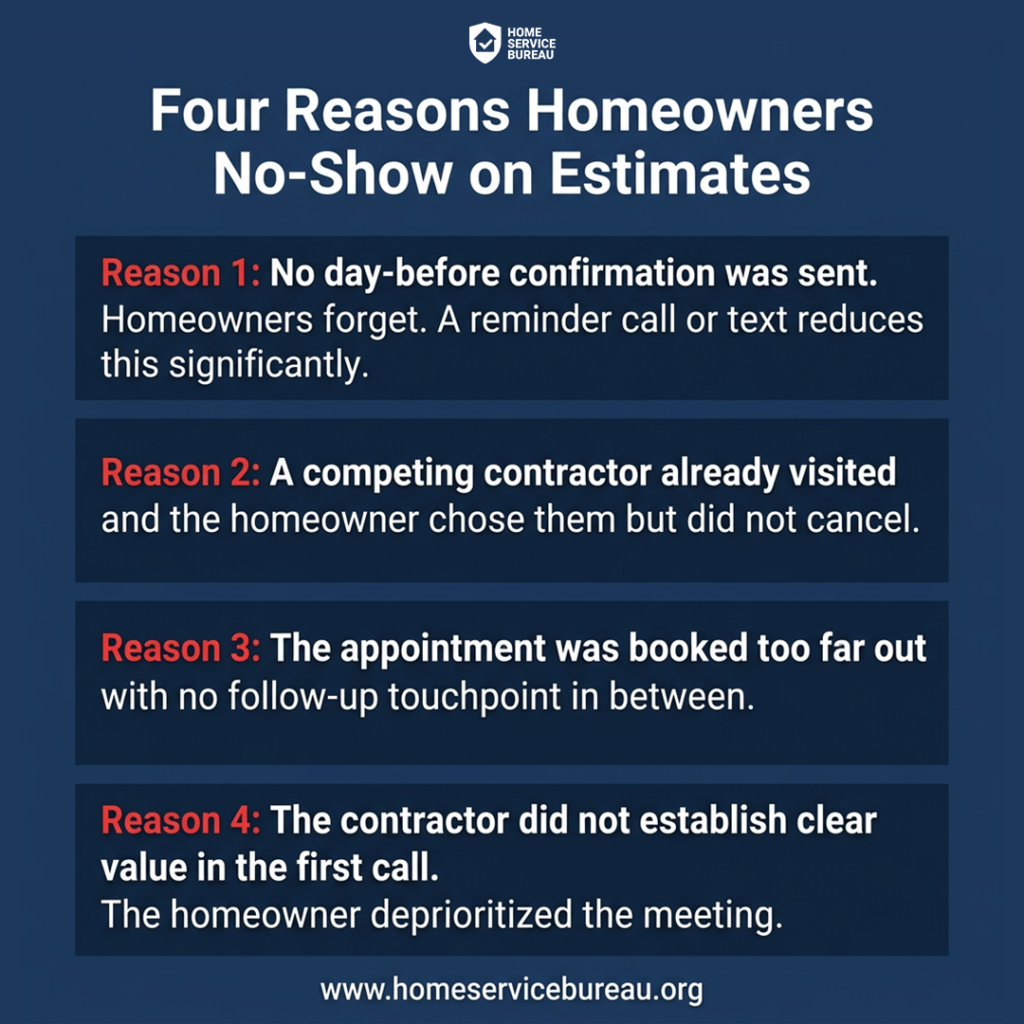
Every GTA contractors estimate no-show pattern traces back to one of four root causes, and understanding them is the first step toward fixing them.
No day-before confirmation was sent. Homeowners book an estimate and then forget about it within days. Without a reminder call or text close to the appointment, the booking fades from their schedule entirely. A short reminder message reduces this outcome significantly.
A competing contractor already visited. In many cases, a rival company got there first, the homeowner selected them, and never bothered to cancel the second appointment. This is one of the most common forms of contractor appointment no-show GTA homeowners describe when surveyed, and it usually means the losing contractor was booked too far out to be first in line.
The appointment was booked too far out with no follow-up touchpoint. A gap of a week or more between booking and the visit, with zero contact in between, gives homeowners time to lose interest, get quotes elsewhere, or simply forget.
The contractor did not establish clear value on the first call. If the homeowner never understood why the estimate mattered, they deprioritize it the moment something else competes for their time. This reason sits underneath most of the others even a well-confirmed appointment falls apart if the homeowner never felt the visit was worth protecting.
Recognizing these four causes matters because most contractors only address one of them (reminders) while ignoring the other three.
The Four-Step Confirmation Process That Cuts No-Shows
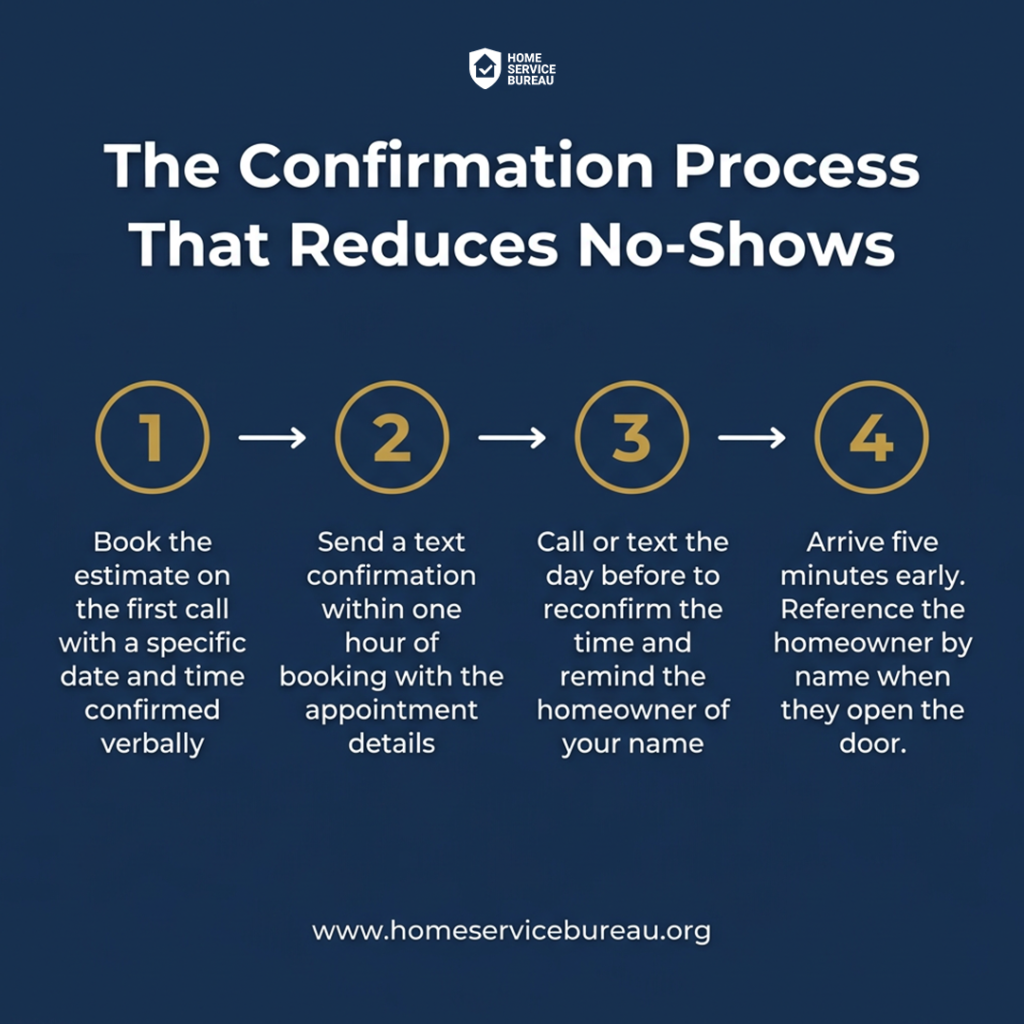
A structured confirmation sequence solves the scheduling half of the problem. The process that consistently works follows four steps:
- Book the estimate on the first call with a specific date and time, confirmed verbally before ending the conversation.
- Send a text confirmation within one hour of booking, restating the appointment details in writing.
- Call or text the homeowner the day before to reconfirm the time and remind them of the contractor’s name.
- Arrive five minutes early and reference the homeowner by name when they open the door.
This sequence works because it creates four separate touchpoints between booking and arrival, closing the gap that Reason 3 above depends on. It also reinforces Reason 4: a contractor who confirms details clearly and shows up prepared signals that the appointment carries weight. For any contractor focused on Canadian home services estimate conversion, this four-step sequence should be treated as non-negotiable, not optional follow-up.
Why Verified Contractor Status Increases Homeowner Commitment
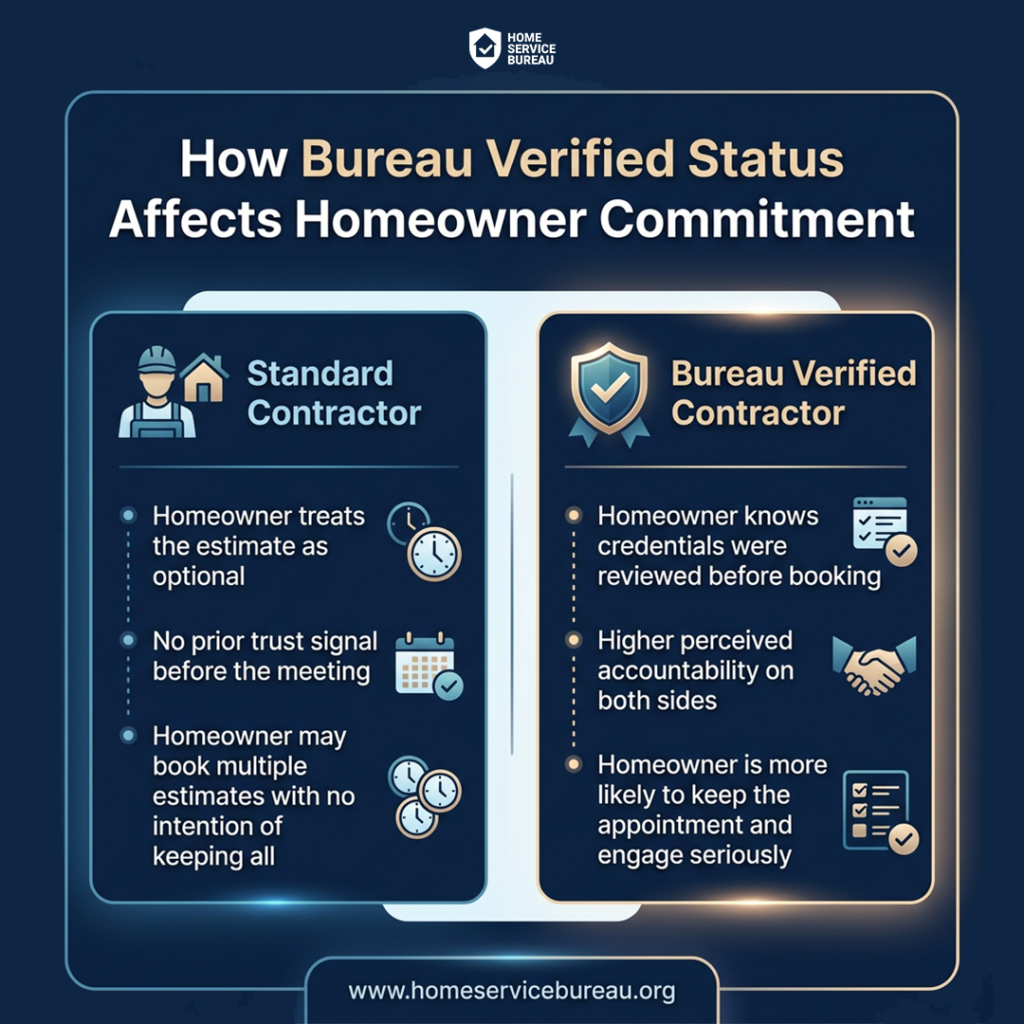
Confirmation calls only go so far if the homeowner has no reason to prioritize the appointment over a competitor’s. This is where credential verification changes the outcome.
A standard, unverified contractor faces a homeowner who treats the estimate as optional. There’s no prior trust signal before the meeting, and the homeowner may have booked several competing estimates with no real intention of keeping all of them.
A Bureau Verified contractor faces a different homeowner entirely. The homeowner already knows the contractor’s credentials were reviewed before the appointment was booked. That single fact raises perceived accountability on both sides. The homeowner is measurably more likely to keep the appointment and engage seriously once the contractor arrives, because the relationship starts with a trust signal instead of a blind booking.
This is a critical distinction for licensed contractors in Ontario no-show reduction efforts specifically. Licensing alone isn’t visible to a homeowner scrolling through search results or directories verification status is. Making that verification visible before the first call is what converts a skeptical booking into a committed one.
The Real Cost of a No-Show on Estimate Win Rate
No-shows don’t just waste a time slot they quietly erode the numbers that determine business growth. Every missed appointment removes one opportunity from the pipeline that could have closed. Contractors tracking their estimate win rate Canada–wide consistently find that no-show rate and win rate move in opposite directions: as one climbs, the other falls.
The compounding effect matters here. A contractor running five estimates a week who loses one to a no-show isn’t just missing one job they’re missing the referrals, reviews, and repeat business that job could have generated. Reducing no-shows by even a small percentage has an outsized effect on annual revenue, because the fix touches every appointment going forward rather than a single transaction.
Building an Estimate Process That Converts
Combining confirmation discipline with visible credibility solves both halves of the no-show problem. A contractor should:
- Confirm every appointment in writing within an hour of booking.
- Reconfirm by phone or text the day before.
- Arrive early and personalize the greeting.
- Make licensing and verification status visible before the homeowner ever picks up the phone.
- Establish clear value on the first call so the homeowner understands what the estimate covers and why it matters.
Contractors who apply all five consistently see fewer cancellations, stronger show-up rates. And a noticeably higher percentage of estimates that convert into signed work.
Final Thoughts
Reducing no-shows isn’t a single fix. It’s the combination of disciplined confirmation and visible credibility that changes homeowner behaviour before the appointment even happens. Contractors who commit to both see steadier calendars, stronger conversion. And a client base that shows up ready to move forward.
Home Service Bureau helps contractors put both halves of this system in place. Through verified credential status and a trust framework homeowners recognize before the first call, Home Service Bureau gives contractors a measurable edge in every market they serve. Contractors looking to strengthen their booking process and protect their pipeline can learn more at HSB.
Frequently Asked Questions
1. What is a good no-show rate for home services estimates in Canada?
Most well-run contracting businesses aim to keep no-show rates below 10 to 15 percent. Rates above that typically point to weak confirmation processes, unclear value communication on the first call, or appointments booked too far in advance without follow-up contact.
2. Does texting homeowners actually reduce no-shows?
Yes. A text sent within an hour of booking, followed by a reminder the day before, addresses forgetfulness, which is one of the most common reasons homeowners miss scheduled estimates. It also reinforces that the contractor takes the appointment seriously.
3. How does licensing verification affect appointment commitment?
When a homeowner sees that a contractor’s credentials were reviewed before booking, they treat the appointment as more legitimate. This raises accountability on both sides and measurably reduces the likelihood that the homeowner cancels or ignores the visit.
4. Why do homeowners book multiple estimates and skip some?
Homeowners often book several contractors at once because no single company has established enough trust or urgency to lock in their commitment. Without a clear value proposition or verified credibility, the homeowner defaults to comparison shopping and drops the weaker options.
5. How far in advance should an estimate be booked?
Shorter gaps between booking and the appointment reduce no-shows significantly. When a booking must be scheduled further out, adding a mid-point follow-up touchpoint keeps the appointment top of mind and prevents the homeowner from losing interest.
6. What should a contractor say on the first call to reduce no-shows later?
The first call should clearly explain what the estimate includes, how long it takes, and why it matters for the homeowner’s project. Establishing this value early makes the homeowner far less likely to deprioritize the appointment later.
7. Does arriving early or on time affect future business?
Arriving five minutes early and referencing the homeowner by name signals professionalism and reinforces that the appointment was worth keeping. This small detail builds trust quickly and improves the odds of converting the estimate into a signed job.
8. How does reducing no-shows improve overall business growth?
Fewer no-shows mean more completed estimates, which directly increases signed jobs, referrals, and reviews. Because the effect compounds across every future appointment, even a modest reduction in no-show rate produces a meaningful increase in annual revenue.