

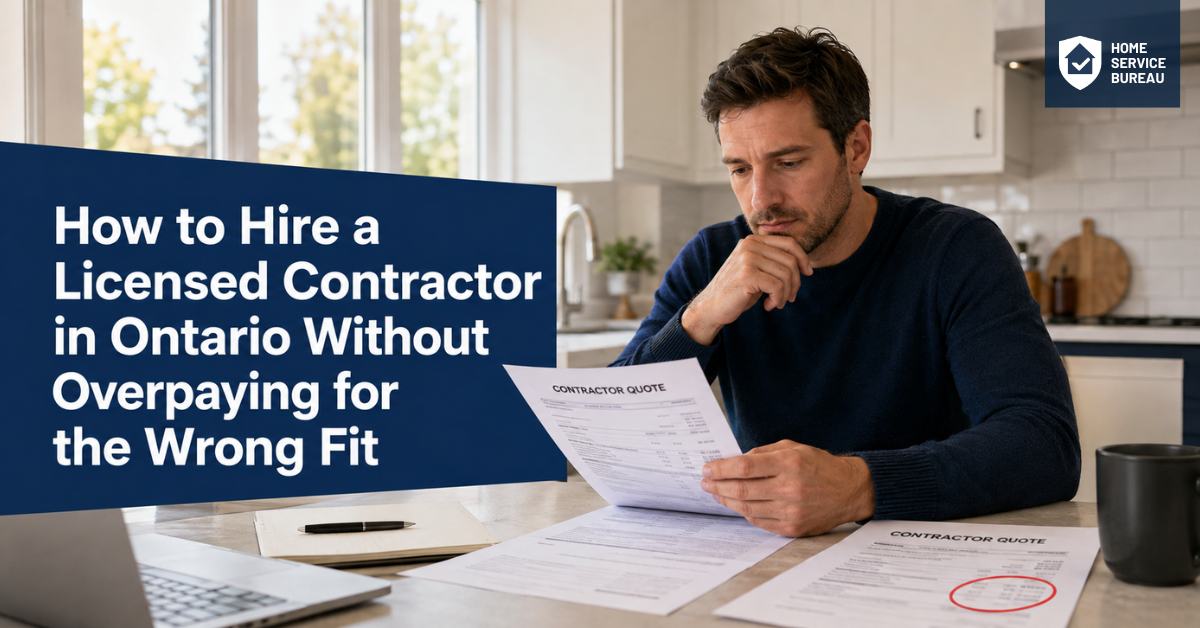
Finding the right contractor transforms your home project from a financial nightmare into a smooth investment. Yet most homeowners skip the verification steps that protect their wallets and their properties. When you hire a licensed contractor in Ontario without overpaying, you eliminate hidden costs, scope creep, and the stress of dealing with uninsured workers who disappear mid-project.
The difference between a low bid and a legitimate bid separates homeowners who waste thousands from those who get excellent work at fair prices. This guide walks you through the exact vetting process that weeds out contractors before they waste your time and money.
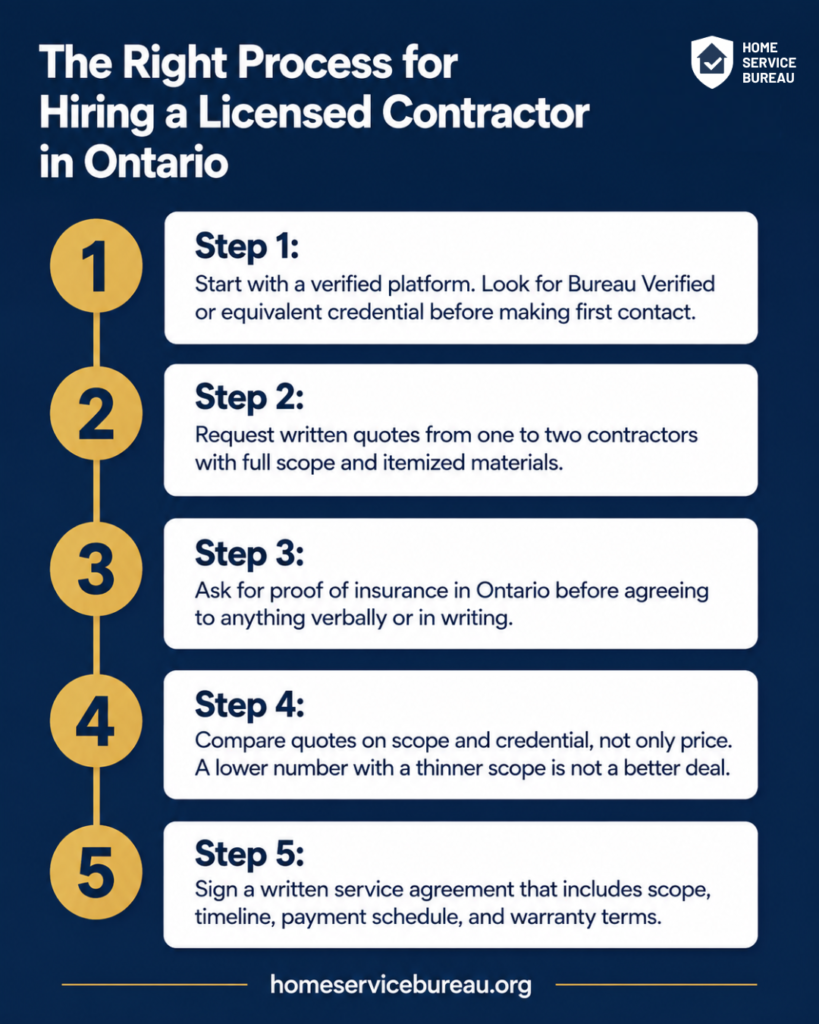
Four Signs a Contractor Is the Wrong Fit Before You Hire Them
You can spot problematic contractors before signing anything. These warning signs predict costly disputes and abandoned work.
Red Flag 1: They cannot provide proof of insurance in Ontario when asked. Licensed contractors keep insurance documentation ready without hesitation. When someone fumbles, delays, or makes excuses about providing proof, they operate outside legitimate channels. Your liability multiplies if an uninsured worker gets injured on your property. Insurance isn’t optional—it’s the baseline credential that separates professionals from hobbyists.
Red Flag 2: Their quote contains no written scope. Verbal descriptions vanish into disputes the moment work begins. Contractors who refuse to itemize materials, specify timelines, or define deliverables set you up for scope creep. You’ll pay for “extras” that should have been included. A legitimate quote breaks down every component so both parties understand exactly what happens and why.
Red Flag 3: They request a large upfront payment before work begins. This pattern indicates cash-flow desperation, not professional confidence. Licensed contractors in Ontario selection emphasize milestone-based payment schedules tied to completed work phases. Legitimate contractors finance their own materials and labor until they earn payment. Large upfront deposits signal high risk.
Red Flag 4: They carry no credential signal on any platform. Contractors with verification, review history, or Bureau Verified status demonstrate accountability. Those with zero online presence, no reviews, and no verification create invisibility that protects them from consequences. When you can’t verify their history, you can’t predict their behavior.
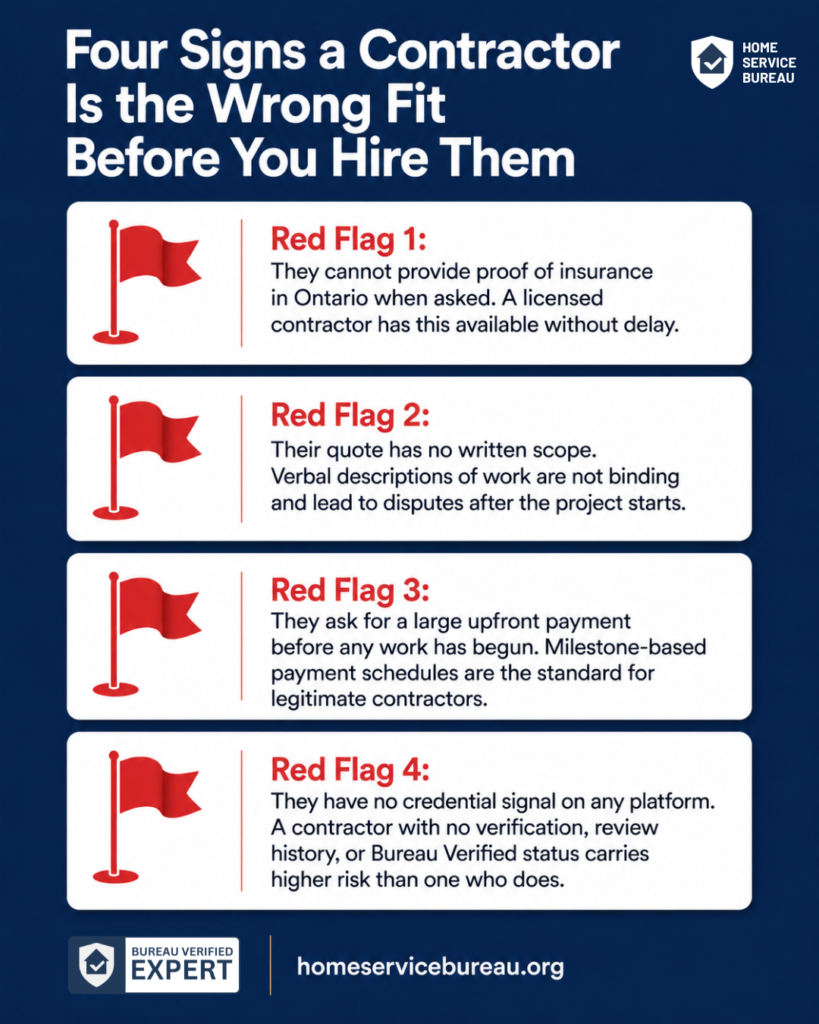
Looks Right vs Is Right: What to Check Before Hiring an Ontario Contractor
Appearance deceives. Professional presentation doesn’t guarantee legitimate operation. Here’s what actually protects your investment:
Low Price vs. Scope Confirmed to Match the Price
Cheap bids attract attention, but they hide problems. A contractor offering $3,000 for work another contractor quotes at $5,000 likely cut scope, not margins. Request detailed breakdowns from each bidder. Compare apples to apples material quality, labor hours, warranty coverage, and cleanup responsibility. When scope matches the price, you’ve found a fair deal, not a bargain.
Verbal Commitment vs. Written Agreement Before Work Starts
Handshakes and phone calls evaporate under pressure. Written agreements create binding documentation that protects both parties. Your contract should specify scope, timeline, payment schedule, materials, warranty terms, and how disputes resolve. This forces clarity before hammers swing.
Platform Listing vs. Bureau Verified on a Regional Allocation Platform
Anyone can create a website or social media presence. Bureau Verified credentials involve third-party verification of licenses, insurance, and performance history. Regional platforms like HomeServiceBureau.org maintain accountability standards that solo websites don’t enforce. Verify contractors through established platforms before engaging.
Insurance Claim vs. Proof on Request Without Hesitation
Some contractors carry insurance but resist providing proof, hoping you won’t ask twice. Legitimate professionals hand over documentation immediately. Ask for proof before verbal agreements, not after signing. Request current coverage that protects both property damage and worker injuries.
Milestone-Based Payment Schedule
Payment structures reveal contractor stability. Those accepting upfront deposits often struggle financially and need cash immediately. Contractors confident in their work structure payments around completion milestones10% upon signing, 40% at materials delivery, 40% at substantial completion, 10% upon final inspection and warranty documentation.
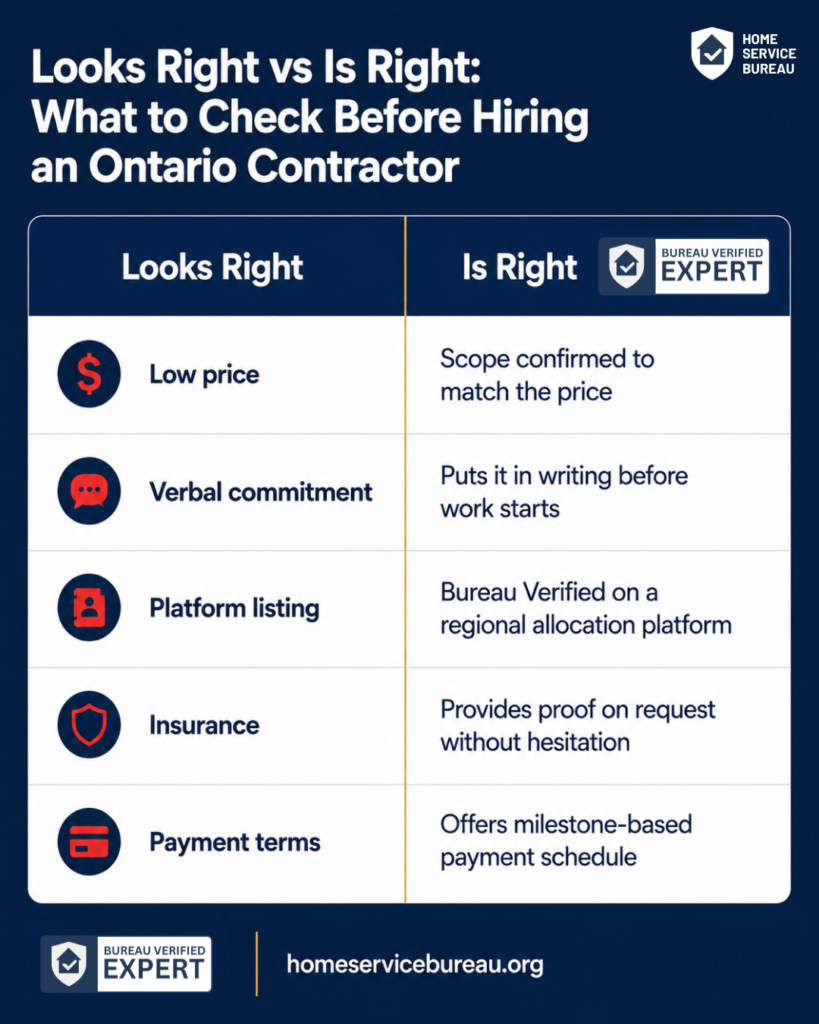
The Right Process for Hiring a Licensed Contractor in Ontario
Follow this sequence to avoid wrong contractor hire GTA situations:
Step 1: Start with a Verified Platform
Begin your search on HomeServiceBureau.org or equivalent credential-verified platforms. Filter for Bureau Verified contractors in your service area. This single step eliminates unvetted operators before you waste time vetting them yourself. Verified platforms maintain active license verification, liability insurance confirmation, and performance tracking.
Step 2: Request Written Quotes from One to Two Contractors
Limit yourself to two serious contenders. Request detailed written quotes specifying scope, materials, labor, timeline, and warranty coverage. Verbal quotes create confusion. Written quotes create contracts. Insist on itemized breakdowns so you understand what you’re buying and why prices differ.
Step 3: Confirm Proof of Insurance Before Any Commitment
Contact their insurance provider directly to verify active coverage. Don’t accept photocopies alone—verify independently. Request proof of Workplace Safety and Insurance Board (WSIB) coverage if they employ workers. This step stops uninsured operators cold.
Step 4: Compare Quotes on Scope and Credentials, Not Only Price
A lower price means nothing if scope shrinks proportionally. Compare what each contractor includes, excludes, and guarantees. Verify both hold current licenses through Ontario’s regulatory body. Check verified contractor hire Ontario platforms for performance ratings and complaint history.
Step 5: Sign a Written Service Agreement
Your contract becomes your protection. It specifies scope, timeline, payment schedule, warranty terms, and dispute resolution. Both parties sign before work begins. This creates legal clarity that prevents “misunderstandings” from becoming expensive problems.
Critical Questions to Ask Contractors During Consultations
Ask these questions before requesting written quotes—answers predict project outcomes.
“Can you show me three completed projects and provide homeowner references?” Confident contractors produce portfolios instantly. Call references yourself to verify timeline adherence, scope completion, and professionalism.
“What happens if you discover hidden problems during work?” Legitimate contractors budget for contingencies and expect unforeseen issues. Those claiming zero problems hide inadequate planning.
“Who supervises daily work, and how do I contact them?” Know your point person for escalating concerns. Contractors dodging this question hide weak accountability.
“How long have you held your Ontario license?” Long licensing history demonstrates stability. Combined with other red flags, new licenses increase risk.
“What’s included in your warranty and how do I claim it?” Get warranty specifics written. Contractors refusing terms don’t stand behind work.
“Do you carry WSIB coverage for employees?” Verify worker protection through proper insurance channels, never independent contractor workarounds.
These conversations prevent thousands in project problems.

Conclusion: Protect Your Investment with Verified Contractor Selection
Hire a licensed contractor in Ontario without overpaying means following verification, comparison, and documentation processes that eliminate risk upfront. The five-step process separates legitimate professionals from operators cutting corners to undercut prices. Bureau Verified credentials, written agreements, insurance verification, and milestone-based payments create accountability at every stage.
Your investment deserves protection. That protection starts with selecting contractors through established verification platforms, requesting transparent documentation, and insisting on written agreements before any work begins.
HSB connects homeowners across Ontario with Bureau Verified contractors who meet rigorous licensing, insurance, and performance standards. Our directory eliminates unvetted operators, provides independent review access, and tracks contractor accountability. Use HomeServiceBureau.org to find licensed contractors in your area who deliver quality work at fair prices ensuring your home project invests your money wisely rather than wasting it on the wrong fit.
Frequently Asked Questions
1. How do I verify a contractor’s Ontario license online?
Access the regulatory body’s license database using the contractor’s business name or license number. Verify status shows “active” and matches their stated trade classification. Independent verification prevents contractors from overstating credentials or operating with expired licenses.
2. What should I include in a written service agreement?
Include scope (what work happens), timeline (start and end dates), payment schedule (milestone-based), materials (specifications and quality), labor warranty (timeframe), and dispute resolution (how disagreements get handled). Both parties sign before work starts to prevent scope creep and payment disputes.
3. Can I negotiate payment terms with contractors?
You can discuss payment structure, but milestone-based schedules are standard for legitimate contractors. Avoid those demanding 50%+ upfront. Negotiate final payment to occur only after you’ve inspected completed work and verified all warranty documentation is provided.
4. What insurance coverage do contractors need in Ontario?
Contractors need liability insurance (property damage and bodily injury) and WSIB coverage if they employ workers. Some carry bonding for additional protection. Request proof of minimum coverage amounts, typically $2 million liability for residential work. Verify coverage directly with insurers.
5. How do I spot scope creep before it drains my budget?
Reference your written scope agreement before approving any additional work. Document all change requests in writing with revised costs. Never approve verbal additions. Insist on written change orders that specify new costs and timeline impacts before work proceeds on any additions.
6. What’s a reasonable timeline for residential contractor work?
Timelines vary by project complexity, but legitimate contractors provide specific start and completion dates. They factor in material delivery, weather, inspections, and cleanup. Vague timelines like “a few weeks” indicate poor planning. Demand specific dates so you hold them accountable.
7. Should I use contractors who offer cash-only payments?
Avoid cash-only contractors. Legitimate businesses accept checks, bank transfers, or credit cards, creating transaction records. Cash-only operations often avoid tax reporting and provide no documentation for warranty claims or disputes. Payment records protect you legally.
8. What warranty coverage should licensed contractors provide?
Standard warranties cover workmanship (typically one year) and materials (per manufacturer specifications). Get warranty terms in writing with contact information for warranty claims. Legitimate contractors stand behind their work. Avoid those refusing warranty documentation or limiting coverage unreasonably.