

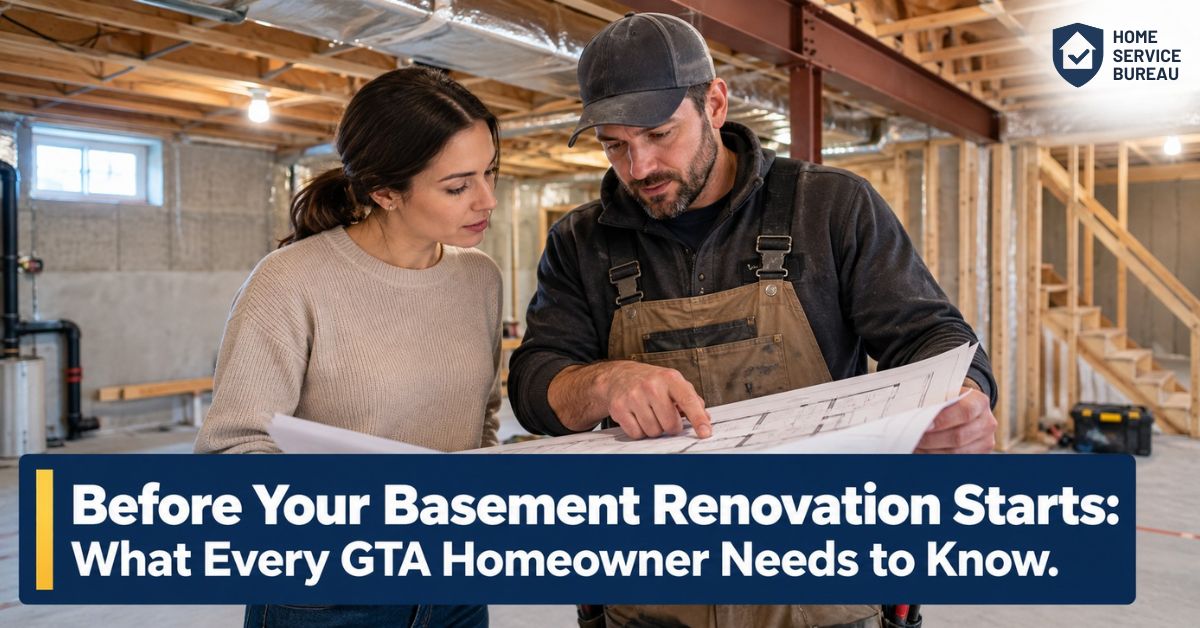
A finished basement adds living space, comfort, and value to your home. It also brings permits, building code rules, and technical challenges that catch many homeowners off guard. Preparation separates a smooth project from an expensive one. This GTA homeowner basement renovation guide explains what you need to understand before the first wall goes up.
The guide covers permits, contractor selection, and a practical pre-start checklist. It reflects general building practices and the way permitting typically works across Ontario municipalities. Requirements differ between municipalities, so always confirm details with your local building department before you commit to a plan.
Why Preparation Matters for a Basement Project
Basements behave differently from the rest of your home. They sit below grade, they face moisture pressure, and they often hide plumbing, wiring, and ductwork inside tight spaces. Surprises appear quickly when you skip the planning stage.
Homeowners who research first make better decisions. They set realistic budgets, avoid permit delays, and choose contractors with confidence. If you wonder what to know before basement reno Ontario projects begin, start with three priorities: permits, people, and preparation.
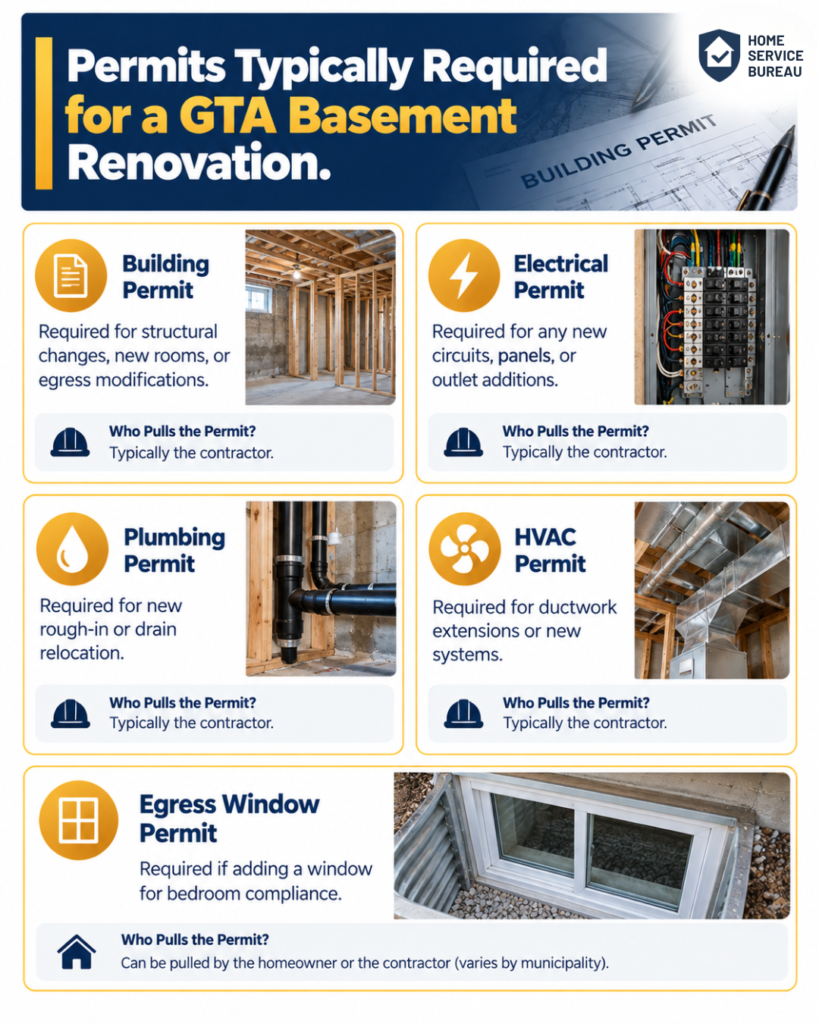
Permits Typically Required for a GTA Basement Renovation
Permits protect you, your family, and your property value. Inspectors verify that the work meets safety standards, and unpermitted work can cause problems with insurance claims and future home sales. Most basement projects involve several permit types, depending on the scope.
Building Permit
You typically need a building permit for structural changes, new rooms, or egress modifications. Contractors usually pull this permit on your behalf. Confirm that arrangement in writing before the project starts.
Electrical Permit
Any new circuits, panels, or outlet additions require an electrical permit. A licensed electrician handles the work, and the contractor typically pulls the permit. An inspection follows to confirm the installation meets code.
Plumbing Permit
New rough-ins and drain relocations require a plumbing permit. Basement bathrooms, wet bars, and laundry additions all fall into this category. Licensed plumbers perform this work, and contractors typically arrange the permit.
HVAC Permit
Ductwork extensions and new heating or cooling systems need an HVAC permit. Proper airflow matters in a basement, because poor ventilation leads to comfort issues and moisture problems.
Egress Window Permit
You need this permit if you add a window to make a bedroom compliant. Depending on your municipality, either you or your contractor can pull it. Ask your local office who holds responsibility, and keep copies of every approval.
5 Things to Look for in a Basement Renovation Contractor
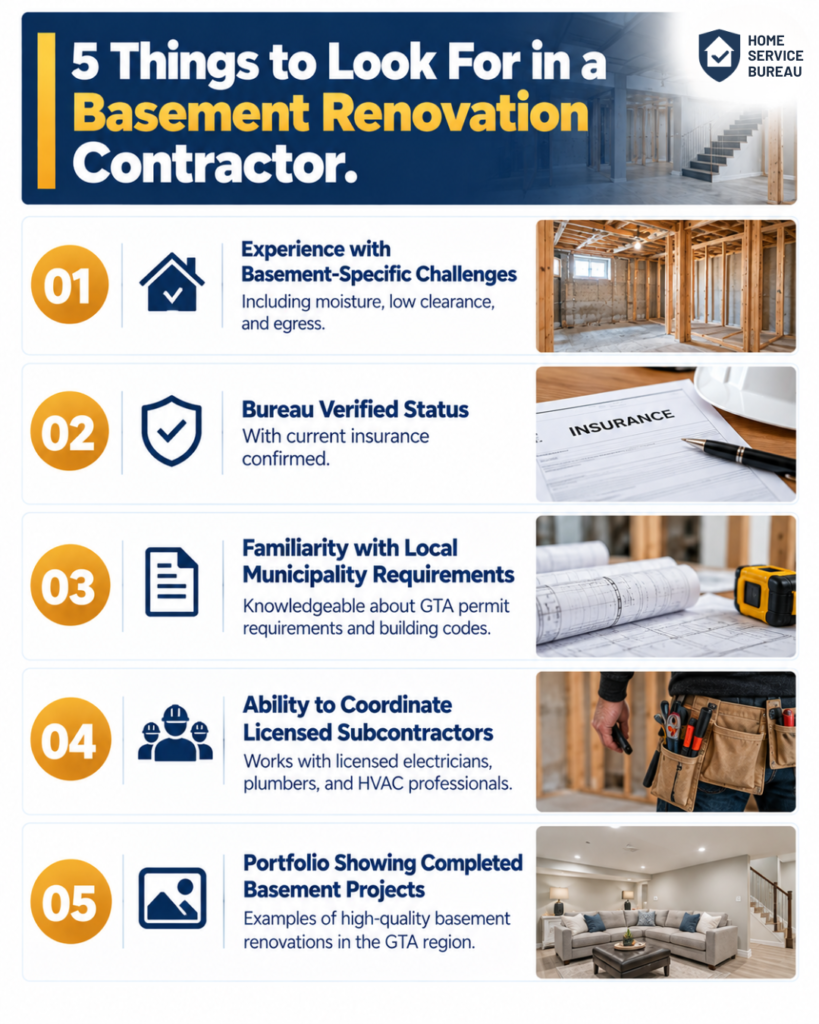
The contractor you choose shapes every part of the project. When you hire contractor basement GTA projects require, evaluate candidates against these five standards.
1. Experience With Basement-Specific Challenges
Basements bring moisture, low clearance, and egress requirements. Ask candidates how they handle each one. A contractor with real basement experience answers with specific methods, not general promises.
2. Bureau Verified Status With Current Insurance Confirmed
Verification gives you a reliable starting point. Confirm that the contractor holds current insurance and active credentials. Reputable professionals share this documentation without hesitation, and they keep it up to date.
3. Familiarity With Local Municipality Requirements
Each municipality sets its own permit processes and building rules. A contractor who knows your local requirements moves through approvals faster and avoids costly rework. Ask how many permits they have handled in your area.
4. Ability to Coordinate Licensed Subcontractors
Most basement projects need electricians, plumbers, and HVAC professionals. Strong contractors coordinate these trades and schedule them in the right order. Work with licensed contractors in Ontario basement renovation specialists who manage that coordination so you do not have to.
5. Portfolio Showing Completed Basement Projects
A portfolio proves experience. Review completed basement projects in the GTA region, and ask about similar scopes to yours. Request references, and speak with previous clients about communication, timelines, and finishing quality.
Basement Renovation Pre-Start Checklist for GTA Homeowners
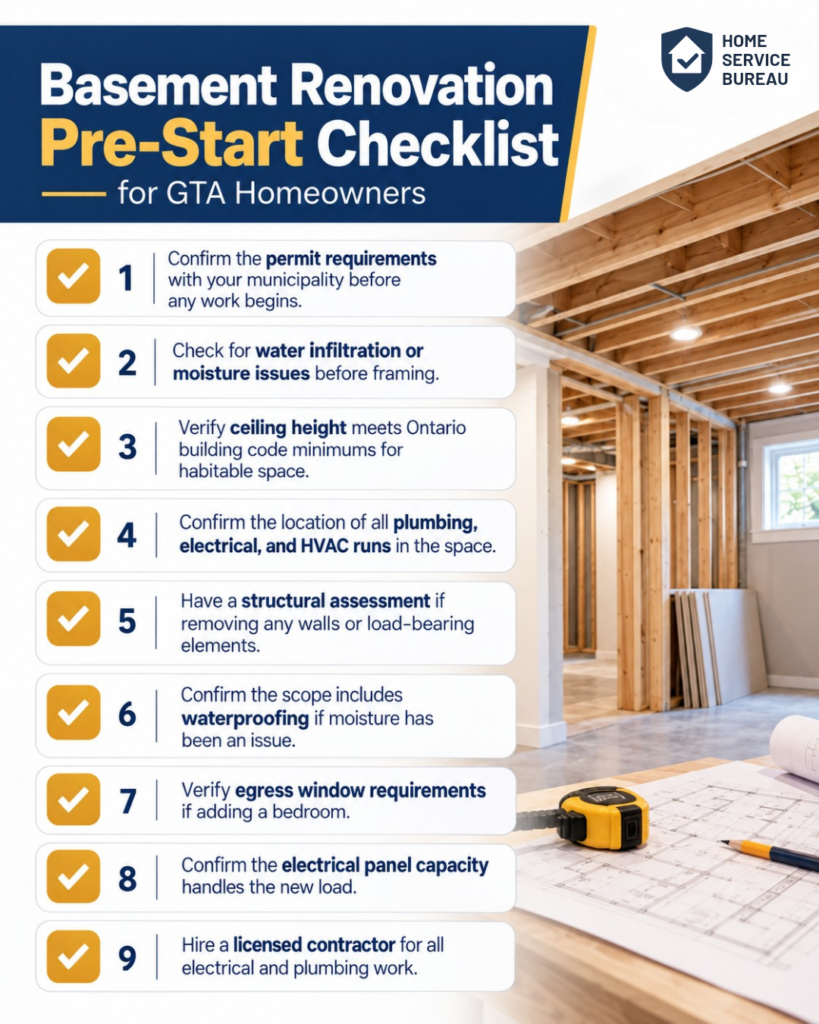
Use this basement renovation checklist Ontario GTA homeowners can follow before any work begins. Each item prevents a common and costly problem.
- Confirm permit requirements. Contact your municipality before any work begins.
- Check for water infiltration or moisture issues. Inspect before framing starts, because hidden moisture ruins finished walls and floors.
- Verify ceiling height. Make sure it meets Ontario building code minimums for habitable space.
- Locate all plumbing, electrical, and HVAC runs. Know what sits behind walls and above ceilings.
- Arrange a structural assessment. Do this if you plan to remove walls or load-bearing elements.
- Confirm the scope includes waterproofing. Add it if moisture has been an issue.
- Verify egress window requirements. Check them if you plan to add a bedroom.
- Confirm electrical panel capacity. Make sure it handles the new load.
- Hire a licensed contractor. Use licensed professionals for all electrical and plumbing work.
Work through the list in order. Several items, such as moisture checks and structural assessments, can change your budget and timeline significantly, so address them early.
How to Plan Your Budget and Timeline
A realistic budget includes a buffer for unexpected findings. Older homes often hide issues behind finished surfaces, and basements frequently reveal them once demolition starts. Set aside a contingency amount so a surprise does not stop the project.
Request detailed written quotes from several contractors. Compare scope, materials, timelines, and payment schedules rather than price alone. The lowest quote often leaves out items that appear later as extra charges.
Build in time for permits and inspections as well. Approvals take longer in busy seasons, and inspections happen at specific stages. Plan your timeline around these steps, not just construction days.
Common Mistakes to Avoid
Many basement problems trace back to a handful of avoidable errors:
- Skipping permits. Unpermitted work creates insurance and resale risks.
- Ignoring moisture. Finishing over a damp basement invites mould and damage.
- Hiring on price alone. Cheap quotes often hide missing scope.
- Approving verbal changes. Confirm every change in writing.
- Overlooking egress rules. Bedrooms require compliant exits and windows.
What a Strong Project Looks Like
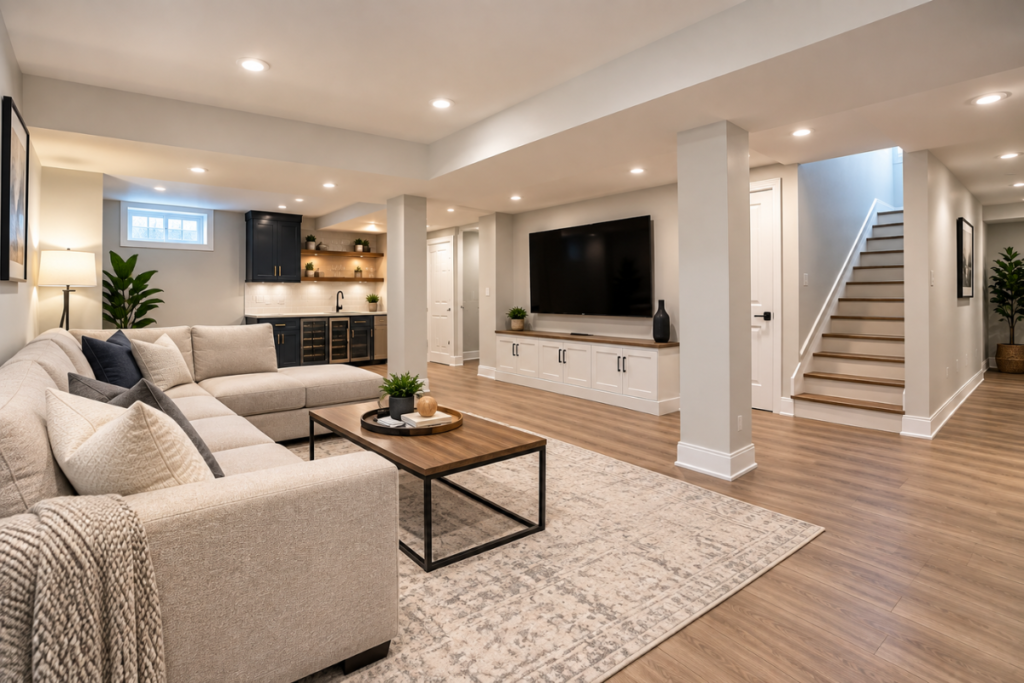
A well-run Canadian home services basement project follows a clear sequence. You confirm permits, resolve moisture, finalize the scope, and sign a written agreement. The contractor then coordinates trades, schedules inspections, and keeps you informed at each stage. When the work finishes, you receive documentation of approvals and a clean, finished space.
This structure takes effort at the start, but it pays off through fewer delays, fewer disputes, and a finished basement that adds lasting value.
Bottom Line
Every successful basement project starts with preparation. Confirm your permits, choose an experienced contractor, and work through the pre-start checklist before construction begins. This GTA homeowner basement renovation guide gives you the foundation to make confident decisions, avoid common mistakes, and protect your investment.
Home Service Bureau (HSB) helps GTA homeowners take the next step. HSB connects you with Bureau Verified home service professionals whose credentials and insurance have been confirmed, so you can start your project with trust. Visit Home Service Bureau today to find a verified contractor for your basement renovation.
FAQs
1. Do I need a permit for a basement renovation in the GTA?
Most basement projects need at least one permit, especially for structural changes, new rooms, plumbing, or electrical work. Confirm requirements with your municipality before work begins, since rules differ by location.
2. Who pulls the permits for a basement renovation?
Contractors typically pull building, electrical, plumbing, and HVAC permits. Egress window permits may come from either you or your contractor, depending on the municipality. Confirm responsibility in your written agreement.
3. How do I check a contractor’s credentials?
Ask for proof of insurance, licences, and relevant certifications, then verify them directly with the issuing organizations. Reputable contractors share these documents willingly and keep them current throughout the project.
4. Why should I check for moisture before renovating?
Moisture hides behind finished walls and floors, then causes mould and structural damage. Inspecting before framing lets you fix problems early, often through waterproofing, before you invest in expensive finishes.
5. Do I need a structural assessment for my basement?
Yes, if you plan to remove walls or any load-bearing elements. An assessment confirms what your home can safely support, and it guides the design before you commit to construction.
6. What ceiling height does a basement need?
Ontario building code sets minimum ceiling heights for habitable space. Measure your basement early, because low clearance can limit your plans, and confirm exact requirements with your local building department.
7. Can I add a bedroom to my basement?
Yes, if the space meets code. You need compliant egress, usually through a properly sized window, plus required ceiling height and safe exits. Verify these requirements before you finalize your design.
8. Why should I hire licensed professionals for basement work?
Licensed electricians and plumbers follow safety codes, pass inspections, and protect your insurance coverage. Unlicensed work creates fire, water, and liability risks that can cost far more than hiring correctly.