


You send a strong estimate, and then you wait. Days pass without a reply. You wonder whether the homeowner lost interest, chose someone else or simply needs more time. Most contractors face this moment on nearly every project, and many handle it poorly because they do not understand how decisions actually unfold.
The Canadian home services contractor homeowner decision timeline varies widely by project type, budget and household. When you understand these patterns, you follow up at the right moments, avoid pressure that pushes people away and win more of the work you quote. This guide explains how long homeowners take to decide, what slows them down and how to build a follow-up sequence that respects their process while keeping your name in front of them.
Why Decision Timelines Matter for Contractors
Timing shapes every sales conversation. A follow-up that arrives too early feels pushy. A follow-up that arrives too late suggests you do not care. Both mistakes cost you jobs.
Homeowners do not decide on your schedule. They decide on their own, and the size of the project drives most of that pace. A small repair carries little risk and closes fast. A large renovation carries significant cost and disruption, so homeowners take longer to feel confident. When you match your follow-up rhythm to their natural pace, you earn trust instead of friction.
How Long Homeowners Take to Decide by Project Type in Canada
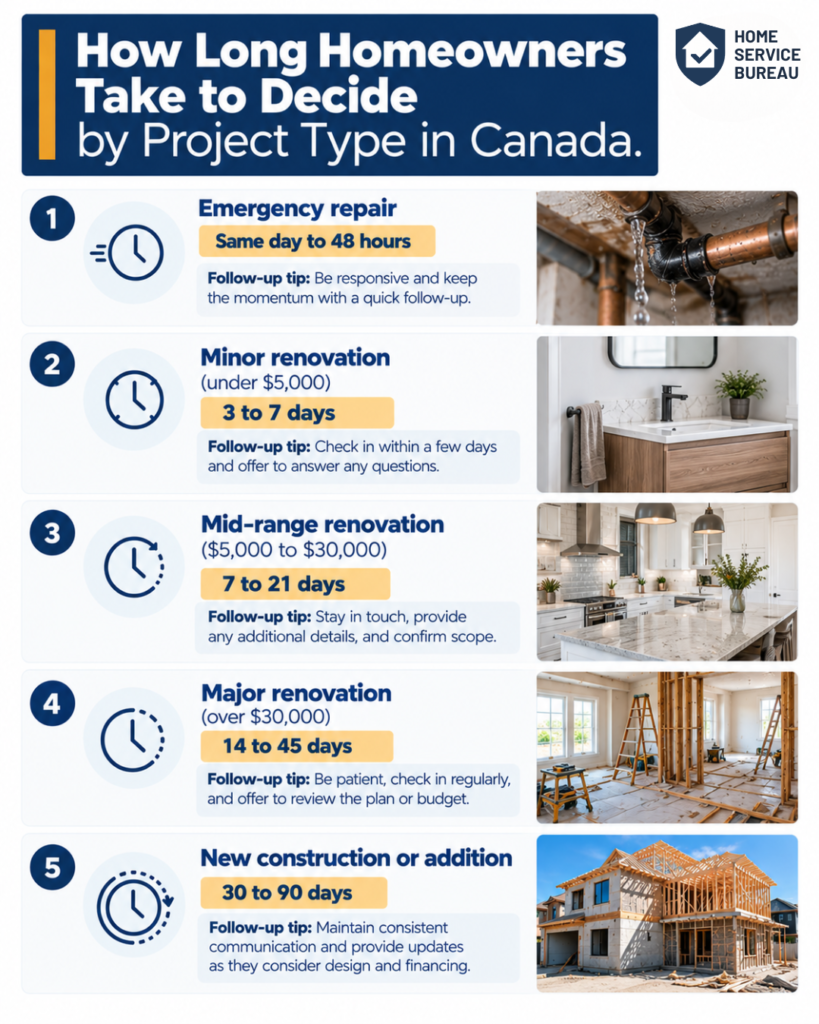
Understanding how long homeowners take to decide Ontario wide, and across the country, starts with project type. Each category follows a different pace, and each calls for a different approach.
1. Emergency repair: same day to 48 hours. Urgency drives these decisions. Homeowners want the problem solved immediately. Respond quickly and keep momentum with a prompt follow-up.
2. Minor renovation (under $5,000): 3 to 7 days. The stakes are modest, so homeowners decide within a week. Check in within a few days and offer to answer any questions.
3. Mid-range renovation ($5,000 to $30,000): 7 to 21 days. Homeowners compare options and discuss the plan at home. Stay in touch, provide additional details and confirm the scope.
4. Major renovation (over $30,000): 14 to 45 days. The investment is large, so homeowners deliberate carefully. Be patient, check in regularly and offer to review the plan or budget.
5. New construction or addition: 30 to 90 days. Design and financing decisions extend the process. Maintain consistent communication and provide updates as they consider each piece.
These ranges give you a realistic expectation for each job. They also help you forecast your pipeline, because you can predict when most quotes will turn into decisions.
What Slows Homeowner Decisions and How to Help
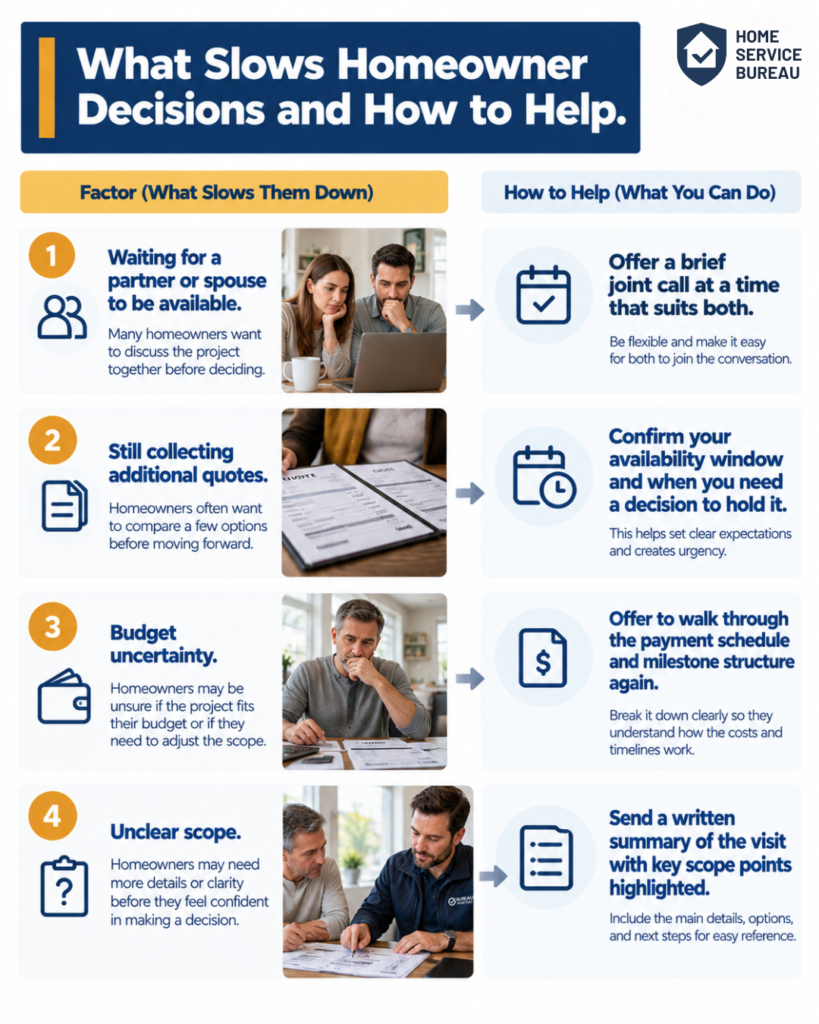
Even within a normal timeline, specific factors can slow a decision. Recognize them, and you can help homeowners move forward without pressure.
1. Waiting for a partner or spouse to be available. Many homeowners want to discuss the project together before deciding. How to help: Offer a brief joint call at a time that suits both people. Be flexible and make it easy for both to join the conversation.
2. Still collecting additional quotes. Homeowners often want to compare a few options before moving forward. How to help: Confirm your availability window and when you need a decision to hold it. This sets clear expectations and creates healthy urgency.
3. Budget uncertainty. Homeowners may feel unsure whether the project fits their budget or whether they need to adjust the scope. How to help: Offer to walk through the payment schedule and milestone structure again. Break it down clearly so they understand how costs and timelines work.
4. Unclear scope. Homeowners may need more detail or clarity before they feel confident. How to help: Send a written summary of the visit with key scope points highlighted. Include the main details, options and next steps for easy reference.
Each solution replaces pressure with clarity. When you remove uncertainty, you shorten the decision without forcing it.
What This Means for Your Business
Across the country, the homeowner contractor selection timeline Canada wide follows the same principle: bigger decisions take longer, and clearer communication shortens them. Apply these habits consistently:
- Record the expected decision window for every quote.
- Schedule each follow-up at the moment you send the estimate.
- Tailor your message to the barrier the homeowner faces.
- Track how often each project type converts and how long it takes.
- Adjust your sequence when your data shows a better rhythm.
These habits turn a vague waiting game into a managed process. You stop guessing and start planning
Your Follow-Up Sequence by Project Decision Timeline
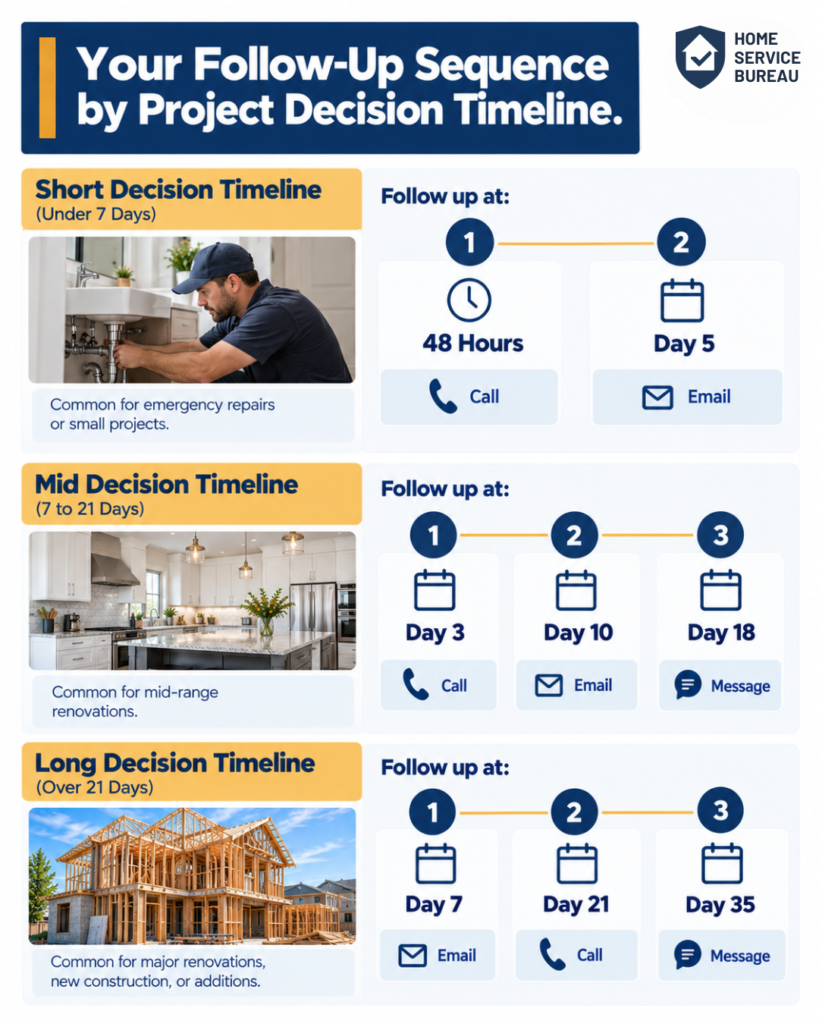
A structured follow-up plan keeps you consistent without becoming annoying. Match your sequence to the decision timeline of the project.
Short decision timeline (under 7 days)
This pattern fits emergency repairs and small projects.
- 48 hours: Call to confirm receipt and answer questions.
- Day 5: Send an email to check in and restate your availability.
Mid decision timeline (7 to 21 days)
This pattern fits mid-range renovations.
- Day 3: Call to confirm the homeowner has everything they need.
- Day 10: Send an email with any additional details or clarifications.
- Day 18: Send a short message to check in before the window closes.
Long decision timeline (over 21 days)
This pattern fits major renovations, new construction and additions.
- Day 7: Send an email with a summary of next steps.
- Day 21: Call to discuss progress and answer questions.
- Day 35: Send a message to keep the conversation open.
Notice how the spacing widens as the project grows. Longer decisions need more breathing room. Mix calls, emails and messages so each touchpoint feels fresh and useful rather than repetitive.
How Timing Applies Across the GTA and Ontario
Local markets add their own pressure. In dense urban areas, homeowners often contact several professionals at once, which narrows the GTA contractors homeowner decision window. A fast, clear response earns you a place in the comparison before the window closes.
Strong contractor timing homeowner decision GTA practice combines speed at the start with patience in the middle. Reply quickly to every inquiry, deliver a complete estimate promptly and then follow your sequence without crowding the homeowner.
Credentials also influence timing. Homeowners often decide faster when they trust the contractor, and trust grows when you display clear credentials. A well-documented licensed contractors in Ontario decision timeline benefits from visible licensing, insurance and written terms, because those details remove doubt that would otherwise delay the decision. Always confirm the licensing requirements that apply to your trade through official provincial sources.

Conclusion: Win More Projects With Home Service Bureau
Homeowners decide at different speeds, and the best contractors respect that pace. When you understand the decision timeline for each project type, identify what slows people down and follow a structured sequence, you win more work without pushing anyone.
Home Service Bureau (HSB) supports contractors who want to work this way. HSB connects verified professionals with homeowners who are ready to hire and rewards the responsiveness, clarity and credibility that move decisions forward. If you want to turn more quotes into booked projects, join HSB and put your verified status to work.
Frequently Asked Questions
1. How long do homeowners usually take to decide?
Decision time depends on project size. Emergency repairs close within two days, minor work takes three to seven days, and major renovations or new construction can take anywhere from several weeks to three months.
2. When should I first follow up after sending an estimate?
Match the follow-up to the project. Check in at 48 hours for short decisions, on day three for mid-range work and on day seven for major projects, so you stay visible without applying pressure.
3. Why do homeowners delay even after a good estimate?
Common causes include waiting for a partner, collecting more quotes, uncertainty about budget and unclear scope. Each barrier has a simple solution, and addressing it directly usually moves the decision forward.
4. How can I help a homeowner who is comparing quotes?
Confirm your availability window and tell them when you need a decision to hold it. This sets clear expectations and creates healthy urgency without pressure, while respecting their need to compare options.
5. What should I do when budget uncertainty slows the decision?
Offer to walk through the payment schedule and milestone structure again. Break the costs down clearly so the homeowner understands how payments and timelines work, and discuss scope adjustments if needed.
6. Should I use calls, emails or messages for follow-up?
Use a mix. Calls build connection, emails deliver detail and short messages offer a light reminder. Rotating methods keeps each touchpoint fresh and helps you reach homeowners in the way they prefer.
7. How do I handle a long decision timeline without losing the job?
Keep communication consistent and spaced out. Send useful updates, offer to review the plan or budget and stay patient. Steady, helpful contact keeps your name familiar while the homeowner works through design and financing.
8. Does clear scope documentation really speed up decisions?
Yes. A written summary of the visit with key scope points highlighted removes confusion and builds confidence. Homeowners who understand exactly what they receive decide faster and feel more comfortable moving forward.