


You request three quotes for the same project, and the numbers land far apart. One feels suspiciously low. Another feels alarmingly high. The third sits somewhere in the middle. Now you must decide, and every option seems to carry risk.
This situation is common, and it does not mean something is wrong. When GTA homeowner contractor quotes different prices, the gap usually reflects differences in scope, materials, labour and business structure rather than honesty or dishonesty. This guide explains why the gaps appear, which red flags deserve your attention at both ends of the range and how to compare each quote fairly. You will finish with a clear process you can follow before you sign anything.
Why GTA Contractor Quotes Vary on the Same Project
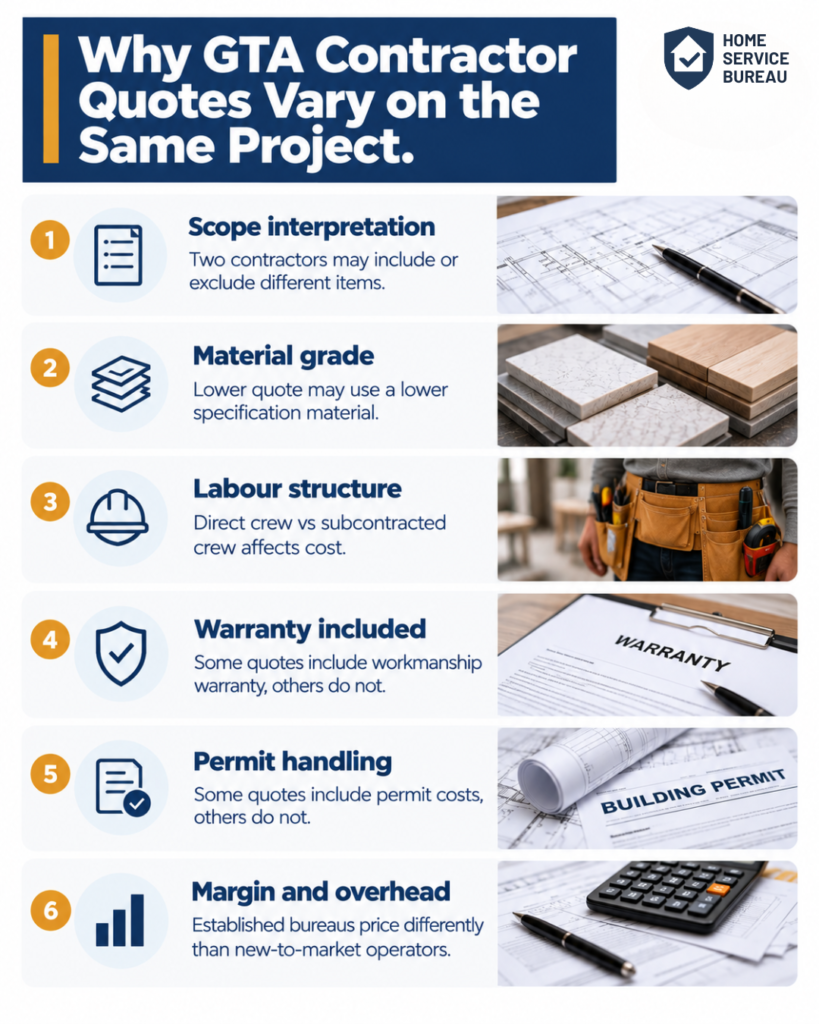
Understanding why contractor quotes vary GTA wide helps you stay calm and ask better questions. Six factors drive most price differences.
1. Scope interpretation. Two contractors may include or exclude different items. One may price demolition, cleanup and finishing work, while another may leave those out. The two quotes describe different jobs, even though you asked for the same result.
2. Material grade. A lower quote may use a lower specification material. Two quotes can name the same product category while pricing very different quality levels.
3. Labour structure. A direct crew costs differently than a subcontracted crew. The way a contractor staffs the work affects both price and accountability.
4. Warranty included. Some quotes include a workmanship warranty, and others do not. A warranty carries a real cost, and it protects you after the work ends.
5. Permit handling. Some quotes include permit costs, and others do not. A quote that leaves permits out may look cheaper until you add the missing expense.
6. Margin and overhead. Established bureaus price differently than new-to-market operators. Insurance, administration, training and support all sit inside a stable business’s pricing.
When you recognize these factors, the homeowner quote price gap GTA residents often see starts to make sense. The gap rarely signals a single villain. It more often signals different assumptions.
Why Price Alone Misleads You
Many homeowners sort quotes from lowest to highest and pick accordingly. That habit feels logical, but it ignores what each number covers. A low price that omits key items can cost more after change orders. A high price that covers everything can cost less than a cheap quote that grows.
Treat each quote as a description of a job, not just a number. When you read quotes this way, you shift from asking “which costs less?” to asking “which delivers what I need?” That change protects both your budget and your project.
Red Flags at Both Ends of the Price Range
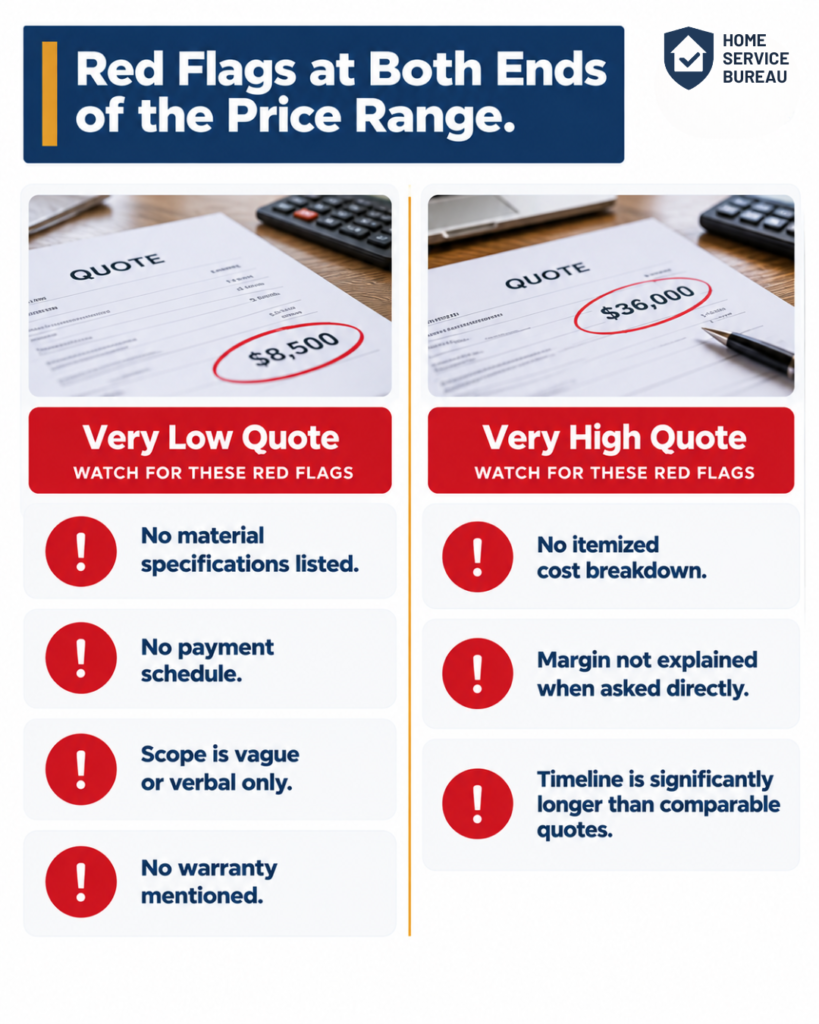
Extreme prices deserve extra scrutiny. Watch for these warning signs at each end.
Very low quote: watch for these red flags
- No material specifications listed. Without specifications, you cannot confirm what the contractor will install.
- No payment schedule. A missing schedule leaves you guessing about when and how much you owe.
- Scope is vague or verbal only. Verbal promises cannot protect you if a dispute arises.
- No warranty mentioned. Silence about warranty often means no warranty exists.
Very high quote: watch for these red flags
- No itemized cost breakdown. You deserve to see where your money goes.
- Margin not explained when asked directly. A contractor who dodges a direct pricing question creates doubt.
- Timeline is significantly longer than comparable quotes. An unexplained long timeline may signal poor planning or inflated pricing.
A red flag does not prove wrongdoing. It signals that you should ask questions before you move forward. A professional contractor answers those questions clearly and without defensiveness.
What to Do When the Quotes Still Do Not Match
Sometimes you complete the comparison and still see unexplained gaps. Take these steps next:
- Ask each contractor to revise the quote against one shared scope document.
- Request an itemized breakdown from any contractor who did not provide one.
- Ask directly why the price differs from the others, and listen to the reasoning.
- Confirm credentials, insurance and references before you decide.
- Trust contractors who explain their numbers openly.
This approach puts you in control. You guide the conversation instead of reacting to prices.
How to Compare Quotes at Different Price Points
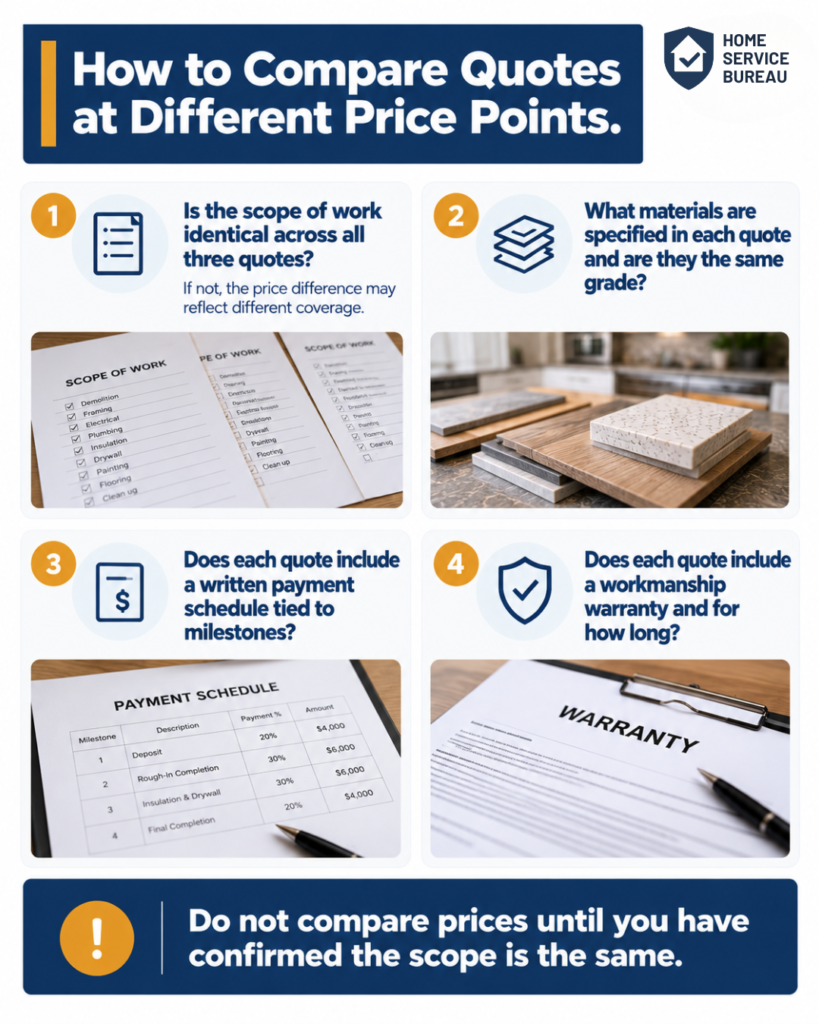
Follow a simple four-question process when you compare high and low contractor quotes Ontario homeowners receive. Do not compare prices until you have confirmed the scope is the same.
1. Is the scope of work identical across all quotes? If not, the price difference may reflect different coverage. Lay the quotes side by side and check each task line by line.
2. What materials does each quote specify, and are they the same grade? Ask each contractor for written specifications. Equal grades allow a fair comparison, and unequal grades explain much of the gap.
3. Does each quote include a written payment schedule tied to milestones? Milestone-based payments protect you because you pay as work progresses rather than far in advance.
4. Does each quote include a workmanship warranty, and for how long? Compare both the existence and the length of each warranty.
When you answer these four questions, you convert three confusing numbers into three clear descriptions. Only then can you judge value with confidence.
Checking Credentials Strengthens Every Comparison
Price comparison works best when you also verify who you are comparing. A thorough licensed contractors in Ontario quote comparison includes licensing where your trade requires it, proof of insurance and clear written terms. Always confirm licensing requirements through official provincial sources, because rules vary by trade.
The broader Canadian home services price difference often traces back to these hidden factors: coverage, credentials and business stability. A contractor who carries proper insurance and documentation spends more to operate, and that cost appears in the quote. You pay for protection, and protection matters most when something goes wrong.

Bottom Line: Compare With Confidence, Choose With Home Service Bureau
Wide price gaps feel stressful, but they give you useful information. Scope, materials, labour, warranty, permits and overhead explain most differences. When you confirm the scope, review specifications, check the payment schedule and compare warranties, you turn confusion into clarity.
Home Service Bureau (HSB) helps homeowners make that choice with more confidence. HSB connects you with verified professionals who present clear, documented estimates and meet a platform standard before they reach you. If you want to avoid the guesswork behind mismatched quotes, start your next project with HSB and compare options you can trust.
Frequently Asked Questions
1. Why do contractor quotes differ so much for the same project?
Quotes differ because contractors interpret scope differently and use different materials, labour structures, warranties, permit handling and overhead. Two quotes rarely describe identical work, so the prices rarely match.
2. Should I always choose the lowest quote?
No. A low quote may omit items, use lower-grade materials or exclude warranty and permits. Compare what each quote covers before you decide, because the cheapest price can become the most expensive outcome.
3. Is a very high quote a sign of a bad contractor?
Not necessarily. A high quote may include broader scope, better materials or stronger coverage. Ask for an itemized breakdown and an explanation of margin. A trustworthy contractor answers those questions openly.
4. What should an itemized quote include?
An itemized quote lists the scope, materials with specifications, labour, permits, payment milestones, timeline and warranty. Each line shows where your money goes, which makes comparison fair and transparent.
5. How do I confirm the scope is the same across quotes?
Write one scope document and send it to every contractor. Ask each to quote against it. Then compare task lists line by line to catch items that one quote includes and another leaves out.
6. Why does a written payment schedule matter?
A written schedule ties payments to project milestones, so you pay as work progresses. It reduces your risk of paying too much too early and gives both sides clear expectations.
7. What does a workmanship warranty protect?
A workmanship warranty covers defects in the contractor’s labour for a stated period. It gives you recourse after the project ends, so always confirm that the quote states the warranty and its length.
8. Who should I trust when quotes remain far apart?
Trust the contractor who explains pricing clearly, provides written specifications, shows proof of insurance and answers direct questions without hesitation. Open communication usually signals a reliable, accountable business.