

Knowing how to hire a contractor Canada homeowners can trust protects your money, your time, and your home. A renovation touches your biggest investment, so the person you choose matters as much as the plan itself. This guide walks you through every step, from defining your project to closing it out with confidence.
We wrote it for homeowners who want clear, practical advice. Follow the stages below and you will spot problems early, compare options fairly, and sign with peace of mind.
Why the Right Contractor Matters
A skilled professional delivers quality work, respects your schedule, and communicates openly. A poor choice leads to delays, hidden costs, and repairs that cost more than the original job.
Canadian provinces regulate construction and trades differently. Rules, permits, and licensing requirements change depending on where you live. These homeowner contractor tips Canada wide will help you stay protected wherever your home sits.
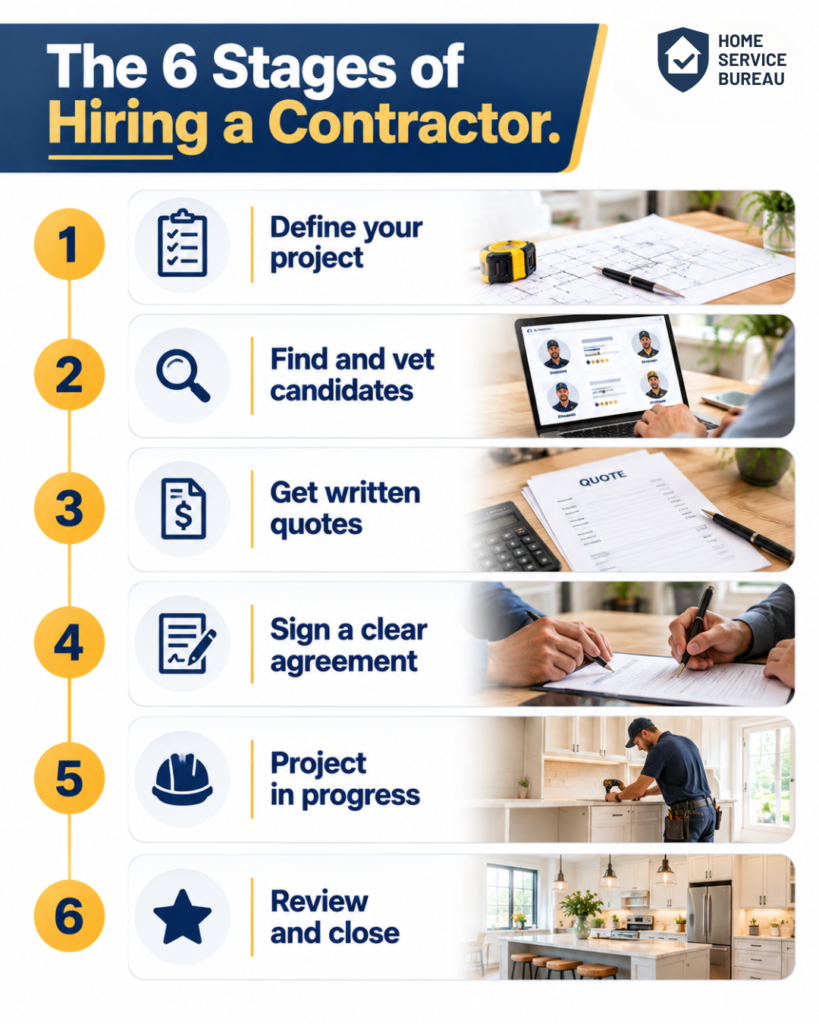
The 6 Stages of Hiring a Contractor
Every successful project follows a similar path. Use this contractor hiring guide GTA homeowners rely on, and adapt it to your own region.
Stage 1: Define Your Project
Start by writing down what you want. List your goals, must-have features, budget range, and ideal timeline. Measure the space, gather inspiration, and note any limits your home presents.
A clear scope helps every contractor quote the same job. Without it, you cannot compare prices fairly.
Stage 2: Find and Vet Candidates
Next, build a shortlist. Ask trusted friends and neighbours for recommendations, read verified online reviews, and review each candidate’s portfolio. This is how you find trusted contractor Ontario homeowners recommend, rather than relying on a single advertisement.
Then vet each candidate. Confirm their business details, check their reputation, and look for consistent positive feedback across several sources.
Stage 3: Get Written Quotes
Request at least three detailed written quotes. Each quote should break down labour, materials, permits, and timelines. A single bottom-line number tells you nothing.
Compare the quotes line by line. Differences in scope often explain differences in price, so ask questions whenever something looks unclear.
Stage 4: Sign a Clear Agreement
Never start work on a handshake. A written contract protects both sides. It should state the scope, price, payment schedule, start and finish dates, warranty terms, and a process for handling changes.
Read every page before you sign. If you do not understand a clause, ask for an explanation or seek professional advice.
Stage 5: Project in Progress
Stay involved while work happens. Visit the site, review progress against the schedule, and document changes in writing. Address concerns the moment they appear, because small issues grow quickly.
Release payments only when the agreed milestones are complete.
Stage 6: Review and Close
Walk through the finished work with your contractor. Check every detail against the contract, and list anything that needs fixing. Hold the final payment until you feel satisfied.
Collect all warranties, manuals, and permit documents. Then leave an honest review to help other homeowners.
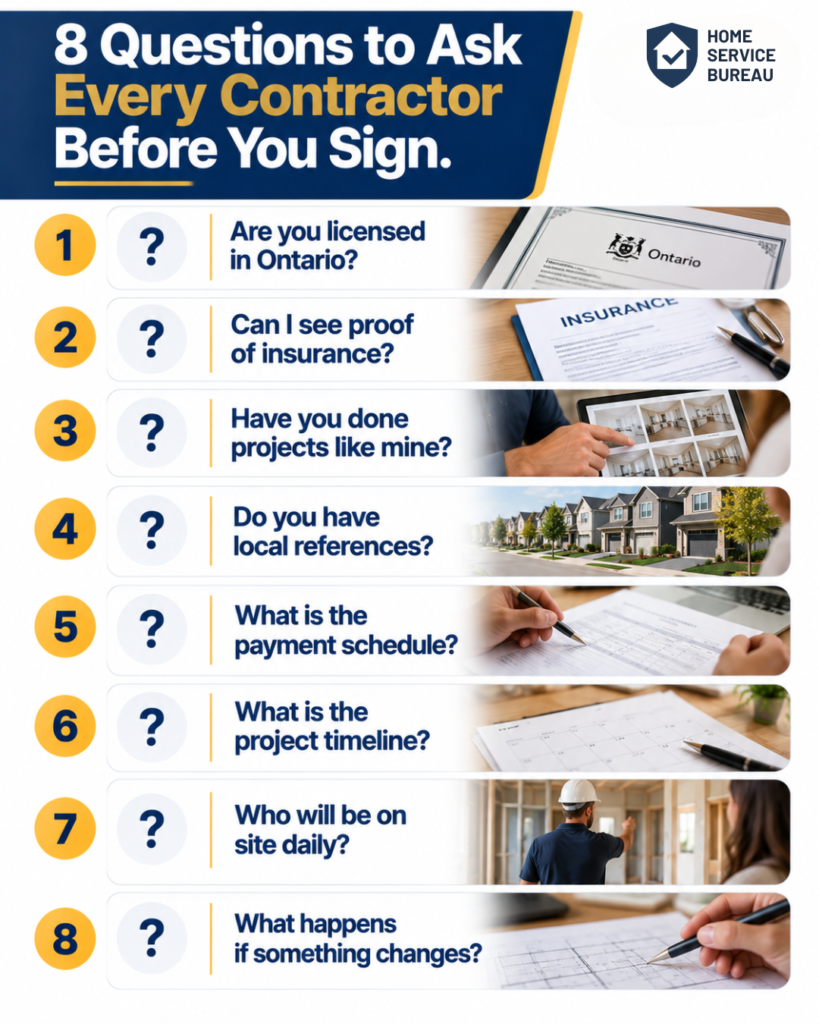
8 Questions to Ask Every Contractor Before You Sign
Good questions reveal professionalism fast. Ask these eight, and note how each contractor responds.
- Are you licensed in Ontario? Anyone who wants to hire licensed contractor Ontario homeowners can rely on must verify licences for regulated trades directly with the issuing authority.
- Can I see proof of insurance? Request current liability and workers’ compensation documents.
- Have you done projects like mine? Look at photos and ask about similar scope, size, and complexity.
- Do you have local references? Call at least two past clients and ask about quality, cleanliness, and communication.
- What is the payment schedule? Expect a modest deposit followed by payments tied to progress.
- What is the project timeline? Ask for start and completion dates in writing.
- Who will be on site daily? Know who supervises the work and who answers your calls.
- What happens if something changes? Agree on how you will handle changes to scope, price, and schedule before they occur.
Honest professionals answer these questions directly. Hesitation, vague replies, or irritation should make you pause.
Avoid These Hiring Mistakes
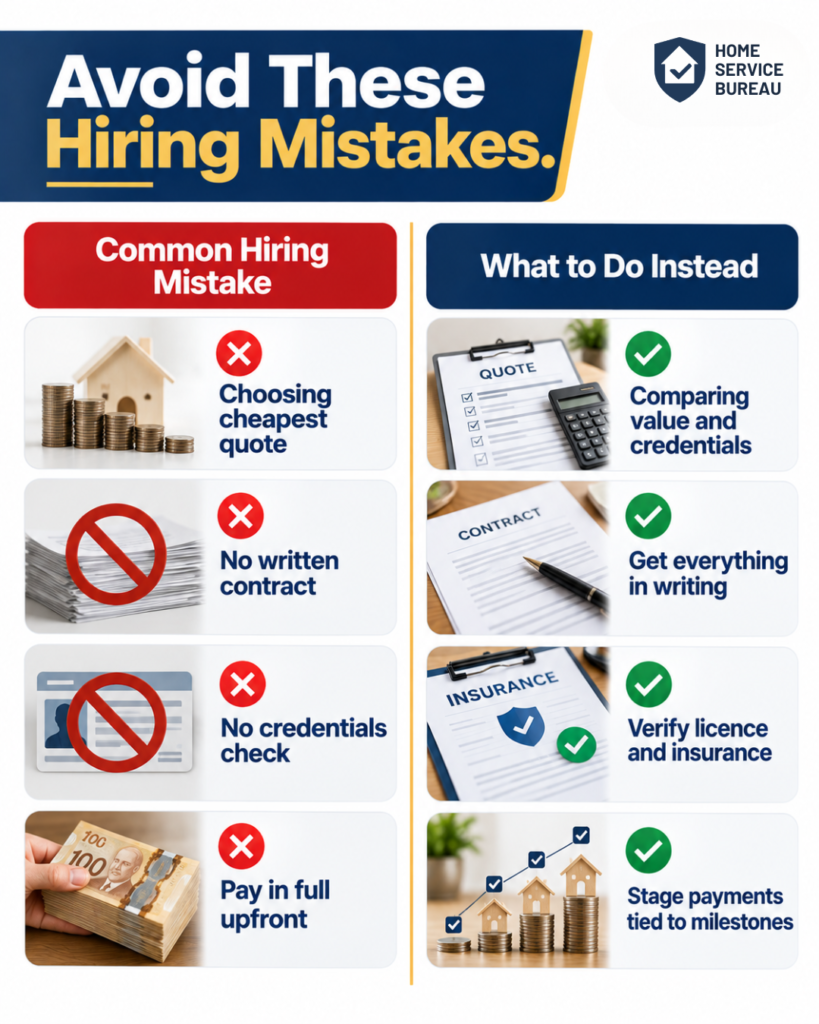
Many homeowners repeat the same errors. Avoid these four, and you will already stand ahead of most.
Choosing the cheapest quote. A low price often hides missing scope, weak materials, or corners cut later. Compare value and credentials instead of price alone.
Skipping the written contract. Verbal promises disappear when disputes arise. Get everything in writing, including every change you approve along the way.
Skipping the credentials check. Never assume a contractor holds a valid licence or insurance. Verify both yourself before work begins.
Paying in full upfront. Large upfront payments remove your leverage. Stage payments tied to milestones so the work and the money move together.
Hiring a Contractor Checklist for the GTA
Print this hiring a contractor checklist GTA homeowners can use before every signature:
- Define scope, budget, and timeline in writing.
- Shortlist at least three candidates.
- Verify licences and insurance directly.
- Call local references.
- Collect three itemized written quotes.
- Confirm permits and who will obtain them.
- Sign a detailed contract with a milestone payment schedule.
- Keep records of all changes, payments, and communication.
This checklist works well for a first-time renovation or a major upgrade. It keeps your decisions organized and your expectations clear.

Bottom Line
Hiring well comes down to preparation, verification, and clear paperwork. Define your project, vet every candidate, compare written quotes, ask the eight key questions, and protect yourself with a detailed contract and milestone payments. Follow these steps, and you will know how to hire a contractor Canada homeowners can count on.
You do not have to handle this alone. Home Service Bureau (HSB) helps homeowners connect with vetted, trusted professionals and navigate each stage of the hiring process with confidence. Visit HSB today to start your project with the right people and the right information.
Frequently Asked Questions
1. How do I start hiring a contractor in Canada?
Define your project scope, budget, and timeline first. Then research local candidates, check their credentials, and request at least three written quotes. Compare each quote line by line before you make your decision.
2. Do I need to hire a licensed contractor in Ontario?
Yes. Ontario regulates several skilled trades, and licensed professionals must perform that work. Always request the licence number and verify it with the issuing authority before any work begins. Doing so protects your safety and insurance.
3. How many quotes should I collect?
Collect at least three written quotes. This gives you a fair view of local pricing and scope. Compare materials, labour, timelines, and warranties instead of focusing only on the final number. Cheapest rarely means best.
4. Should I pay a deposit?
Yes, a modest deposit is normal, but never pay in full upfront. Tie further payments to completed milestones, and record every payment in your written contract. This keeps both sides accountable throughout the project.
5. What insurance should a contractor carry?
A reputable contractor carries liability insurance and workers’ compensation coverage. Ask for current proof, and confirm the policy covers your project dates. This protects you from liability if an accident or damage occurs.
6. What should a written contract include?
Include the full scope of work, materials, total price, payment schedule, start and finish dates, warranty terms, and a process for changes. Both parties should sign and keep a copy. Clear terms prevent most disputes.
7. How do I spot a red flag?
Watch for pressure to sign quickly, unusually low quotes, requests for large cash payments, and reluctance to show credentials. Trustworthy professionals welcome questions and provide documents without hesitation. Walk away if you feel uneasy.
8. How long does the hiring process take?
Plan for two to four weeks to define your project, gather quotes, and check references. Rushing this stage often leads to costly errors, so give yourself enough time to decide with confidence. Reputable contractors often book weeks ahead.