


Every renovation starts with excitement and a target finish date. Then reality arrives. Canadian home services project timeline delays affect almost every homeowner at some point, and they stress budgets, family routines, and trust between you and your contractor.
You cannot eliminate every delay, but you can understand why they happen, plan around them, and respond with confidence. This guide draws on common industry practice and the guidance of the Home Service Bureau (HSB). It explains what you should know before, during, and after your project.
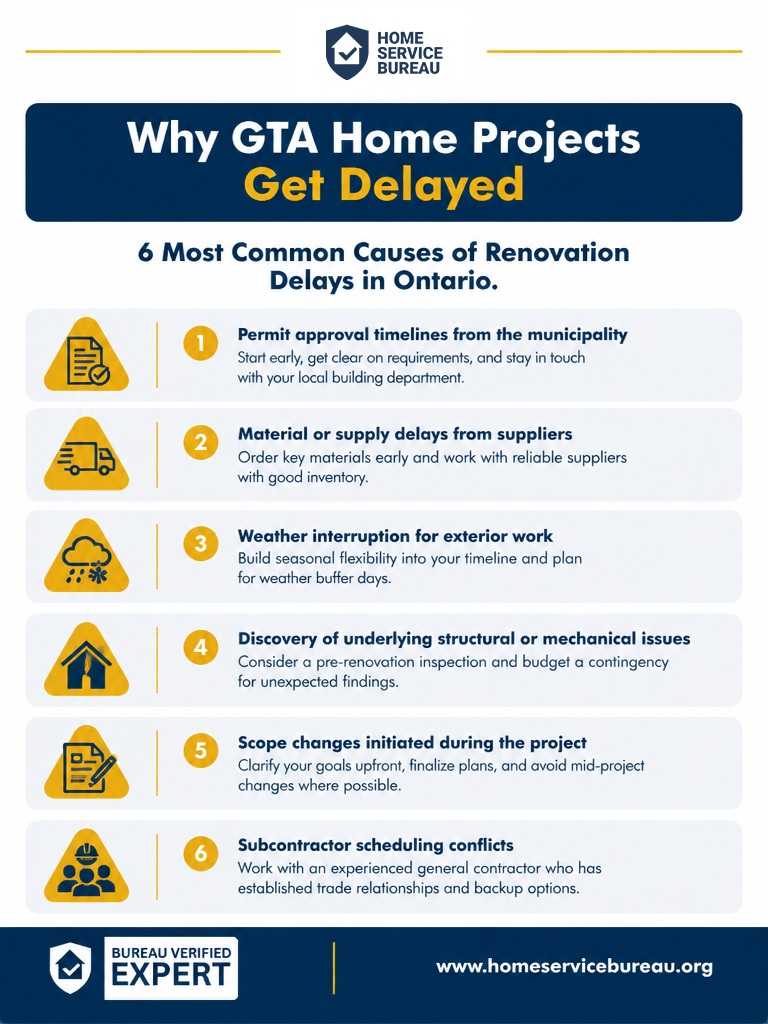
Why GTA Home Projects Get Delayed
Most homeowners assume delays signal poor workmanship. In reality, many delays come from outside factors that no one fully controls. When you ask what causes contractor delays GTA homeowners face most often, six causes appear again and again. Each one has a practical solution.
1. Permit Approval Timelines From the Municipality
Municipal offices review applications in order, and review times change throughout the year. A project that needs a building permit cannot legally start until approval arrives. Start the application early, ask the building department which documents it requires, and follow up regularly. Clear communication keeps your file moving.
2. Material or Supply Delays From Suppliers
Even well-organized trades cannot finish a job without materials. Supplier backlogs, shipping disruptions, and special-order items all slow progress. Order key materials early and work with suppliers who keep reliable inventory. Confirm delivery dates in writing before demolition begins.
3. Weather Interruption for Exterior Work
Ontario weather shifts quickly. Rain, snow, frost, and extreme heat all limit exterior work such as roofing, masonry, and concrete. Build seasonal flexibility into your schedule and plan for weather buffer days. Winter projects especially need extra room.
4. Discovery of Underlying Structural or Mechanical Issues
Walls, floors, and ceilings hide problems that no one can see until work begins. Contractors often uncover outdated wiring, moisture damage, or weak framing once they open a space. Consider a pre-renovation inspection and set aside a contingency budget for unexpected findings. This habit protects your timeline and your finances.
5. Scope Changes Initiated During the Project
Changing your mind mid-project feels natural, but each change triggers new design work, new orders, and new labour scheduling. Clarify your goals upfront, finalize your plans before work starts, and avoid mid-project changes where possible. When you must change something, document it in writing.
6. Subcontractor Scheduling Conflicts
Most renovations involve several trades, and each trade works on a tight calendar. One late finish creates a chain reaction for the next crew. Work with an experienced general contractor who maintains established trade relationships and has backup options ready.
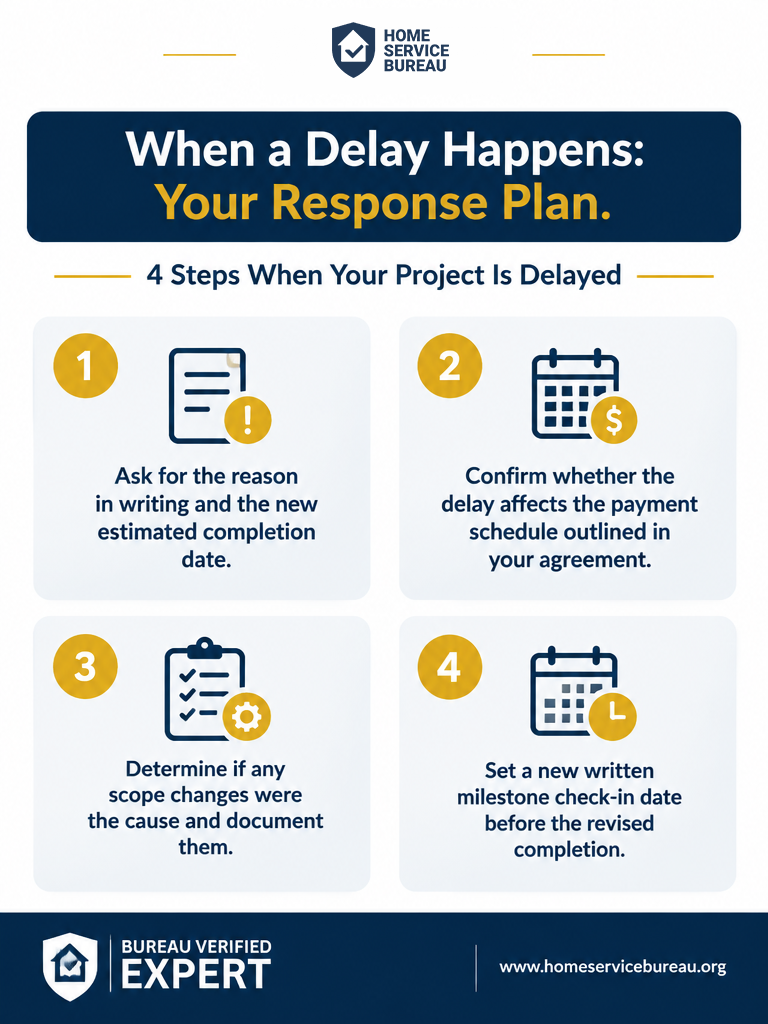
When a Delay Happens: Your Response Plan
Even with careful planning, delays can still occur. How you respond often matters more than the delay itself. A calm, documented approach protects your interests and keeps the relationship productive. Follow these four steps.
Step 1: Ask for the reason in writing, along with the new estimated completion date. A written explanation creates a clear record and encourages accountability. Verbal updates disappear quickly, but written ones give you something to reference later.
Step 2: Confirm whether the delay affects the payment schedule in your agreement. Review your contract carefully. Ask your contractor to state in writing whether payment milestones stay the same or shift. Never assume the terms adjust on their own.
Step 3: Determine whether any scope changes caused the delay, and document them. Sometimes a delay traces back to a change request from the homeowner or a new discovery on site. Identify the true cause, write it down, and agree on how both sides will handle it.
Step 4: Set a new written milestone check-in date before the revised completion. A scheduled check-in keeps everyone honest. It gives you a checkpoint to confirm progress rather than waiting until the final week to find out the project has slipped again.
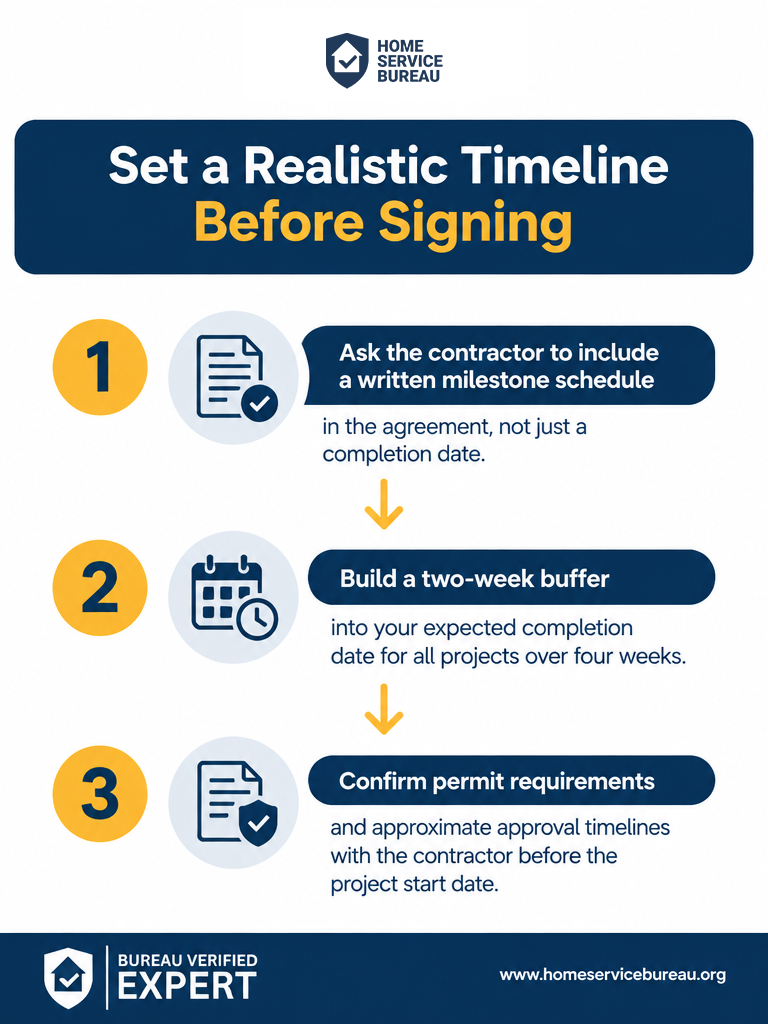
Set a Realistic Timeline Before Signing
The best time to manage homeowner project delay Ontario risks is before you sign anything. A realistic timeline protects your household and sets honest expectations on both sides. Use these three habits.
Ask the contractor to include a written milestone schedule in the agreement. A single completion date tells you very little. A milestone schedule breaks the project into stages, such as demolition, rough-in, inspection, and finishing. You can then track progress and spot slippage early.
Build a two-week buffer into your expected completion date for all projects over four weeks. Longer projects face more variables, so a buffer absorbs normal disruptions without causing household chaos. Plan your move-in dates, hosting plans, and travel around the buffered date, not the optimistic one.
Confirm permit requirements and approximate approval timelines with the contractor before the project start date. Ask which permits the work requires, who applies for them, and how long approval typically takes. This single conversation prevents many avoidable surprises.
Understanding Canadian Home Renovation Timeline Expectations
Setting accurate Canadian home renovation timeline expectations starts with understanding that every project follows a sequence. Design, permitting, ordering, construction, inspection, and cleanup all take time, and none of them can happen in a perfect straight line. Smaller updates move faster, while larger renovations involve more approvals, more trades, and more risk.
Seasonal patterns also matter. Spring and summer fill contractor calendars quickly, and winter limits certain exterior work. Ask your contractor how the season affects your specific project and plan accordingly.
Why Licensed Contractors Matter for Your Timeline
Hiring licensed contractors in Ontario timeline planning becomes easier because they understand permit rules, inspection requirements, and local regulations. They carry proper insurance, follow documented processes, and maintain relationships with reliable trades and suppliers. Those habits reduce the risks behind many delays.
Verify credentials before you sign. Ask for proof of licensing, insurance, and written references. A professional contractor welcomes these questions because they signal a serious, informed client.
How to Protect Yourself From GTA Contractors Project Delay Frustration
Beyond the steps above, a few ongoing habits keep your project on track:
- Communicate in writing and keep every message, change order, and schedule update in one organized file.
- Schedule regular site visits or progress calls.
- Raise concerns early instead of waiting for them to grow.
- Respond quickly to your contractor’s questions about selections and approvals, since homeowner decision delays also slow projects.
Good communication works in both directions. When you respond promptly and your contractor reports honestly, delays shrink and trust grows.

Bottom Line
Canadian home services project timeline delays will never disappear completely, but informed homeowners handle them far better. When you understand the common causes, set realistic expectations, document everything in writing, and hire qualified professionals, you protect your time, your budget, and your peace of mind.
The Home Service Bureau (HSB) helps homeowners across Canada make confident decisions. HSB connects you with Bureau Verified Experts, professionals who meet clear standards, and it provides practical guidance on planning, contracts, and project timelines. Before you start your next project, visit www.homeservicebureau.org to find trusted professionals and educational resources that help you plan with confidence.
Frequently Asked Questions
1. How long does a typical home renovation take in Canada?
Timelines vary by scope. Small updates often finish within a few weeks, while larger renovations can take several months. Ask your contractor for a written milestone schedule so you understand each stage before work begins.
2. What causes contractor delays in the GTA?
Permit approvals, supplier shortages, weather, hidden structural problems, mid-project scope changes, and subcontractor scheduling conflicts cause most project delays. Each factor stays manageable when you plan early and communicate clearly with your contractor every week.
3. Are licensed contractors in Ontario more reliable on timelines?
Licensed and insured professionals follow established processes, understand permit rules, and maintain trade relationships. These habits reduce schedule risks, although no contractor can eliminate every delay. Always verify credentials and references carefully before you sign.
4. Does a delay change my payment schedule?
It might. Review your agreement and confirm in writing whether the delay affects payment milestones. Never assume payment terms shift automatically; get any adjustment documented, dated, and signed by both parties before work continues again.
5. How much buffer should I add to my timeline?
Add a two-week buffer to any project longer than four weeks. This cushion absorbs permit waits, weather interruptions, and supply issues without disrupting your household plans or any other important commitments you have already scheduled.
6. Should I ask for a delay explanation in writing?
Yes. A written explanation creates a clear record, states the new completion date, and helps you spot scope changes or payment impacts. Keep every message, change order, and updated schedule in one organized digital file.
7. Can a pre-renovation inspection prevent delays?
It can reduce costly surprises. An inspection reveals structural, electrical, or plumbing problems before demolition starts, so you can budget a contingency and adjust the schedule instead of reacting mid-project, keeping your renovation moving forward.
8. How do scope changes affect timelines?
Every change adds design, ordering, and labour time to the schedule. Finalize your plans before work starts, and when you must change something, request a written change order showing the revised cost and completion date.