
A renovation puts your home, your money, and your safety in a contractor’s hands. One missed check can lead to failed inspections, surprise liability, or work you must pay to redo. A reliable contractor background check checklist Ontario homeowners can follow removes that risk before you sign anything.
This guide explains what to check, why each check matters, and how HSB’s Bureau Verified process can shorten your to-do list.
Why a Contractor Background Check Matters
Most renovation disputes start with a skipped check, not bad luck. A contractor without proper credentials can expose you to legal, financial, and safety problems that outlast the project.
A background check confirms that the person you hire is who they claim to be, holds the right approvals, and has a record of satisfied clients. It takes a little time upfront and saves a great deal of stress later. Homeowners who verify contractor credentials GTA wide protect their property and their peace of mind.
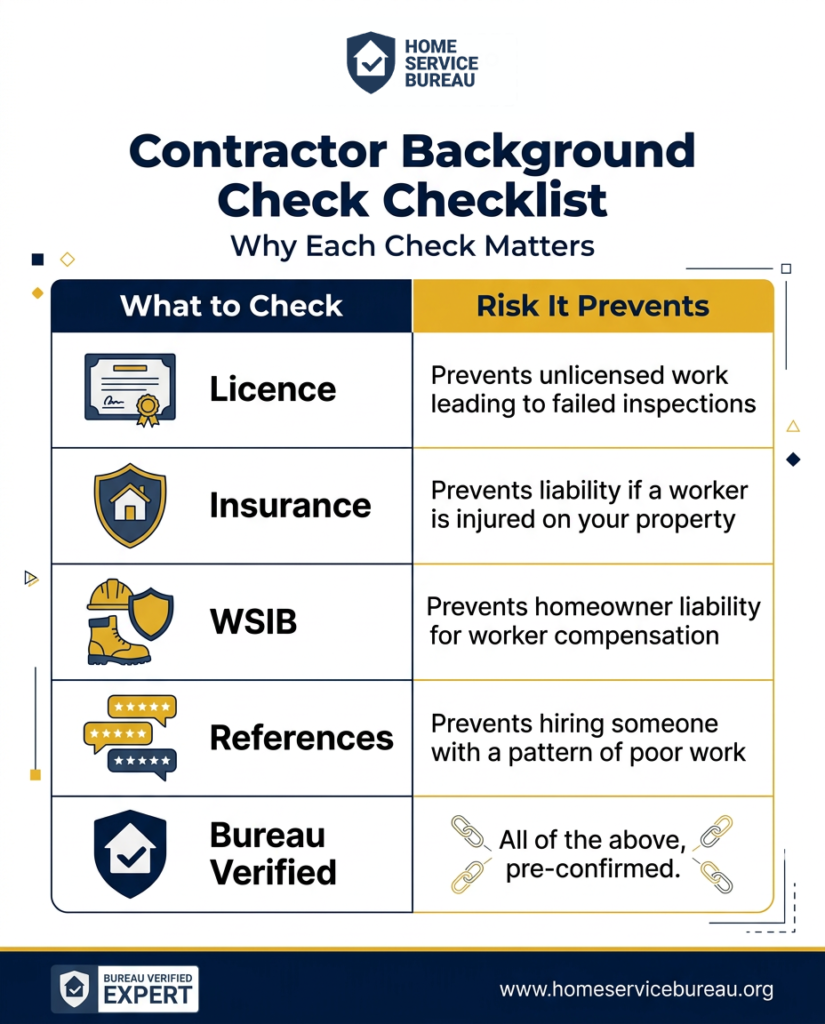
Contractor Background Check Checklist: Why Each Check Matters
Each item on your list prevents a specific risk. Use this table-style breakdown to understand what you check and what it protects you from.
Licence. A valid licence prevents unlicensed work that leads to failed inspections and costly corrections.
Insurance. Liability coverage prevents you from paying if a worker is injured or damage occurs on your property.
WSIB. Workplace safety coverage prevents homeowner liability for worker compensation claims.
References. Past client feedback prevents you from hiring someone with a pattern of poor work.
Bureau Verified status. This badge confirms all of the above in advance, so you start with checked information instead of promises.
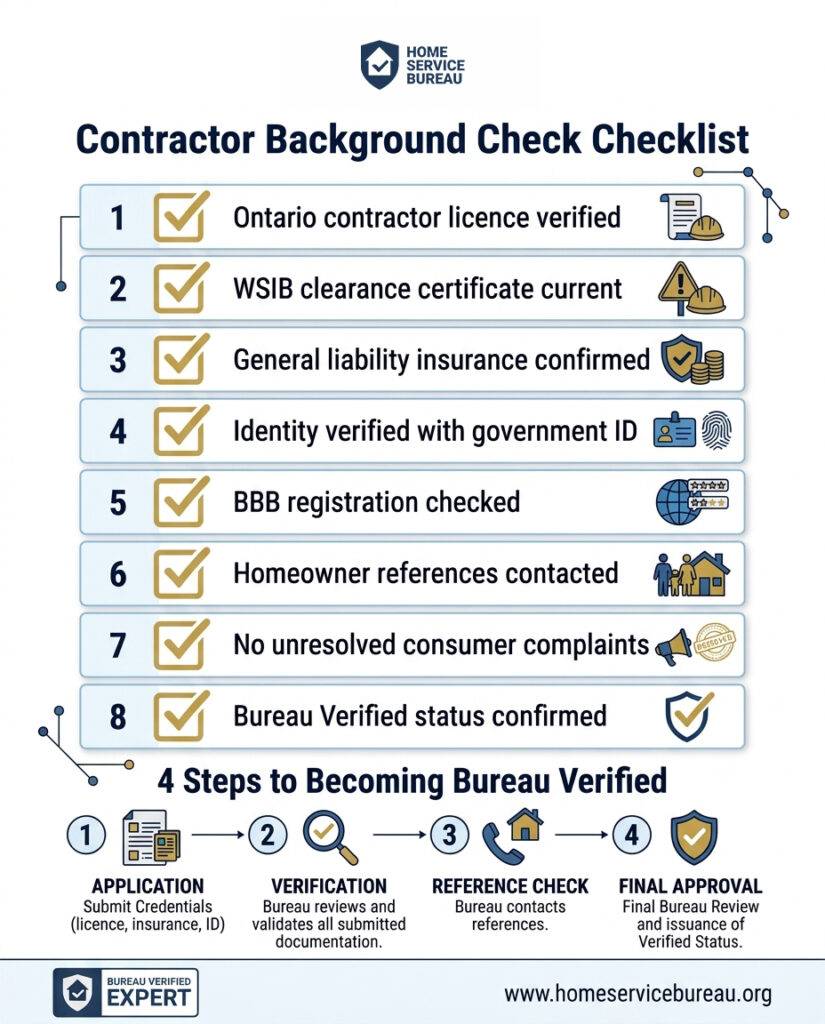
The 8-Point Contractor Background Check Checklist
Work through these eight items for every contractor on your shortlist. Treat each one as a requirement, not a suggestion.
1. Confirm the Ontario Contractor Licence
A contractor licence check Ontario homeowners can trust starts with the trade itself. Some trades require a licence or certification, while others do not. Ask which approvals apply to your project, then verify the number directly with the issuing authority. Never rely on a photocopy or a verbal claim.
2. Check the WSIB Clearance Certificate
Ask for a current WSIB clearance certificate. This document shows that the contractor has coverage for their workers. Without it, you could face liability if someone gets hurt while working at your home. Confirm the certificate is current and covers your project dates.
3. Confirm General Liability Insurance
Request proof of general liability insurance. Check the policy dates, coverage amount, and the business name on the document. Call the insurer or broker if anything looks unclear. Coverage that lapsed last month protects no one.
4. Verify Identity With Government ID
Match the person in front of you to the business on the paperwork. Ask to see government-issued photo ID and compare the name with the licence, insurance, and contract. Mismatched names signal a problem you should resolve before work starts.
5. Check Business Registration and Standing
Review the contractor’s registration and reputation with consumer protection organizations. Look for a consistent business history, a stable address, and a track record that matches what they tell you.
6. Contact Homeowner References
Call at least two past clients. Ask about quality, cleanliness, timelines, communication, and how the contractor handled problems. Honest professionals share references freely and welcome the calls.
7. Confirm There Are No Unresolved Consumer Complaints
Search for complaints and check whether the contractor resolved them. One old complaint handled well matters less than a repeated pattern left unresolved. Look at how the contractor responded, not only at what happened.
8. Confirm Bureau Verified Status
If the contractor carries a contractor verification badge GTA homeowners can recognize, confirm the status directly with the issuing organization. A badge only helps when the organization behind it checks real documents and stands behind the result.
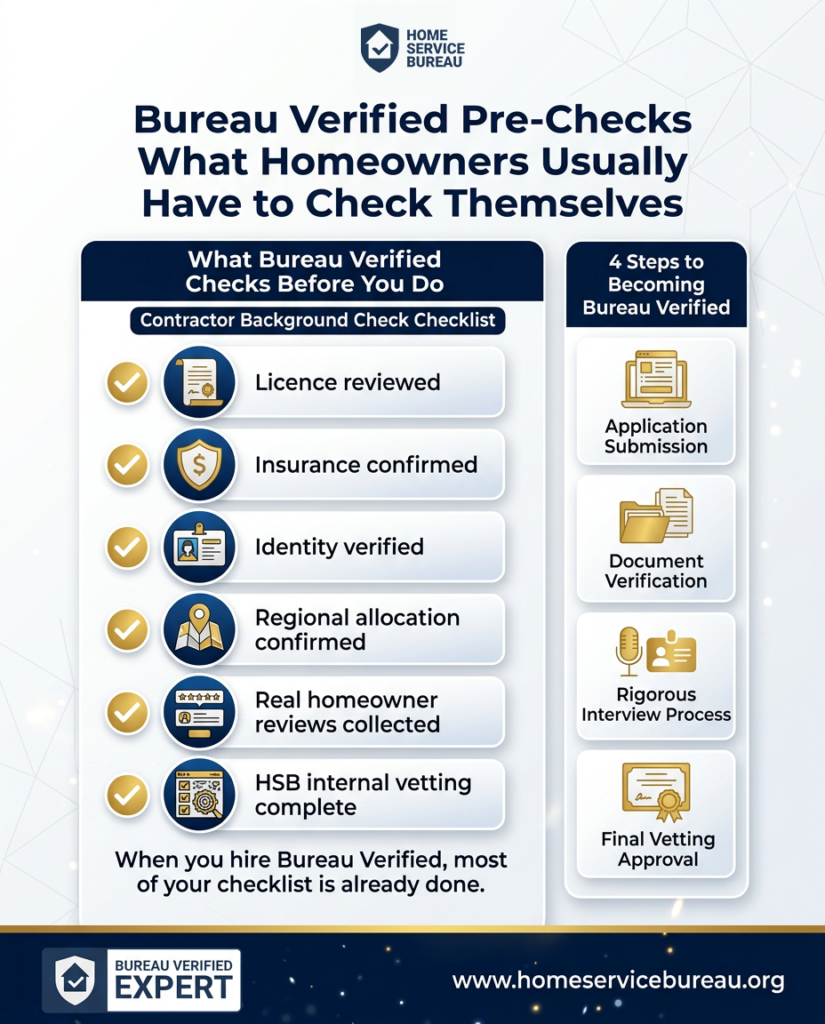
The 4 Steps to Becoming Bureau Verified
HSB holds contractors to a clear standard. Every contractor completes four steps:
- Application submission. The contractor submits credentials, including licence, insurance, and identification.
- Document verification. HSB reviews and validates every submitted document.
- Rigorous interview process. HSB speaks with the contractor and contacts references to confirm their record.
- Final vetting approval. A final review decides whether the contractor earns Verified status.
This process matters because it filters out contractors who cannot prove their claims.
How to Check Contractor Background in Canada
Requirements vary by province, so learn your local rules first. Here is how to check contractor background Canada wide in four simple moves:
- Ask for documents. Request the licence, insurance, and workers’ coverage in writing.
- Verify at the source. Contact the issuing authority yourself instead of trusting a copy.
- Listen to past clients. References reveal what paperwork cannot.
- Record everything. Keep copies of every document and note the date you verified each one.
This routine takes a few hours at most. It costs far less than fixing a failed project.
Contractor Credentials Explained Ontario Homeowners Can Use
Many homeowners feel overwhelmed by the terminology. This short contractor credentials explained Ontario section clears it up.
- Licence or certification: Proof that a contractor meets the standard required for a regulated trade.
- General liability insurance: Coverage for damage to your property or injury to others during the job.
- WSIB clearance: Proof that the contractor covers workers for workplace injuries.
- References: Direct feedback from past clients about real projects.
- Verification badge: A mark showing an organization has independently checked a contractor’s documents.
Understanding these terms helps you ask sharper questions and spot gaps quickly.
Bureau Verified Pre-Checks: What Homeowners Usually Have to Check Themselves
Most homeowners lack the time to run every check. That is where HSB’s Bureau Verified process helps. Before a contractor earns the badge, HSB completes much of the work for you.
What Bureau Verified checks before you do:
- Licence reviewed
- Insurance confirmed
- Identity verified
- Regional allocation confirmed
- Real homeowner reviews collected
- HSB internal vetting complete
When you hire a Bureau Verified contractor, most of your checklist is already done. You still ask questions and read your contract, but you start from a stronger position.
Red Flags to Watch During Your Check
Pause the process when you notice any of these signs:
- The contractor avoids showing documents or delays sending them.
- The licence, insurance, or ID shows different names.
- The contractor pressures you to sign or pay quickly.
- References are unavailable or only come from friends.
- The quote sits far below every other offer.
One red flag deserves a question. Several deserve a different contractor.

Ending Notes
A strong contractor background check checklist Ontario homeowners follow covers licences, insurance, WSIB coverage, identity, references, and complaint history. Each check blocks a specific risk, and together they protect your home, your budget, and your family.
You do not have to run every check alone. Home Service Bureau (HSB) pre-checks contractors through its four-step Bureau Verified process, so you can hire with more confidence and less guesswork. Visit www.homeservicebureau.org today to find a Bureau Verified Expert for your next project.
Frequently Asked Questions
1. What should a contractor background check include?
It should include licence verification, insurance proof, WSIB clearance, identity confirmation, business standing, homeowner references, and a complaint review. Together, these checks confirm legitimacy, safety, and a record of reliable work.
2. How do I verify contractor credentials in the GTA?
Request each document in writing, then confirm it with the issuing authority or insurer directly. Never rely on photocopies alone. Match names across all documents to confirm they belong to the same business.
3. Do all contractors need a licence in Ontario?
No. Some trades require licensing or certification, while others do not. Ask which approvals apply to your project, then verify the number with the issuing authority before work begins.
4. What is a WSIB clearance certificate?
It is a document showing that a contractor has workplace safety insurance coverage for their workers. Ask for a current certificate, because without coverage, you may face liability if someone gets hurt on your property.
5. Why does liability insurance matter?
Liability insurance covers damage to your property or injury to others during the work. Without it, you could pay for repairs or claims yourself. Always check coverage dates and the business name on the policy.
6. What does a contractor verification badge mean?
It shows that an organization has independently reviewed a contractor’s documents and background. Confirm that the badge issuer checks real credentials and verifies status directly before you rely on it.
7. How many references should I contact?
Contact at least two past clients, and ideally three. Ask about quality, timelines, communication, and problem handling. Consistent positive answers across several homeowners signal a dependable professional.
8. How does Bureau Verified save me time?
HSB reviews licences, insurance, identity, and reviews before awarding the badge. You then confirm status instead of starting every check from scratch, which shortens your checklist considerably.