

Every contractor knows the feeling. A new lead lands in your inbox, you dial immediately, and three minutes later you realise the address sits forty minutes outside your service area, the homeowner wanted a different trade entirely, and the project has no start date attached. You have just spent your most expensive resource billable time on a call that never had a chance.
Skilled operators avoid that trap by reading before dialling. When GTA contractors qualify homeowner lead before calling, they convert more conversations into site visits, quote fewer dead ends, and build a reputation for showing up prepared. This guide explains exactly how to read a lead, how to judge whether it is ready, and how to open the call so the homeowner takes you seriously from the first sentence.
Why Pre-Call Reading Separates Busy Contractors From Profitable Ones
Lead volume means very little on its own. Two contractors can receive the same twenty requests in a month. One calls all twenty cold and books four jobs. The other spends ninety seconds reviewing each request, calls fifteen with a clear plan, and books nine.
The difference is not charisma. It is preparation.
Canadian home services lead review habits work because homeowners submit requests in a specific emotional state. They have already decided something needs fixing, they have already imagined the outcome, and they are already comparing you against whoever calls next. A contractor who references the submitted details accurately signals competence immediately. A contractor who opens with “so, tell me what you need” forces the homeowner to repeat themselves and sounds interchangeable with everyone else.
Preparation also protects your margins. Reading the request tells you whether the scope fits your crew, whether the timeline fits your calendar, and whether the budget signal justifies a site visit. That is the practical core of how to qualify a lead contractor Ontario teams should apply to every inbound request.
How to Read a Homeowner Lead Before Calling
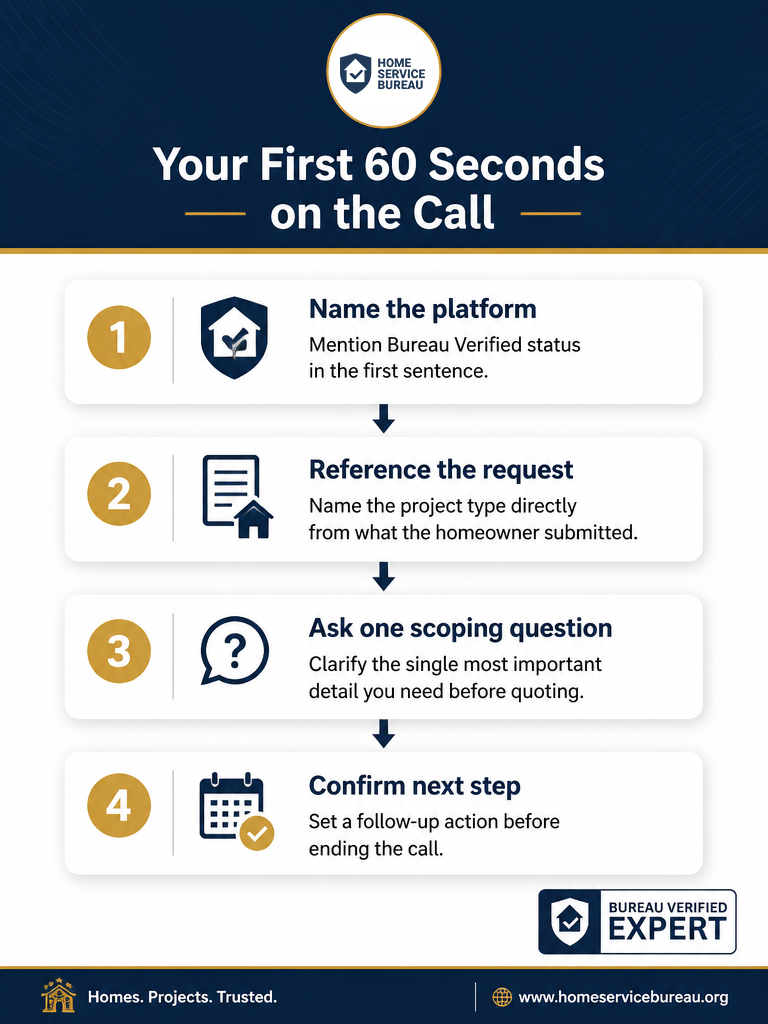
Before you dial, run these five checks. They take under two minutes and they change the entire shape of the conversation.
1. What is the exact scope of work described? Read the request twice. Identify the trade, the surface area, and the outcome the homeowner wants. Note whether they described a repair, a replacement, or a full renovation these three carry very different quoting logic.
2. Is the location inside your confirmed service region? Check the postal area against your actual travel radius, not your aspirational one. Crossing the GTA during peak hours eats margin quickly, and a job that looks profitable on paper can lose money in transit.
3. When is the homeowner looking to start? A request marked “as soon as possible” needs a different call than one marked “planning for next season”. Match your opening to their urgency.
4. Are there any special requirements or constraints noted? Condo board approvals, heritage restrictions, accessibility needs, permit requirements, pets on site, or limited parking all affect your quote and your scheduling.
5. What does the request tell you about the homeowner’s expectations? Detailed submissions usually signal research and realistic budgets. Sparse submissions often signal early-stage exploration. Neither is bad but each needs a different approach.
This is the practical discipline behind contractor pre-call lead reading GTA operators depend on. Write your answers to all five questions on a single line before you dial. That line becomes your call plan.
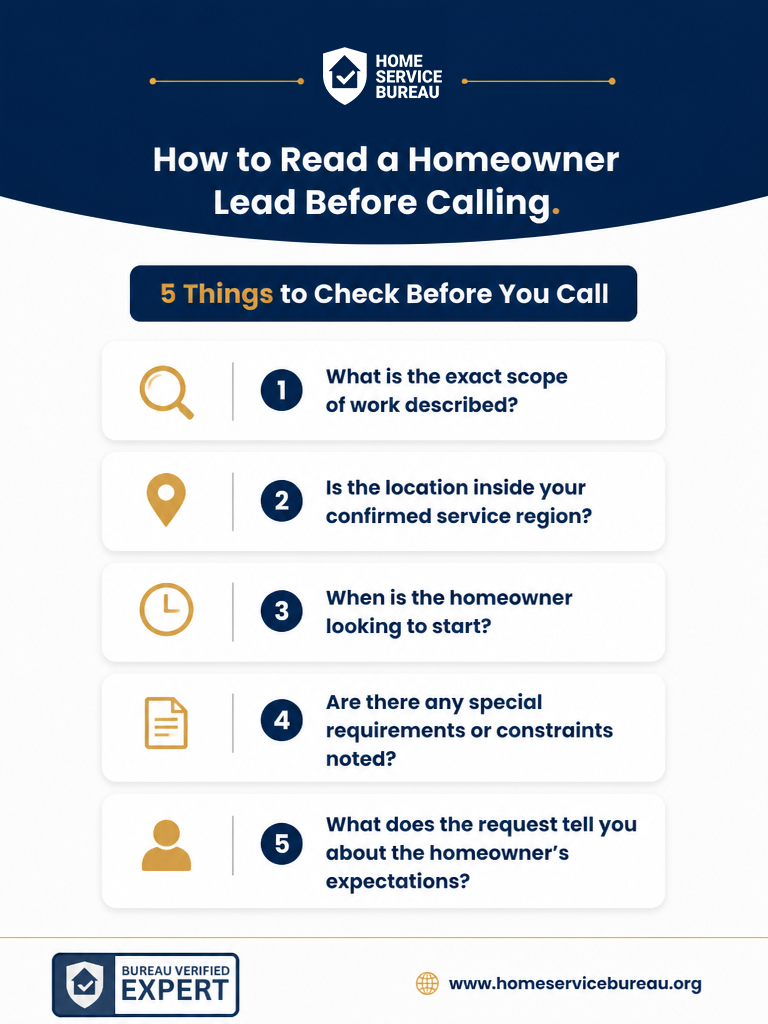
Is This Lead Ready to Call?
Not every request deserves an immediate phone call. Sort each one into two piles.
A qualified lead ready to call shows four markers. The scope reads clearly. The homeowner mentions a specific timeline. The location sits confirmed within your region. Some budget reference appears, even if approximate. Call these leads first, and call them fast. Response speed correlates strongly with win rate in home services.
A lead that needs more clarity shows the opposite pattern. The scope description stays vague. No timeline appears. The location lists broadly rather than specifically. No budget reference exists at all.
Do not discard this second pile. Prepare differently for it. Send a short written message first, asking two or three targeted questions. Then call once the homeowner replies. You will enter that conversation with information instead of guesses, and you will avoid quoting blind.
Strong licensed contractors in Ontario lead qualification processes treat these two piles as separate workflows rather than one queue. Speed serves the first pile. Clarification serves the second.
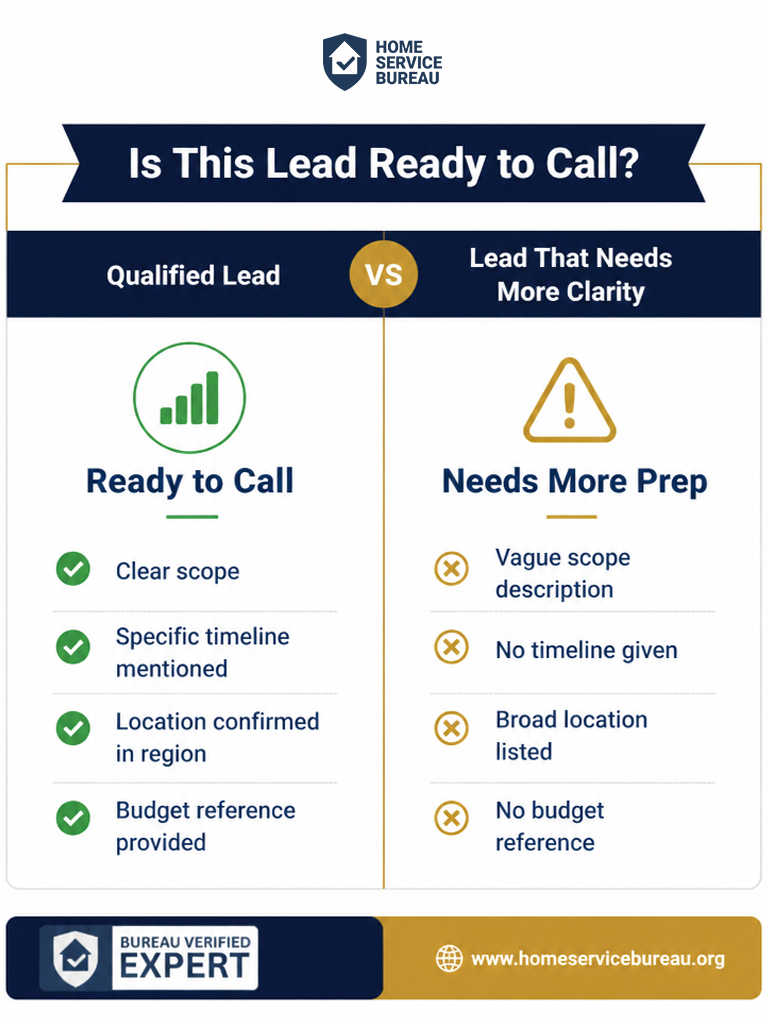
Your First 60 Seconds on the Call
The opening minute decides whether the homeowner engages or mentally moves on. Structure it deliberately.
Step 1: Name the platform. Mention your Bureau Verified status in the first sentence. Homeowners who submitted through a verification platform expect that confirmation, and it establishes credibility before you discuss anything technical.
Step 2: Reference the request. Name the project type directly from what the homeowner submitted. This proves you read it. It also saves them from repeating information and immediately separates you from contractors who call cold.
Step 3: Ask one scoping question. Just one. Clarify the single most important detail you need before quoting usually the measurement, the material preference, or the site constraint. Resist the urge to run a full interrogation on a first call.
Step 4: Confirm the next step. Set a follow-up action before ending the call. Propose a site visit window, promise a written estimate by a specific date, or agree on a callback time. A call that ends without a defined next step almost always ends the relationship.
Sixty seconds. Four moves. Homeowners notice the structure even when they cannot name it.
Build the Habit Into Your Weekly Routine
Consistency beats intensity here. Block two short windows each day for lead review rather than reacting to notifications all afternoon. Keep a simple one-page log recording each lead’s scope, region fit, timeline, and outcome. After a month, patterns emerge you will see which project types convert, which postal areas drain your margin, and which submission signals predict a signed contract.
Train anyone else who answers your phone on the same four-step opening. Nothing undermines a well-read lead faster than an unprepared person picking up the call.

Conclusion
Lead quality matters, but lead reading matters more. Contractors who spend ninety seconds understanding a request before dialling quote better, travel less, and win a noticeably higher share of the conversations they start. The five checks, the ready-to-call test, and the first-sixty-seconds structure turn an inbox of requests into a manageable, profitable pipeline.
Home Service Bureau (HSB) builds that advantage into the platform itself. Homeowner requests arrive with structured scope, location, and timeline details already captured, which makes HSB lead qualification GTA contractors far faster and far more accurate. Every listed professional carries Bureau Verified status, so you open each call with credibility already established rather than credibility still to earn. A documented request trail sits behind every submission, protecting both sides if expectations ever diverge.
Visit HSB to join as a Bureau Verified Expert and start receiving homeowner requests you can actually read before you call.
Frequently Asked Questions
1. How long should I spend reviewing a lead before calling?
Ninety seconds usually suffices. Run the five checks scope, location, timeline, constraints, and expectations then write a one-line call plan. Longer review rarely improves outcomes and delays your response time unnecessarily.
2. How quickly should I respond to a new homeowner request?
Respond within one business hour whenever possible. Homeowners typically contact several contractors at once, and the first prepared caller who references their actual request usually secures the site visit.
3. Should I call a lead with no budget information?
Yes, but prepare differently. Send a brief message with two clarifying questions first, then call once they reply. This avoids quoting blind and keeps the conversation focused on scope rather than price.
4. What if the location sits just outside my service area?
Calculate the real travel cost including peak traffic before deciding. If the project value justifies it, call and mention the travel consideration openly. If it does not, decline promptly and professionally.
5. How many questions should I ask on the first call?
Ask one scoping question on the opening call. Save detailed discovery for the site visit. Overloading a first conversation with questions makes homeowners feel screened rather than served.
6. Does mentioning verified status actually help conversion?
Yes. Homeowners who submit through a verification platform expect that confirmation. Naming it in your first sentence establishes credibility immediately and distinguishes you from unverified contractors calling the same request.
7. What should I do if a lead’s scope looks completely unclear?
Move it to your clarification workflow rather than your call queue. Send targeted written questions, wait for the reply, then call prepared. Unclear scope produces inaccurate quotes and disputes later.
8. How do I track whether my lead qualification is improving?
Log every lead with its scope, region, timeline, and final outcome. Review monthly. Watch your call-to-site-visit ratio and your site-visit-to-contract ratio both should climb steadily.