

Hiring a contractor should be straightforward: describe the job, compare a few options, pick the best fit. In practice, most homeowners make the same handful of decisions that feel safe in the moment but create real risk later. These Canadian home services homeowner contractor selection mistakes show up across the country, but they’re especially common in fast-moving, high-demand markets where speed often gets prioritized over due diligence. This article walks through exactly where the selection process breaks down and what a more reliable approach looks like.
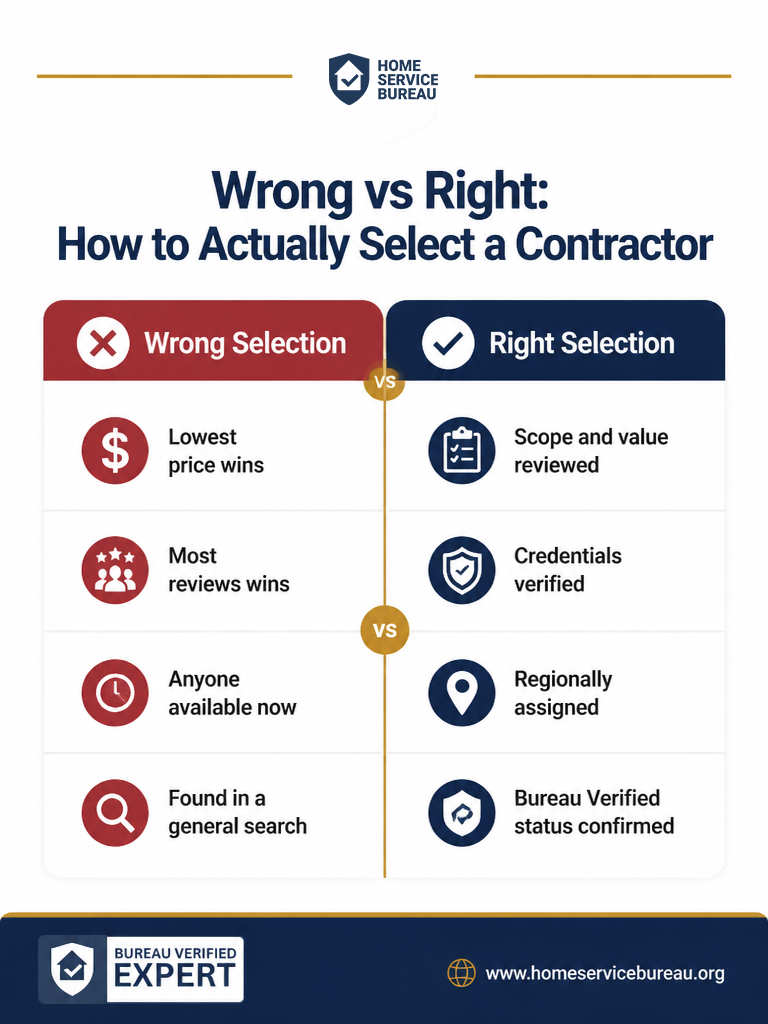
Wrong vs Right: How Homeowners Actually Select a Contractor
Most selection mistakes trace back to a small set of default habits. Homeowners tend to let price alone determine the winner, assuming the lowest quote represents the best deal. In reality, a low bid without a reviewed scope of work often signals corners that will get cut somewhere down the line materials, labor hours, or follow-up service.
A second common habit is treating star ratings as the final word. Review volume and average scores measure customer sentiment, not qualifications. A contractor can have glowing reviews and still lack proper credentials for a specific type of job. Similarly, many homeowners default to whichever contractor is available immediately rather than the one best suited to the work, and they often find contractors through a general online search with no verification layer attached.
The right approach flips each of these defaults. Instead of picking the lowest price, homeowners should review the full scope and value behind a quote. Next, instead of relying on reviews alone, they should confirm credentials directly. Instead of hiring based on availability, they should look for contractors regionally assigned or vetted through a structured process. Instead of a cold search, they should look for verified status confirmed by an independent source. This shift from reactive selection to reviewed selection is where most of the risk gets removed from the process.
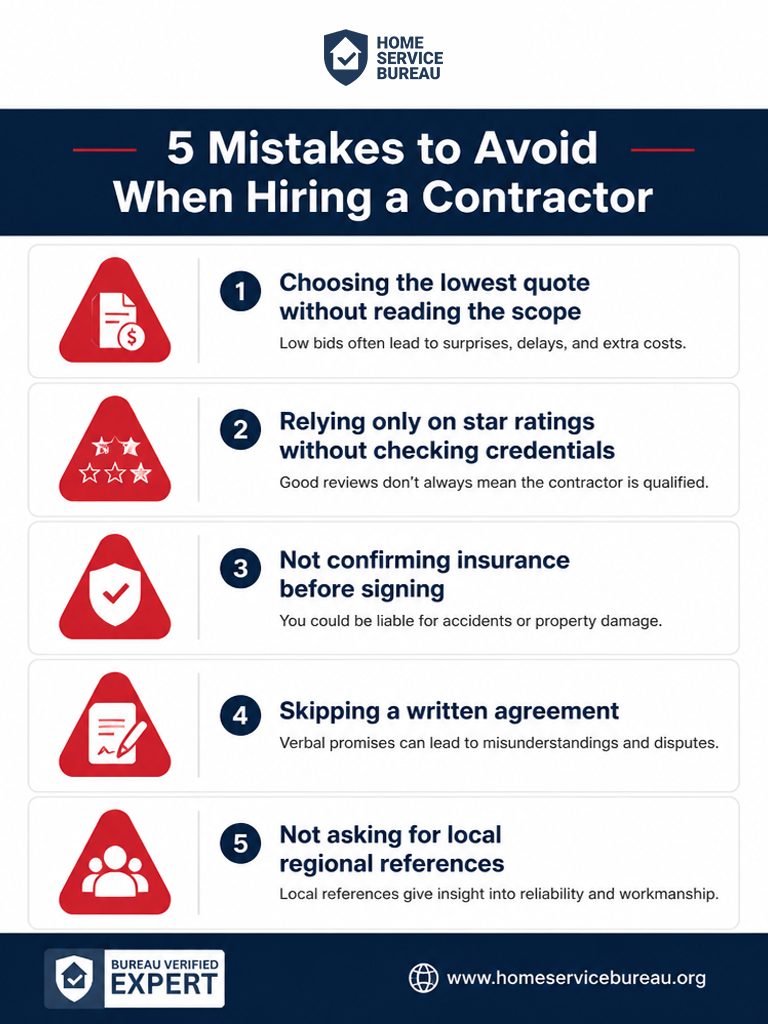
5 Mistakes to Avoid When Hiring a Contractor
Beyond the general Wrong vs Right framework, five specific mistakes appear again and again in common homeowner contractor mistakes Canada-wide data and industry feedback.
Choosing the lowest quote without reading the scope. Low bids frequently lead to surprises, delays, and additional costs once work is underway, because what’s excluded from the quote matters as much as what’s included.
Relying only on star ratings without checking credentials. Positive reviews reflect past customer experience, not licensing status, insurance coverage, or technical qualification for the specific job at hand.
Not confirming insurance before signing. Without verified insurance, homeowners can end up personally liable for accidents or property damage that occur during the project.
Skipping a written agreement. Verbal promises are difficult to enforce and frequently lead to misunderstandings about timeline, cost, or scope once the work begins.
Not asking for local regional references. References from the same area offer real insight into a contractor’s reliability and workmanship, rather than relying on out-of-context reviews.
Each of these mistakes is avoidable, but avoiding them requires homeowners to slow down at exactly the point where they’re often most eager to move fast right after getting a quote they like.
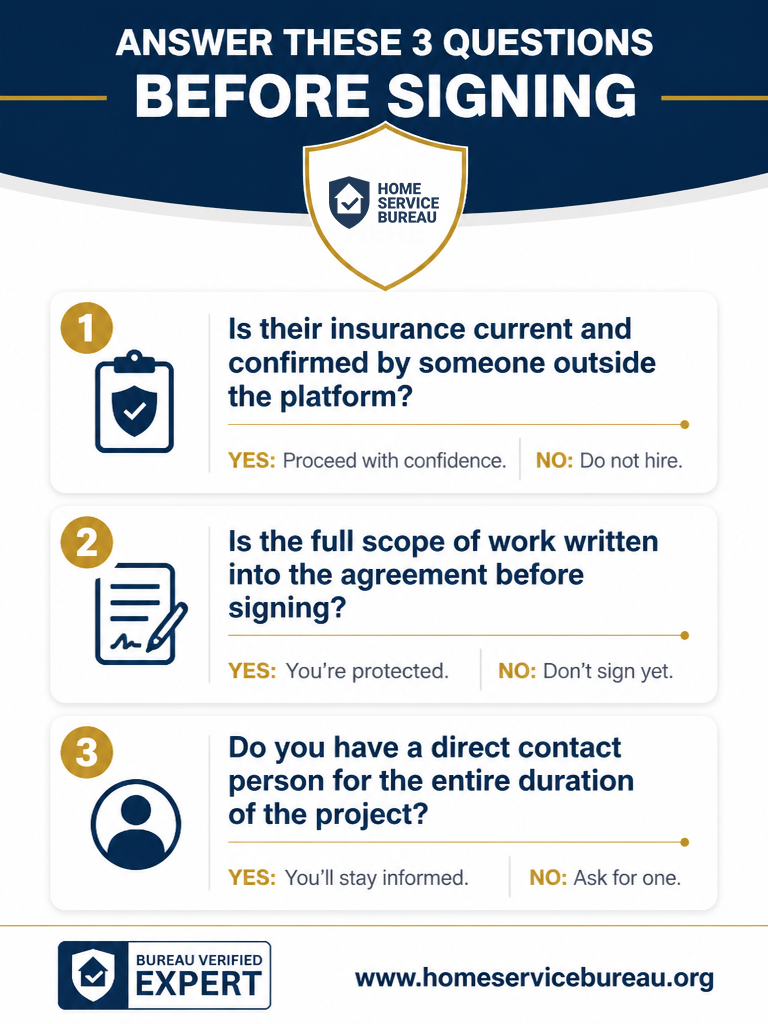
Answer These 3 Questions Before Signing
Before any contract gets signed, three questions can catch most of the risk described above.
Is the contractor’s insurance current and confirmed by someone outside the platform? If yes, homeowners can proceed with reasonable confidence. If no, that’s a clear signal not to hire until it’s resolved.
Is the full scope of work written into the agreement before signing? A written scope protects both parties. Without one, homeowners should not sign until every detail materials, timeline, and cost is documented.
Is there a direct contact person for the entire duration of the project? Having one consistent point of contact keeps homeowners informed throughout the job. If there isn’t one, it’s worth asking for one before work begins.
These three questions take only a few minutes to ask but eliminate a large share of the disputes that arise after a project is already underway.
GTA Contractors and Homeowner Misconceptions
GTA contractors homeowner misconceptions tend to be amplified by how competitive the Greater Toronto Area market is. With a high volume of contractors bidding for the same jobs, homeowners are often flooded with quotes within minutes of submitting a request, which pushes price comparison to the forefront and pushes credential verification to the background.
The homeowner selection process GTA residents typically use benefits from slowing down, even briefly, before committing. A few extra minutes spent confirming insurance, reviewing the full scope, and checking verified status can prevent costly problems that take far longer to resolve than the time saved by hiring quickly.
What Homeowners Get Wrong About Hiring in Ontario
Zooming out to a provincial level, what homeowners get wrong hiring contractor Ontario-wide often comes down to a misunderstanding about how licensing and verification actually work. Many homeowners assume that if a contractor is listed on a popular platform, that listing itself implies vetting. In many cases, platforms simply list contractors without independently confirming credentials.
This is where the distinction around licensed contractors in Ontario hiring errors becomes important. Hiring errors rarely stem from a contractor being intentionally dishonest they more often stem from a homeowner never actually confirming licensing, insurance, or scope details before work began. Closing that verification gap is the single most effective change homeowners can make to their hiring process.

Bottom Line
The pattern behind Canadian home services homeowner contractor selection mistakes is consistent: price gets prioritized over scope, ratings get prioritized over credentials, and speed gets prioritized over verification. Correcting that pattern doesn’t require a complicated process it requires asking the right questions before signing and confirming status through an independent source rather than taking a listing at face value.
Home Service Bureau addresses this gap directly. Every contractor carrying Bureau Verified status has credentials confirmed before ever reaching a homeowner, removing the guesswork from the hiring process. Homeowners looking for a more reliable way to hire can learn more about how Bureau Verified status works at homeservicebureau.org.
Frequently Asked Questions
1. Why shouldn’t homeowners choose the lowest quote automatically?
Low quotes often exclude parts of the scope, leading to added costs later. Reviewing the full scope and value behind a quote gives a clearer picture of what’s actually included.
2. Do good reviews guarantee a qualified contractor?
No. Reviews reflect past customer experience but don’t confirm licensing, insurance, or technical qualifications. Credentials should always be checked independently, regardless of review scores.
3. What happens if a contractor’s insurance isn’t confirmed?
Homeowners risk personal liability for accidents or property damage during the project. Confirming insurance through an outside source before signing protects against this financial exposure.
4. Is a verbal agreement ever sufficient for a home services project?
No. Verbal agreements frequently lead to disputes over timeline, cost, or scope. A written agreement, signed before work begins, protects both the homeowner and the contractor.
5. Why do regional references matter more than general reviews?
Local references reflect a contractor’s actual reliability and workmanship within a specific area, offering more relevant insight than reviews collected from unrelated regions or projects.
6. Why is the GTA market especially prone to rushed hiring decisions?
High contractor competition floods homeowners with quotes quickly, encouraging fast price comparisons over careful verification, which increases the risk of overlooking credentials or scope details.
7. Does being listed on a platform mean a contractor is vetted?
Not necessarily. Many platforms list contractors without independently verifying credentials, so homeowners should confirm licensing and insurance status themselves before hiring.
8. What’s the fastest way to reduce hiring risk before signing a contract?
Confirm insurance independently, review the full written scope, and ask for local references. These three steps address most common contractor selection mistakes efficiently.