

Hiring the wrong contractor costs you money, time, and peace of mind. A portfolio shows you what a contractor can actually deliver, so you need to know how to evaluate contractor portfolio Ontario homeowner projects before you sign anything. A strong portfolio reveals skill, consistency, and honesty. A weak one hides problems until your renovation is already under way.
This guide walks you through a practical, step-by-step process. You will learn what to check, what to ask, and which warning signs to watch for.
Why a Portfolio Review Matters for Ontario Homeowners
A portfolio is more than a gallery of nice photos. It is a record of a contractor’s real abilities. When you assess contractor work history GTA homeowners rely on, you see how a business handles timelines, materials, and finishing details.
Ontario’s climate, building codes, and housing styles also shape the work. A contractor who understands local conditions builds better results. For that reason, a careful portfolio review protects your investment and helps you compare options fairly.
Our experience helping homeowners screen service providers shows one clear pattern. People who review portfolios thoroughly report fewer surprises, fewer disputes, and better final results.
Portfolio Evaluation Checklist for Ontario Homeowners
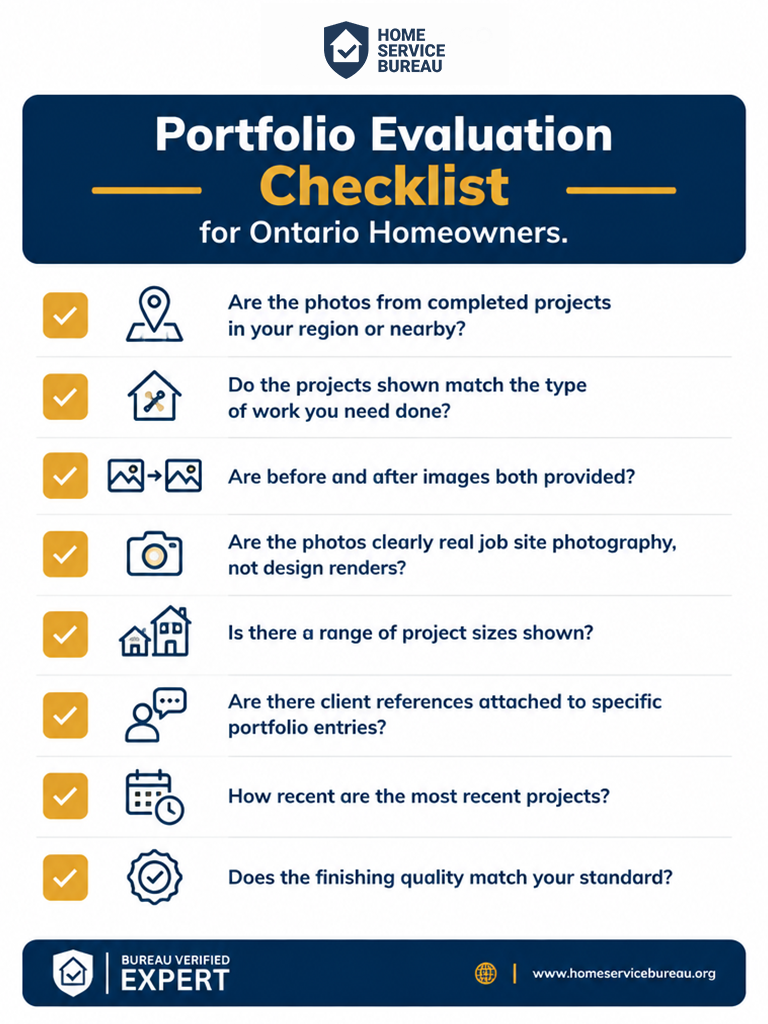
Use this checklist as your starting point. Each item addresses a specific risk, and together they give you a complete picture.
1. Check whether the photos come from your region. Local projects show that the contractor understands regional codes, weather, and permit processes. A thorough GTA contractors portfolio review begins with location, so confirm the work happened in or near your area.
2. Match the projects to your type of work. A contractor may excel at one trade and struggle in another. Make sure the portfolio includes the kind of job you need done.
3. Look for before and after images. Both images together prove the transformation is real. After photos alone tell you very little about the starting conditions or the scale of the work.
4. Confirm the photos show real job sites. Genuine photography shows natural lighting, everyday surroundings, and minor imperfections. Design renders look flawless because someone created them on a computer, not because a crew built them.
5. Look for a range of project sizes. A contractor who handles small repairs and large renovations shows flexibility and capacity. This range also suggests the business can scale its effort to your budget.
6. Find client references tied to specific projects. A reference attached to a particular entry carries far more weight than a general testimonial. You can contact that homeowner and verify the story.
7. Check how recent the latest projects are. Recent work shows the contractor is active and current with modern methods and materials. Old portfolios may reflect a business that has changed or slowed down.
8. Judge the finishing quality against your standard. Study corners, seams, paint lines, and joins. Finishing details reveal care and craftsmanship more clearly than the overall look of a room.
Combine the Portfolio With a Licensing and Credential Check
Photos alone never tell the whole story. A licensed contractors in Ontario portfolio check should pair visual evidence with verified credentials. Ask for proof of the required trade licences, liability insurance, and workplace safety coverage. Then confirm that the details match the business name shown on the portfolio.
Many trades in Ontario require specific certifications, and some work needs permits. A contractor who welcomes these questions shows professionalism. A contractor who dodges them gives you an early warning.
Ask These 5 Questions About the Portfolio
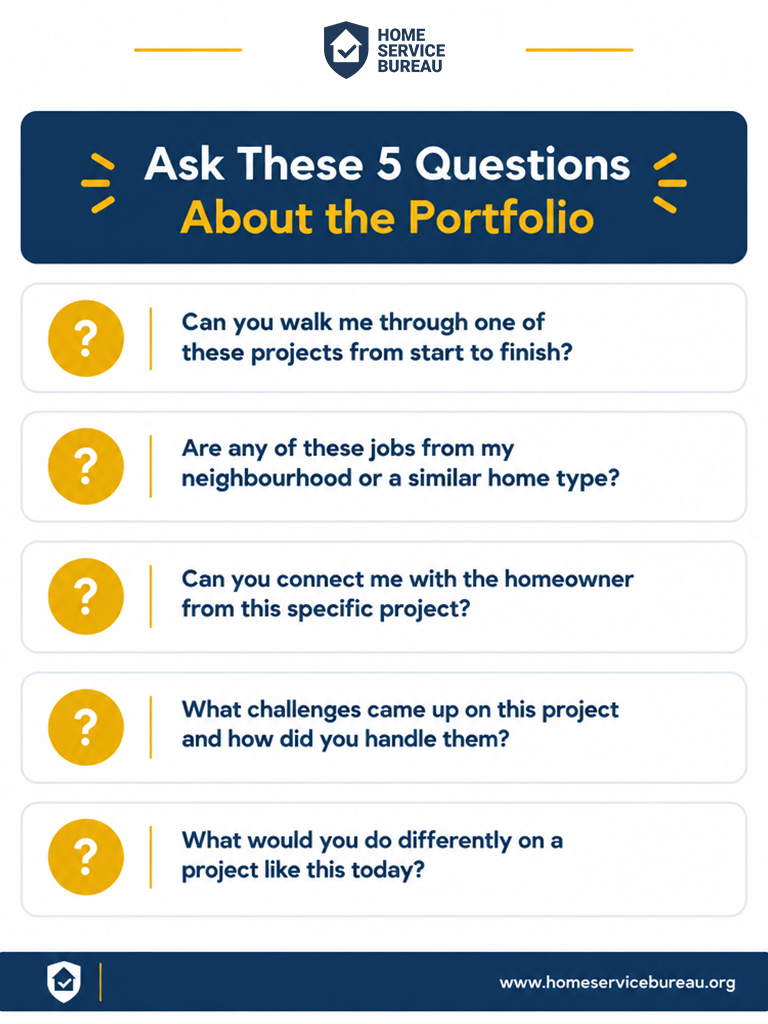
A conversation reveals what photos cannot. Ask these five questions, and listen closely to both the content and the confidence of each answer.
1. Can you walk me through one of these projects from start to finish? A real contractor describes the planning, the schedule, the trades involved, and the final inspection without hesitation. Vague answers suggest limited involvement.
2. Are any of these jobs from my neighbourhood or a similar home type? Similar homes mean similar challenges. This question also confirms that the contractor knows your local conditions.
3. Can you connect me with the homeowner from this specific project? Reliable contractors say yes. Then call the homeowner and ask about communication, cleanliness, budget accuracy, and deadlines.
4. What challenges came up on this project, and how did you handle them? Every renovation hits obstacles. Honest contractors describe problems openly and explain their solutions. Anyone claiming a flawless job deserves extra scrutiny.
5. What would you do differently on a project like this today? This question tests humility and growth. Strong professionals reflect on their work and keep improving their methods.
Green Flags and Red Flags in a Contractor Portfolio
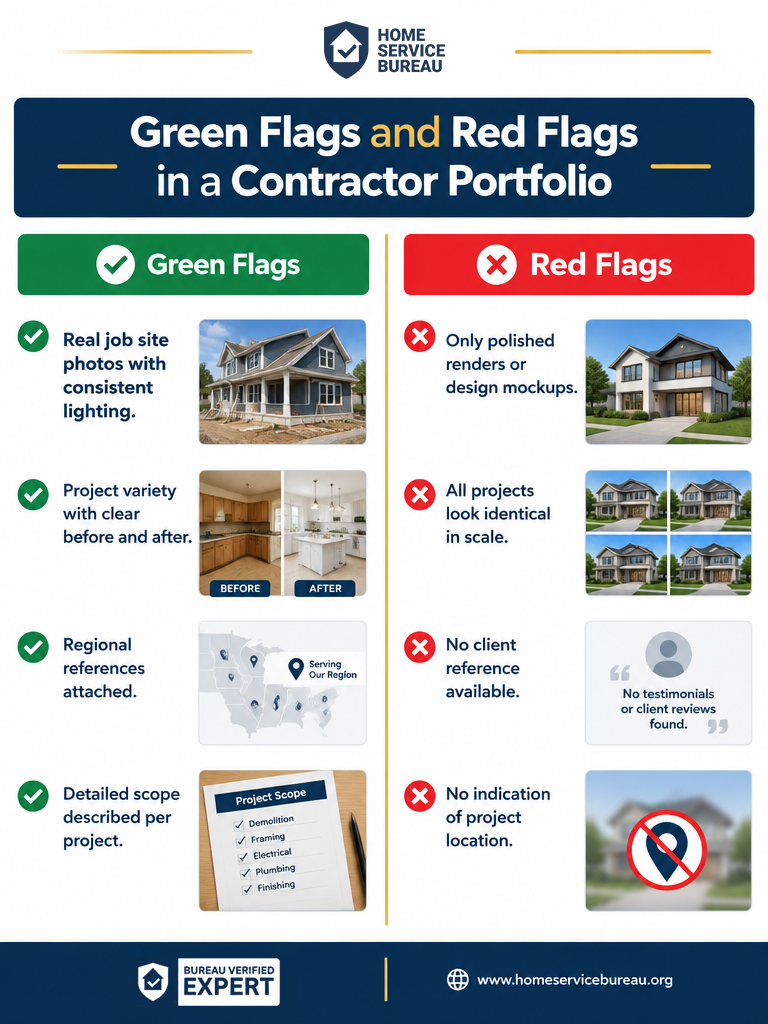
Once you collect the evidence, sort it into positive and negative signals. This simple sort makes your final decision much easier.
Green Flags to Welcome
- Real job site photos with consistent lighting. Authentic images show a natural progression from start to finish.
- Project variety with clear before and after images. Variety proves skill across different situations.
- Regional references attached. Local clients confirm the contractor works reliably in your area.
- Detailed scope described for each project. A clear scope shows planning discipline and transparent communication.
Red Flags to Avoid
- Only polished renders or design mockups. These images show what could happen, not what did happen.
- Every project looks identical in scale. Limited range may signal limited experience.
- No client references available. A missing testimonial or review often means the contractor cannot deliver proof of satisfaction.
- No indication of project location. Without a location, you cannot verify the work or contact anyone connected to it.
How to Verify What You See
Take extra steps when you evaluate contractor portfolio Ontario homeowner projects seriously. First, request a site visit to a finished project if the owner agrees. Second, read independent reviews on trusted platforms and compare them with the portfolio. Third, ask for written quotes from at least three providers and compare their scopes line by line.
This cross-checking also strengthens your Canadian home services contractor past work review. Consistent stories across photos, references, and reviews build trust. Contradictions, on the other hand, signal that you should keep looking.

Conclusion: Choose With Evidence, Not Assumptions
A thorough portfolio review turns a risky decision into an informed one. You check the photos, verify the credentials, ask the right questions, and weigh the green flags against the red flags. Each step reduces your risk and raises your confidence.
Home Service Bureau (HSB) makes this process easier for Ontario homeowners. HSB helps you connect with vetted, verified professionals and gives you practical guidance for comparing providers. Visit www.homeservicebureau.org to explore trusted resources, and start your next project with a contractor you can trust.
Frequently Asked Questions
1. What is the first step to evaluate a contractor’s portfolio in Ontario?
Start by confirming that the photos show completed projects in your region that match your type of work. Then verify that the images come from real job sites, not design renders.
2. How many portfolio projects should I review before hiring?
Review at least three to five projects that resemble your job. This sample shows consistency in quality, scope, and finishing, and it gives you enough detail to ask meaningful follow-up questions.
3. Are before and after photos really necessary?
Yes. Before and after photos prove the actual transformation and show the starting conditions. After images alone can hide poor planning, limited scope, or work that someone else completed.
4. How can I tell real job site photos from design renders?
Real photos show natural lighting, normal surroundings, and small imperfections. Renders look unnaturally perfect, with flawless landscaping and identical angles. Ask the contractor for additional photos from different stages if you feel unsure.
5. Should I contact past clients listed in a portfolio?
Absolutely. Speaking with a past client reveals how the contractor communicates, manages budgets, and meets deadlines. Ask about cleanliness, problem handling, and whether the final result matched the original quote.
6. Does a contractor need a licence to appear credible in Ontario?
Many trades require licences or certifications, and all contractors should carry proper insurance. Request written proof, verify it independently, and confirm that the credentials match the business name shown in the portfolio.
7. How recent should the projects in a portfolio be?
Look for projects completed within the last two to three years. Recent work shows the contractor stays active, understands current building codes, and uses modern materials and methods.
8. What is the biggest red flag in a contractor portfolio?
The biggest red flag is a portfolio with no verifiable references or project locations. Without them, you cannot confirm that the work exists, that the contractor completed it, or that clients felt satisfied.