


Renovating a home rarely involves just one contractor. Most projects bring together several trades carpenters, electricians, plumbers, HVAC technicians, and finishing crews all working in sequence toward the same goal. Understanding GTA homeowner multi-trade renovation expectations helps you plan realistically, avoid costly missteps, and keep a project moving smoothly from demolition to final walkthrough.
A multi-trade renovation is different from a single-trade job in almost every way. It involves more scheduling complexity, more communication touchpoints, and more opportunities for small issues to become expensive delays. This guide walks through what typically happens at each stage, why coordination matters so much, and what you can do to stay in control of the process.
Why Multi-Trade Renovations Require More Planning
A single-trade job, like replacing a bathroom faucet, has one contractor, one timeline, and one point of contact. A multi-trade renovation stacks several of these variables on top of each other, and that changes the entire dynamic of the project.
Trade sequencing matters more than most homeowners realize
Mechanical systems must go in before walls close. Electrical work generally precedes flooring installation. When the order is wrong, crews end up redoing finished work, which wastes both time and money. This is one of the clearest arguments for working with licensed contractors in Ontario multi-trade project settings who understand proper sequencing and building code requirements.
Multiple points of contact create room for miscommunication
Each trade operates on its own schedule and communicates in its own way. Without a coordinated plan, updates get lost between crews, and small delays start to compound into bigger ones. A framing delay of a few days can push back mechanical rough-ins, which then pushes back inspections, and so on down the line.
Cost surprises show up more often in multi-trade work
Opening up walls, ceilings, and floors across several systems increases the odds of finding something unexpected outdated wiring, moisture damage, or plumbing that doesn’t meet current code. These discoveries are a normal part of Canadian home services renovation stages, not a sign that something went wrong with your planning.

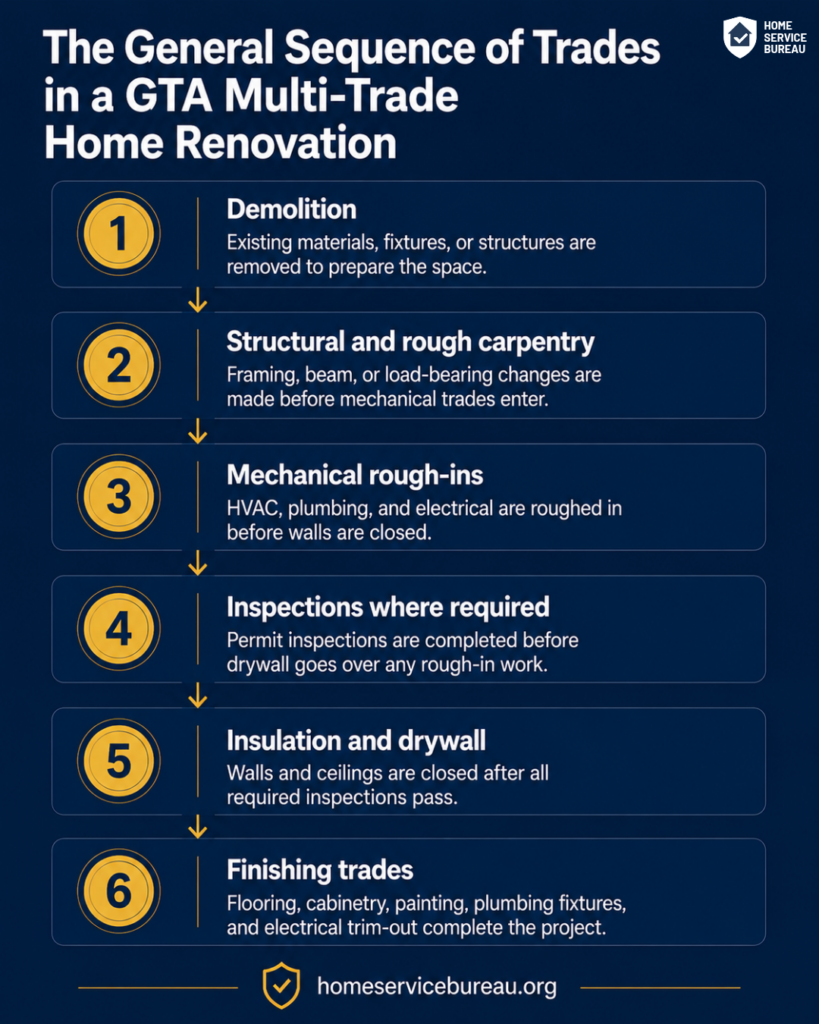
The General Sequence of Trades in a GTA Multi-Trade Home Renovation
Every renovation has its own quirks, but most multi-trade projects in the region follow a fairly predictable order. Knowing this Canadian home services renovation stages in advance makes it easier to understand why certain trades show up when they do, and why the schedule can’t simply be compressed by having everyone work at once.
- Demolition Existing materials, fixtures, or structures come out first to prepare the space for new work.
- Structural and rough carpentry Framing, beams, and any load-bearing changes happen before mechanical trades arrive on site.
- Mechanical rough-ins HVAC, plumbing, and electrical systems get roughed in while walls are still open.
- Inspections where required Permit inspections confirm the rough-in work meets code before anything gets covered up.
- Insulation and drywall Walls and ceilings close only after every required inspection has passed.
- Finishing trades Flooring, cabinetry, painting, plumbing fixtures, and electrical trim-out bring the project to completion.
This order exists for practical reasons, not arbitrary preference. Skipping ahead, such as closing drywall before an inspection, can mean tearing walls back open later. Following this sequence is also central to how a well-run home renovation timeline Ontario typically unfolds, since each stage depends on the one before it being fully complete.
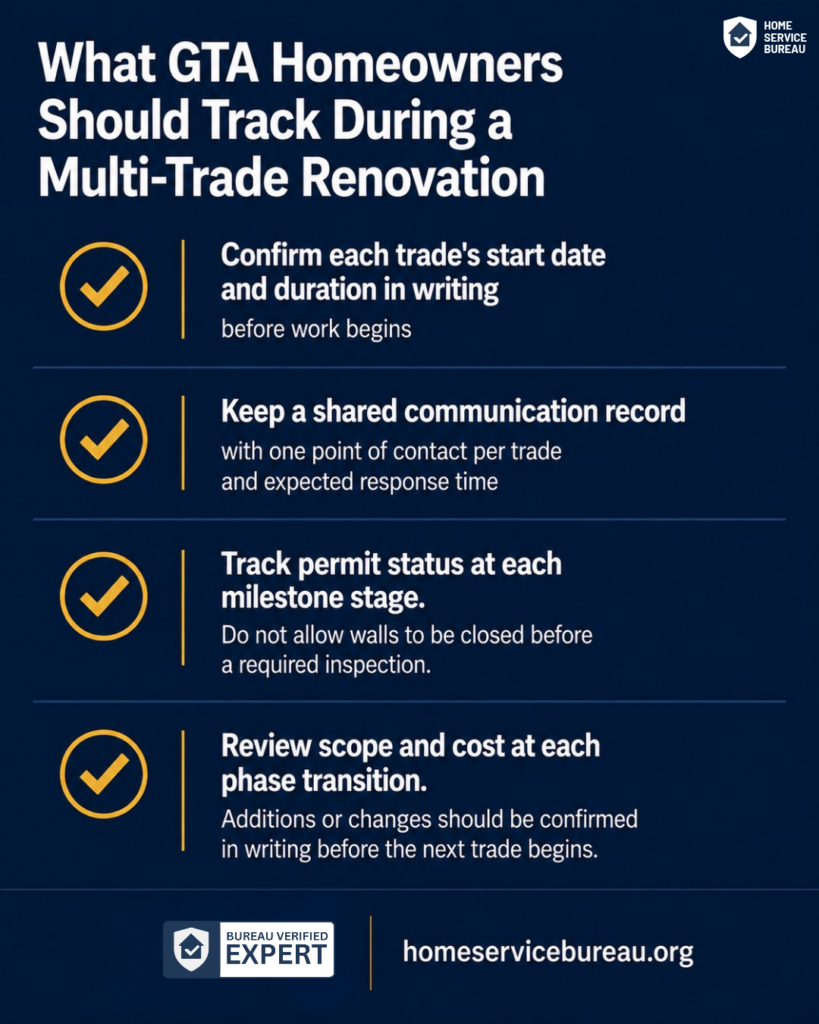
What GTA Homeowners Should Track During a Multi-Trade Renovation
Even with a reliable contractor team in place, staying informed protects your investment and keeps the project accountable to its original plan. A few tracking habits make a real difference across the life of a project.
Confirm each trade’s start date and duration in writing before work begins. Verbal estimates shift easily, but a written schedule gives you something concrete to reference if timelines slip. This single habit is one of the most effective tools in GTA renovation project management homeowner oversight.
Keep a shared communication record with one point of contact per trade. Knowing who to reach for each part of the job, and what response time to expect, prevents questions from falling through the cracks between crews.
Track permit status at each milestone stage. Never allow walls to close before a required inspection has taken place. This is one of the most common and most expensive mistakes in multi-contractor project GTA homeowner situations, since reopening finished walls adds both cost and delay.
Review scope and cost at each phase transition. Any additions or changes to the original plan should be confirmed in writing before the next trade starts work. This keeps everyone aligned and prevents disputes over what was actually agreed to.
Together, these four habits give you visibility into a process that can otherwise feel opaque. You don’t need construction expertise from licensed contractors in Ontario multi-trade project to stay on top of a renovation, you need a system for tracking dates, contacts, permits, and costs, and the discipline to check in at each transition point.
Setting Realistic Expectations From the Start
Multi-trade renovations move in stages, not in a straight line. Some weeks will feel fast, with visible progress every day. Others will feel slow, especially during inspection waits or when a delay in one trade pushes back the ones that follow. Neither pace is unusual. What matters most is whether the project follows a logical sequence, whether communication stays consistent, and whether changes get documented as they happen.
Homeowners who understand this rhythm tend to have a much smoother experience than those expecting a single, uninterrupted flow of work. Planning for coordination gaps, permit timing, and the occasional discovery behind a wall puts you in a stronger position to manage the project rather than react to it.

Final Thoughts
A multi-trade renovation asks more of both the contractor team and the homeowner than a simple single-trade job. Trade sequencing, communication across multiple crews, and the potential for unexpected costs all add layers of complexity that deserve real planning. By tracking start dates, maintaining a communication record, following permit requirements, and reviewing scope at each phase, you stay in control of a process that can otherwise feel unpredictable.
If you want an added layer of confidence before a project begins within GTA homeowner multi-trade renovation expectations, the Home Service Bureau helps homeowners verify that the professionals on their project meet recognized standards. Checking a contractor’s status through HSB gives you one more way to move into a multi-trade renovation with clarity and peace of mind, rather than guesswork.
Frequently Asked Questions
1. What makes a multi-trade renovation different from a single-trade project?
A multi-trade renovation involves several contractors working in sequence across different systems, like framing, mechanical, and finishing trades. This adds scheduling complexity, more communication points, and greater potential for cost changes than a single-trade job.
2. Why does trade sequencing matter so much in a renovation?
Certain trades must finish before others begin, such as mechanical rough-ins before drywall closes. Skipping the correct order often forces crews to redo completed work, increasing both project time and overall renovation costs.
3. How long does a typical multi-trade renovation take?
GTA homeowner, home renovation timeline Ontario vary widely based on scope, permit requirements, and inspection scheduling. A realistic home renovation timeline accounts for sequential trade work, inspection waiting periods, and reasonable buffer time for unexpected discoveries.
4. Why do renovation costs sometimes increase mid-project?
Opening walls, ceilings, or floors can reveal issues not visible during planning, such as outdated wiring or hidden moisture damage. These discoveries are common in multi-trade work and should be confirmed in writing before proceeding.
5. How can homeowners avoid miscommunication between different trades?
Keeping a shared communication record with a designated contact for each trade helps prevent updates from getting lost. Clear expectations around response times also reduce confusion as the project moves between crews.
6. Why are inspections so important during a multi-trade renovation?
Inspections confirm that rough-in work meets local building code before walls close. Skipping this step risks having to reopen finished surfaces later, which adds unnecessary cost and delay to the project.
7. What should homeowners confirm before each new trade begins work?
Homeowners should confirm the trade’s start date, expected duration, and any scope or cost changes in writing. This keeps the project aligned with the original plan and prevents disputes later.
8. Why does working with licensed contractors matter in a multi-trade project?
Licensed contractors understand code requirements, proper sequencing, and inspection timing specific to the region. This reduces the risk of errors that could compromise safety, timelines, or the overall quality of the finished work.