


The day before work begins determines project success more than you realize. Most homeowners wait until crews arrive to clarify scope, confirm timeline, or discuss site protection. By then, scope creep starts, miscommunications multiply, and surprises drain your budget. Questions to ask contractor before work GTA eliminate confusion by forcing clarity before the first hammer swings. These conversations protect your investment, establish communication protocols, and prevent disputes from poisoning the working relationship.
The moment you sign an agreement doesn’t mean you’ve covered everything. The moment before work begins captures remaining gaps. Smart homeowners ask pointed questions in the 48 hours before start dates. These conversations transform vague agreements into specific understandings. Contractors appreciate homeowners who clarify expectations earlyit eliminates misunderstandings that derail projects mid-stream.
This guide walks you through every question that matters before work begins. These aren’t theoretical inquiriesthey’re practical questions that predict how contractors behave when problems arise.
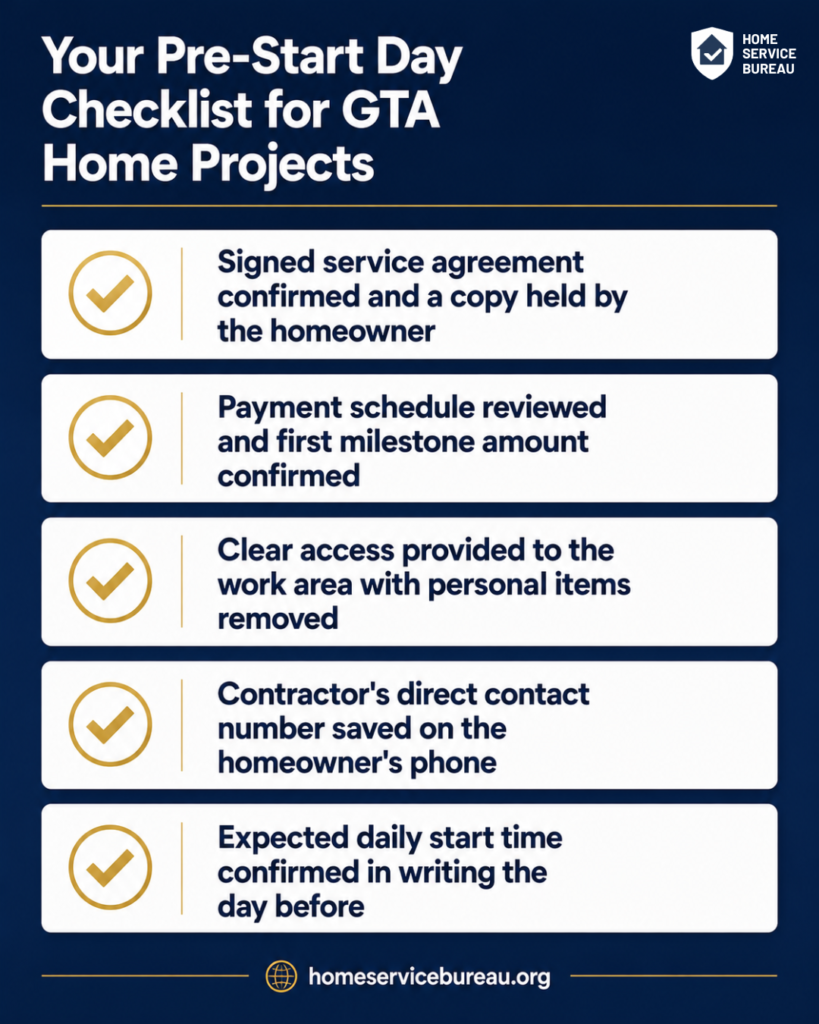
Your Pre-Start Day Checklist for GTA Home Projects
The day before work begins, verify five critical items. This homeowner checklist GTA project ensures nothing falls through cracks when crews arrive.
Signed Service Agreement Confirmed and a Copy Held by You
Your signed agreement must be in your possession before work starts. Not promised. Not pending. In your hands. Both parties sign before crews arrive. You hold an original or certified copy. This document specifies scope, timeline, payment schedule, warranty terms, and how disputes resolve.
Review it one final time. Confirm it matches what was verbally discussed. If discrepancies exist, resolve them before work beginsnot after. Once work starts, disputes over what was “supposed to happen” become expensive problems. Written agreements prevent these disputes.
Payment Schedule Reviewed and First Milestone Amount Confirmed
You understand exactly when you pay and how much. The first payment triggers when? Materials delivered? Substantial completion of phase one? Signed agreement? Confirm this explicitly. Know the exact dollar amount for each milestone. This prevents surprises when invoices arrive.
Discuss what triggers final payment. Most agreements withhold final payment until you inspect completed work, verify warranty documentation, and confirm all scope is satisfied. Final payment should require your sign-off, not automatic triggers.
Clear Access Provided to the Work Area With Personal Items Removed
Contractors need unobstructed access to work areas. Remove personal items, furniture, or valuables. Create a clear pathway for equipment and materials. Establish parking locations. This prevents contractors from damaging items or blocking their own access.
Discuss whether contractors need access to your home’s interior utilities, bathrooms, or water sources. Establish clear boundaries about which areas are off-limits. This prevents privacy violations and protects your home.
Contractor’s Direct Contact Number Saved on Your Phone
You have the supervisor’s direct number, not a general company line. When issues arise, you call this number. Not a voicemail. Not a message board. A direct line to the person managing your project. This establishes immediate communication pathways.
Save this number before work begins. Create a contact labeled with your project scope and start date. This small step prevents communication breakdowns.
Expected Daily Start Time Confirmed in Writing the Day Before
Confirm the exact start time in writing the day before work begins. “Around 8am” fails. “8:00am start time” succeeds. Text confirmation prevents miscommunications about arrival times. This simple step prevents wasted days and frustrated homeowners.
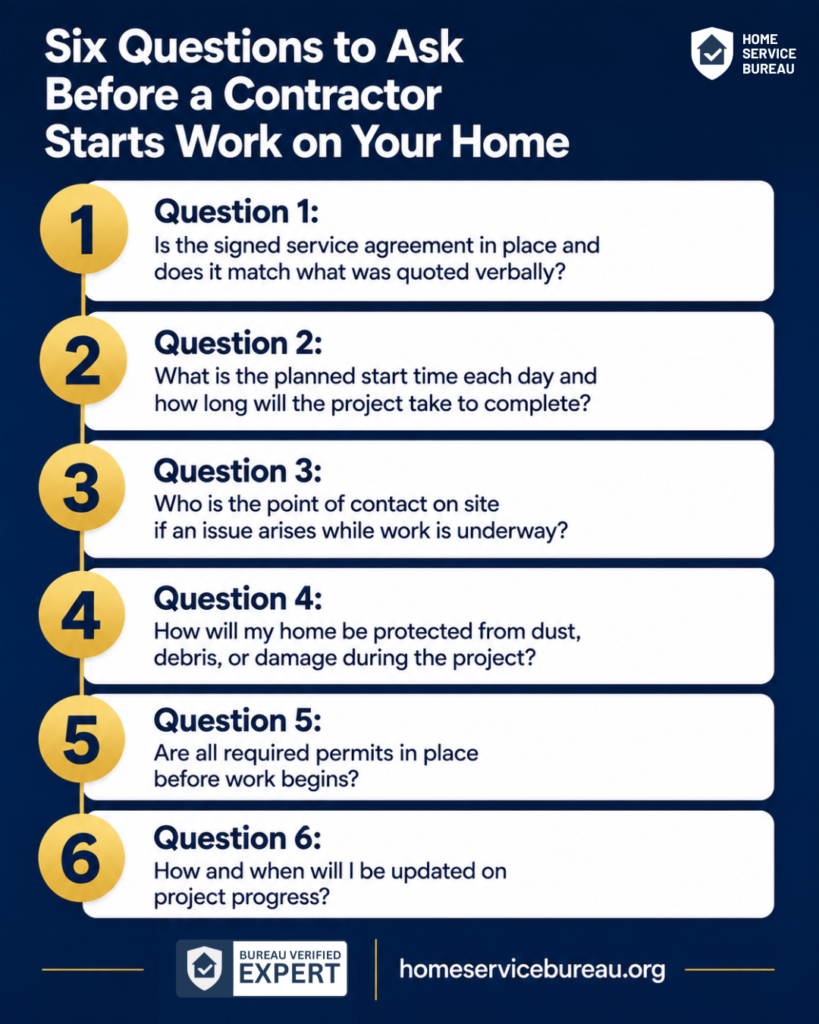
Six Questions to Ask Before a Contractor Starts Work on Your Home
Ask these six questions in the 48 hours before work begins. Licensed contractors in Ontario pre-work checklist requires addressing each question explicitly.
Question 1: Is the Signed Service Agreement in Place and Does It Match What Was Quoted Verbally?
Compare your written agreement to your notes from initial quotes. Verify scope matches. Pricing matches. Timeline matches. Materials match. If discrepancies exist, address them immediately. Don’t proceed if documentation conflicts with verbal discussions.
Ask the contractor to explain any differences. Sometimes clarifications are legitimate. Sometimes contractors cut scope to lower pricing. Resolve this before work starts not during or after completion.
Question 2: What Is the Planned Start Time Each Day and How Long Will the Project Take to Complete?
Confirm specific start and end times daily. Confirm the total project duration. Confirm the completion date. Ask whether this timeline accounts for weather delays, inspections, or material delivery issues.
Discuss what happens if the project extends beyond the agreed completion date. Will the payment schedule adjust? Will final payment be withheld? These details prevent disputes about timeline extensions.
Question 3: Who Is the Point of Contact on Site If an Issue Arises While Work Is Underway?
Know exactly who manages your project daily. Is it the owner? A supervisor? A team lead? Get their direct contact information. Discuss how you escalate concerns if this person is unavailable.
Establish communication protocols. How often do you receive updates? Daily? Weekly? Discuss what constitutes an “issue” requiring immediate escalation versus normal project challenges.
Question 4: How Will Your Home Be Protected From Dust, Debris, or Damage During the Project?
Ask specifically how contractors protect flooring, furniture, and adjacent areas. Do they use drop cloths? Plastic sheeting? Temporary walls? What cleanup happens daily versus final cleanup?
Discuss liability if accidental damage occurs. Does your homeowner’s insurance cover contractor-caused damage, or does the contractor’s insurance? Clarify this before work begins to prevent disputes.
Question 5: Are All Required Permits in Place Before Work Begins?
Before contractor starts home Ontario regulations require certain projects to have permits. Confirm the contractor obtained all required permits. Ask to see permit documentation. Confirm inspection schedules if inspections are required.
Discuss who coordinates with inspectors. Does the contractor schedule inspections? Do you need to be present? What happens if an inspection fails? These details prevent project delays.
Question 6: How and When Will You Be Updated on Project Progress?
Establish update frequency and format. Will the contractor call? Text? Email? Daily or weekly? Discuss what information updates includework completed, timeline status, any issues discovered.
Ask about weekend or holiday work. Will work happen on weekends? Which holidays? This prevents surprises when crews show up when you expected days off.
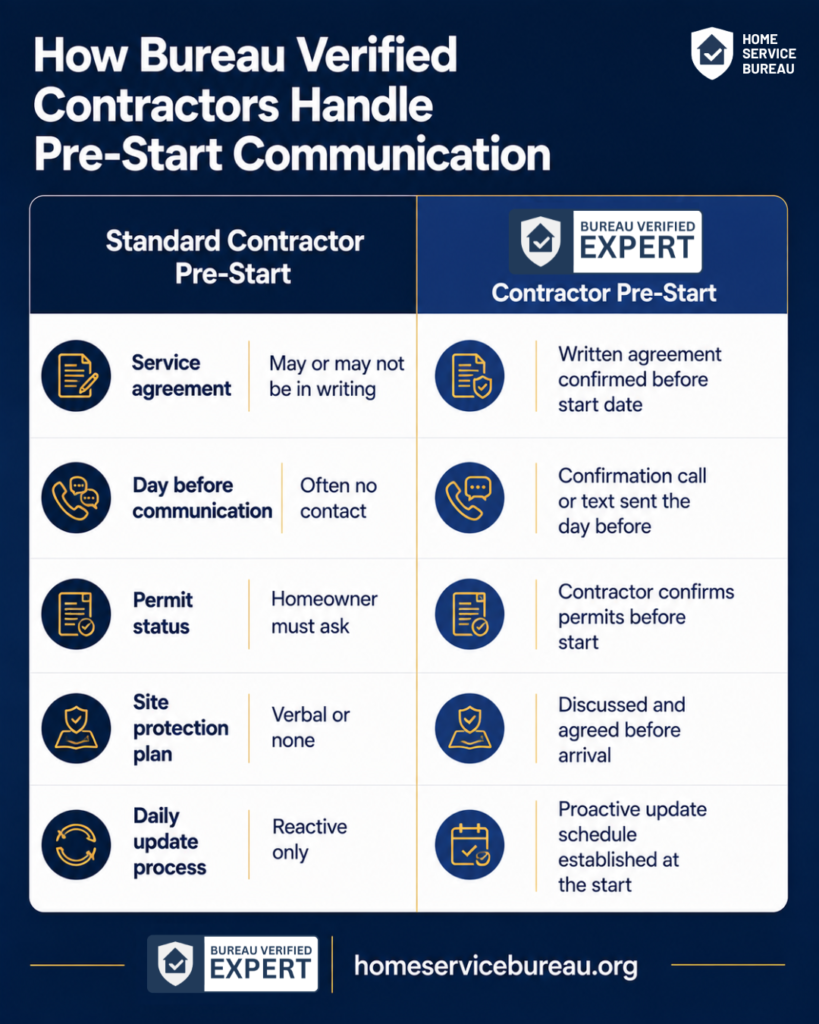
How Bureau Verified Contractors Handle Pre-Start Communication
GTA contractors start of project management differs between verified and unverified contractors. Bureau Verified professionals establish communication protocols proactively.
Service Agreement Practices
Bureau Verified contractors provide written agreements before work begins. Standard contractors may work verbally or with minimal documentation. Verified contractors require signed agreements specifying all terms. This creates accountability and protects both parties.
Day-Before Communication
Verified contractors contact homeowners the day before arrival. This confirms start time, clarifies any final questions, and ensures homeowners prepare work areas. Standard contractors often skip this step, creating confusion about arrival times and site preparation.
Permit Status Confirmation
Bureau Verified contractors confirm all permits before starting work. They don’t proceed if permits are missing or inspections are pending. Standard contractors sometimes begin work assuming permits will arrive later, creating compliance risks for homeowners.
Site Protection Plans
Verified contractors discuss site protection before arrival and execute the agreed plan without variation. Standard contractors may handle site protection verbally or skip it entirely. Bureau Verified standards include written site protection protocols confirmed with homeowners before work begins.
Daily Update Process
Bureau Verified contractors establish proactive update schedules at the project start. Homeowners know exactly when they’ll receive updates and what information updates include. Standard contractors update reactively only when homeowners ask or when problems arise.
Critical Pre-Work Conversations That Prevent Disputes
Canadian home services homeowner questions often emerge too late to prevent problems. Asking these questions before work begins transforms preventable issues into non-issues.
Discuss Change Order Protocols
How do homeowners request scope changes? How do contractors propose cost adjustments? Confirm that changes must be documented in writing before work begins on additions. Verbal change orders create disputes about costs and scope.
Clarify Payment Hold Policies
Discuss whether you can withhold final payment for quality concerns or incomplete scope. Confirm that final payment depends on your inspection and approval, not automatic triggers. This gives you leverage to ensure quality completion.
Establish Communication Escalation
What happens when the on-site point of contact is unavailable? Who do you contact? What’s the response time? Clarifying escalation procedures prevents communication blackouts when urgent issues arise.
Address Cleanup Expectations
Discuss daily cleanup versus final cleanup. Will contractors remove debris daily or accumulate it for final removal? Will they protect your property from debris spread? These details prevent your home from becoming a construction zone.
Confirm Warranty Documentation
Discuss what warranty documentation you’ll receive. Will the contractor provide written warranty terms? Proof of manufacturer coverage for materials? These documents protect you after the project completes.

Bottom Line: Establish Clear Expectations Before Work Begins
Questions to ask contractor before work GTA transform vague agreements into specific understandings that prevent disputes and miscommunications. The 48 hours before work begins capture critical information that protects your investment and establishes communication protocols for the entire project duration.
Before contractor starts home Ontario, legitimate professionals confirm agreements, communicate arrival times, and establish daily update protocols. These practices distinguish verified contractors from those operating without accountability standards. Bureau Verified professionals handle pre-start communication systematically, ensuring homeowners understand exactly what happens before crews arrive.
HomeServiceBureau.org connects GTA homeowners with Bureau Verified contractors who handle pre-start communication professionally. Visit HomeServiceBureau.org to find Bureau Verified contractors in the GTA who establish clear expectations before work begins.
Frequently Asked Questions
1. What happens if the contractor arrives late on the start date?
Confirm communication protocols if the contractor runs late. Ask whether late arrivals push the completion date or compress the timeline. Establish acceptable lateness thresholds before work begins. Late arrivals shouldn’t exceed 30 minutes without notification. Delays exceeding 2 hours may warrant rescheduling.
2. Can I request changes to scope after the project starts?
Yes, but changes require written change orders specifying new costs and timeline impacts. Verbal change approvals create disputes about pricing. Always document scope changes in writing before work proceeds on additions. Your signed agreement should address change order procedures.
3. What insurance should I verify before work starts?
Verify active liability insurance (property damage and bodily injury) and WSIB coverage for employees. Contact the insurance provider directly to confirm coverage. Request proof of current insurance with your project address listed. Verify minimum coverage amounts match your project risk level and insurance requirements.
4. Should I stay home during work, or can I leave?
Ask the contractor whether you need to be present daily. Some projects need homeowner decisions about discovered issues. Others proceed without homeowner input. Discuss which days require your presence and what decisions may need immediate resolution while work is underway.
5. What permits does the contractor handle versus what I must handle?
Confirm which permits the contractor obtains and which you must secure. Most contractors handle trade-specific permits. Homeowners often handle building permits or HOA approvals. Clarify responsibility before work begins to prevent delays and disputes about who dropped the ball.
6. Can the contractor use your utilities without permission?
Confirm utility usage rights before work begins. Most contractors need access to water, electricity, or parking. Establish clear boundaries about which utilities they access and where. Discuss whether utility costs are included in the quoted price or billed separately.
7. What happens if the contractor discovers hidden problems during work?
Discuss contingency plans for discovered issues. Rotted framing, asbestos, or plumbing problems cost extra to address. Confirm whether these costs come from a contingency budget or require change orders. Establish decision protocols for problems that require your approval before work proceeds.
8. How do I verify work quality before final payment?
Confirm inspection procedures before work begins. Will the contractor provide a walk-through inspection? Will they point out completed work? Discuss timeline for your independent inspection before final payment. Withhold final payment until you’ve inspected all work thoroughly and reviewed warranty documentation.