
Sending an estimate is only half the job. The GTA contractors estimate follow-up process decides whether that quote becomes a signed contract or slips into a homeowner’s inbox and disappears. Homeowners across the Greater Toronto Area often collect several quotes, and the contractor who stays in touch professionally usually earns the trust that closes the deal.
This guide explains where most contractors lose momentum, how to fix each mistake, and how to build a simple schedule and script for every quote. You will also learn how to measure your results and find answers to common questions. Follow these steps, and you will turn more estimates into booked work.
Why Your GTA Contractors Estimate Follow-Up Process Decides Who Wins the Job
A quote shows price and scope, but it does not show reliability. Homeowners judge reliability by how you communicate after the visit. When you respond on time, stay organized, and remember the details of their project, you prove that you will run the job the same way.
Track your licensed contractors in Ontario follow-up rate, meaning the share of estimates you follow up on more than once, and you will probably spot gaps. Many professionals treat follow-up as optional. They send one message, wait for a reply, and move on to the next quote. Meanwhile, homeowners get busy, compare options, and forget who impressed them.
Strong Canadian home services estimate follow-up also protects your time. A clear schedule tells you exactly when to contact each prospect, so you stop guessing and stop chasing leads at random. Ontario homeowners also want proof that a contractor is professional, licensed where the trade requires it, and dependable. Consistent communication supplies that proof before the work even begins.
3 Follow-Up Mistakes and How to Fix Them
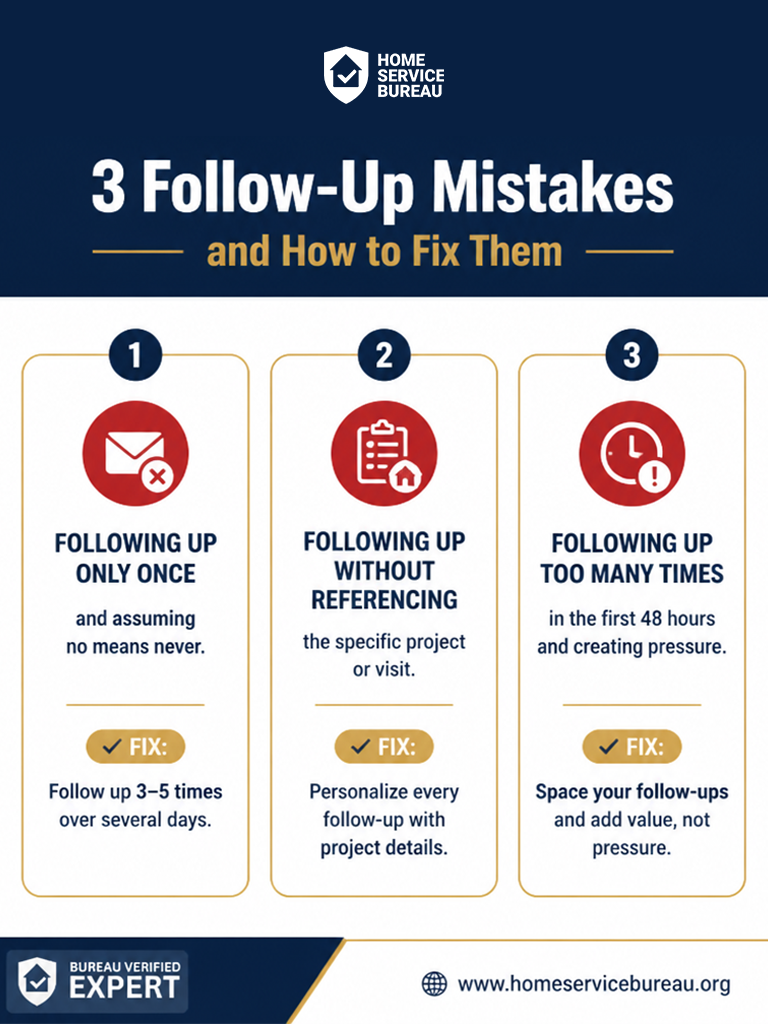
Most lost estimates trace back to three avoidable habits inside the GTA contractors estimate follow-up process. Correct these first, and your results will change quickly.
Mistake 1: Following Up Only Once
Many contractors send a single message and assume that no reply means no. In reality, homeowners often need time, a second opinion, or a simple reminder. The fix: follow up three to five times over several days. Make each contact useful by offering a quick answer or a clear next step.
Mistake 2: Following Up Without Referencing the Project
Generic messages feel like mass emails, and homeowners ignore them. The fix: personalize every follow-up with project details. Mention the scope, the location in the home, or something the homeowner said during your visit. That detail shows you listened and that you care about their project.
Mistake 3: Following Up Too Many Times Too Soon
Contacting a homeowner again and again during the first 48 hours creates pressure and pushes them away. The fix: space your follow-ups and add value, not pressure. Share a helpful tip, confirm a detail, or offer to adjust the scope.
Treat these three fixes as the first step in your improve follow-up contractor Ontario plan. Once you stop repeating these habits, a structured schedule becomes much easier to run.
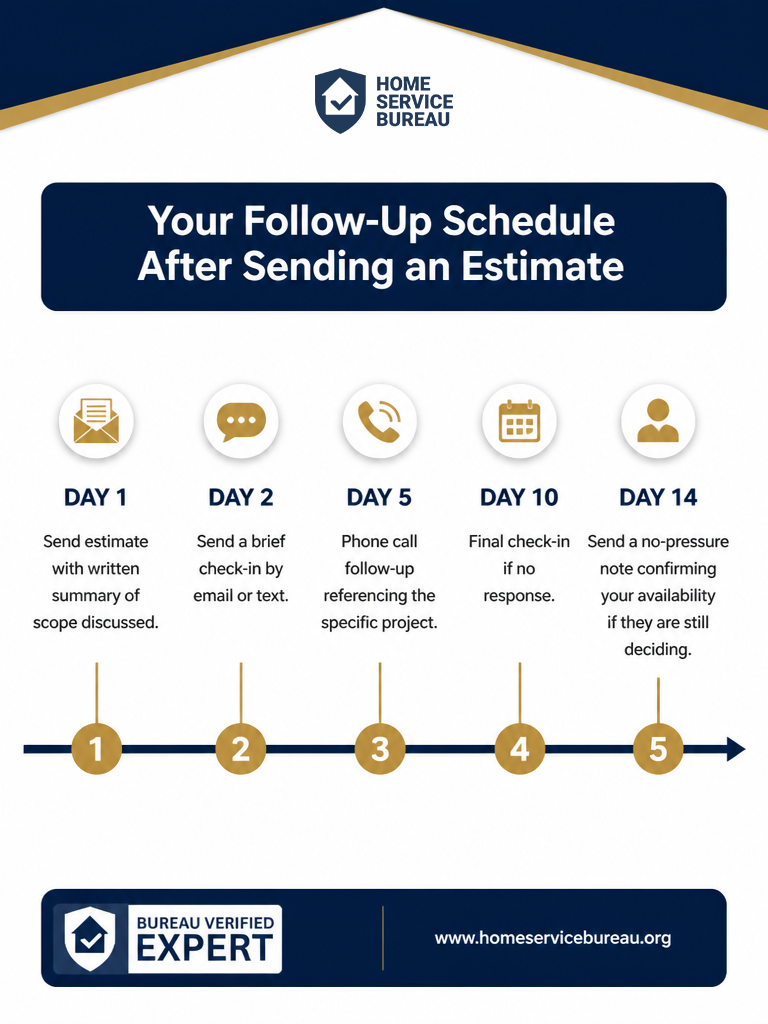
Your Follow-Up Schedule After Sending an Estimate
A fixed schedule removes guesswork. Use the five-touch plan below as your standard contractor post-estimate follow-up GTA routine.
- Day 1: Send the estimate with a written summary of the scope you discussed.
- Day 2: Send a brief check-in by email or text.
- Day 5: Make a phone call that references the specific project.
- Day 10: Send a final check-in if you have received no response.
- Day 14: Send a no-pressure note that confirms your availability if the homeowner is still deciding.
Notice how the rhythm moves from written detail to a light touch, then to a personal call, and finally to a gentle close. Each step adds a different kind of value, so no message feels repetitive. Treat this timeline as your win jobs after estimate GTA contractor playbook, and stick to it for every quote you send.
Your Day 5 Follow-Up Script Framework
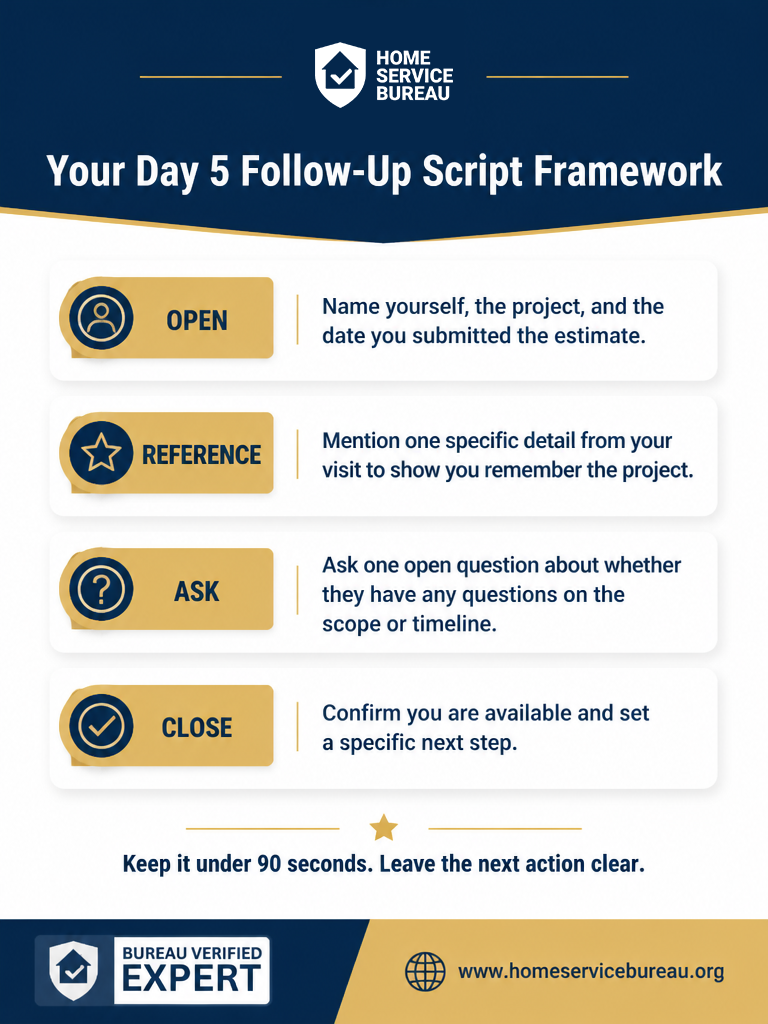
Inside your GTA contractors estimate follow-up process, the Day 5 call carries the most weight because you finally speak with the homeowner. Use the four-step framework below to keep the conversation focused and confident.
- Open: Name yourself, the project, and the date you submitted the estimate.
- Reference: Mention one specific detail from your visit to show you remember the project.
- Ask: Ask one open question about whether they have any questions on the scope or timeline.
- Close: Confirm you are available and set a specific next step.
Keep the call under 90 seconds and leave the next action clear. Short calls respect the homeowner’s time, and a specific next step gives them an easy way to say yes, request changes, or tell you they need more time.
How to Track and Improve Your Follow-Up Rate
You cannot fix what you do not measure. Record every estimate, the date you sent it, and each follow-up that happens afterward. Then review the numbers each month to see how many estimates receive all five contacts and how many turn into signed jobs.
Use these habits to keep the system running:
- Log every estimate in one place, such as a spreadsheet or a CRM.
- Set reminders for Day 2, Day 5, Day 10, and Day 14 as soon as you send the quote.
- Note each homeowner’s project details so you can personalize every message.
- Review your close rate monthly and adjust your timing wherever replies slow down.
Small gains add up. Every extra follow-up you complete gives a homeowner another reason to choose you, and a stronger GTA contractors estimate follow-up process rewards you season after season.

Conclusion: Win More Jobs With a Reliable Follow-Up Process
A dependable GTA contractors estimate follow-up process does not need complicated software or pushy tactics. It needs a clear schedule, personal messages, and a short call that ends with a next step. Avoid the three common mistakes, follow the five-touch timeline, and use the Open, Reference, Ask, Close framework. Homeowners will then see you as organized, attentive, and easy to hire.
Home Service Bureau (HSB) supports home service professionals who want to build that credibility. The Bureau Verified Expert badge helps homeowners recognize professionals they can trust, and HSB shares practical guidance like this to help you grow with confidence. Visit to learn how HSB can help you strengthen your reputation, attract quality leads, and win more jobs.
Frequently Asked Questions
1. What is a good estimate follow-up process for GTA contractors?
A good process uses a fixed schedule of five contacts over 14 days. It combines a written scope summary, brief check-ins, and a personal phone call, and every message references the specific project you discussed.
2. How many times should I follow up after sending an estimate?
Follow up three to five times over several days. One message rarely earns a quick reply, while a spaced sequence keeps you visible without pressuring the homeowner or damaging the trust you have already built.
3. When should I make my first follow-up after an estimate?
Send the estimate with a written scope summary on Day 1, then add a brief check-in on Day 2. Avoid repeated contact during the first 48 hours, because too much early contact creates unwanted pressure.
4. Should I call, text, or email after an estimate?
Use a smart mix of all three. Email carries the written scope, text or email suits light check-ins, and a phone call on Day 5 lets you answer their questions and build a personal connection.
5. How long should a follow-up call last?
Keep the call short, under 90 seconds. Introduce yourself, mention one project detail, ask one open question, and agree on a clear next step, so the homeowner sees clearly that you truly value their time.
6. How do I follow up without sounding pushy?
Space out your contacts, personalize each message, and offer value instead of pressure. Answer questions, clarify the scope, and confirm your availability, then let the homeowner decide at a comfortable pace without ever feeling rushed.
7. Why do homeowners stop replying after receiving an estimate?
Homeowners often compare several quotes, wait on budget decisions, or simply get too busy. Silence rarely means no, so a polite and well-timed reminder can bring your estimate back to the top of their list.
8. How can I measure whether my follow-up process works?
Log every estimate, its send date, and each follow-up you actually make. Review monthly how many quotes receive all five contacts and how many become signed jobs, then adjust your timing based on the results.