

Every winter, work slows down and phones go quiet. Many trades treat this period as a pause, but the strongest businesses treat it as a launchpad. A well-planned licensed contractors in Ontario slow season lead pipeline turns quiet months into booked projects before spring begins.
This guide explains why the off-season matters, what preparation returns in peak season, and how to build a practical plan. Each step comes from proven business practice and a clear understanding of how homeowners choose trades.
Why the Slow Season Matters for Ontario Contractors
Ontario’s climate shapes demand. Cold weather pushes exterior projects into the spring and summer, and new inquiries drop sharply. Many contractors respond by waiting, and that choice costs them.
Homeowners start researching long before they hire. They compare credentials, read reviews, and shortlist trades months ahead of their project date. A contractor who stays visible and organized during winter earns a place on that shortlist. A contractor who goes silent disappears from it.
Canadian home services slow season growth depends on one principle: use low-demand months for the work that busy months never allow. You finally have time to follow up, update records, and plan capacity. Those tasks create momentum that lasts all year.
What Slow Season Preparation Returns in Peak Season
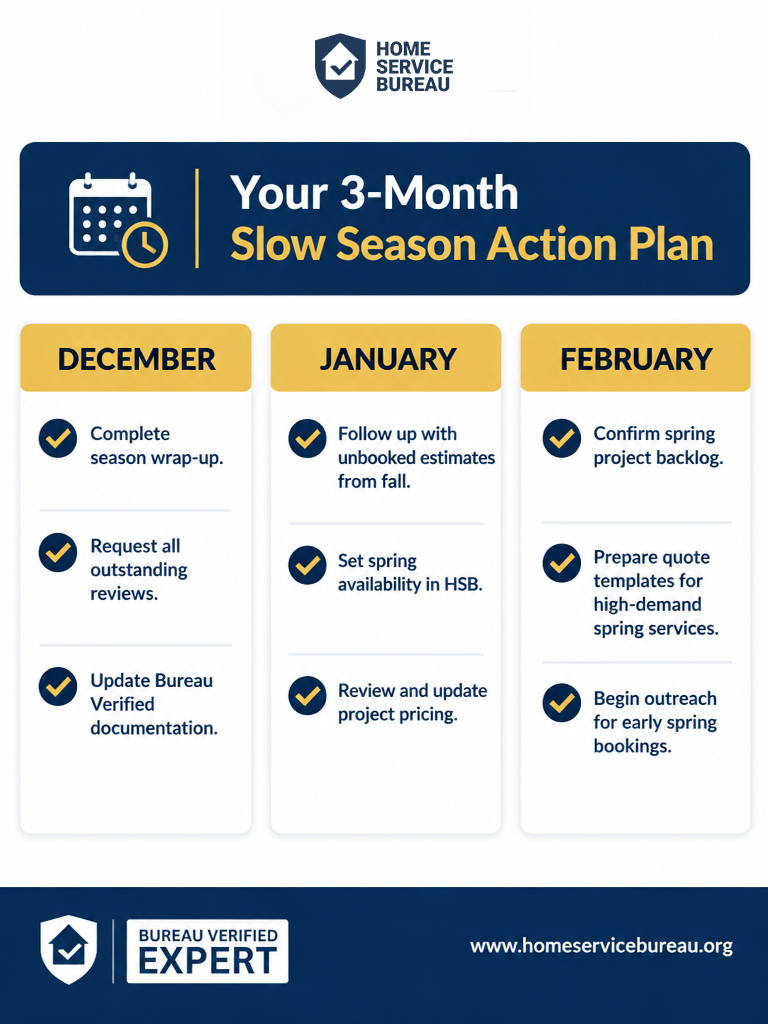
Compare two businesses on the first day of April. The first did nothing over winter. Its owner scrambles for leads while competitors already fill their calendars. Peak season starts cold, and every inquiry feels urgent.
The second business followed up in January, collected reviews, updated its profile, and set its availability. April begins with a warm pipeline and confirmed projects. The owner chooses which jobs to accept instead of chasing any job available.
This difference defines off-peak contractor growth Canada wide. Preparation does not create demand out of nothing. It positions you to capture the demand that already exists. The slow season builds the season after.
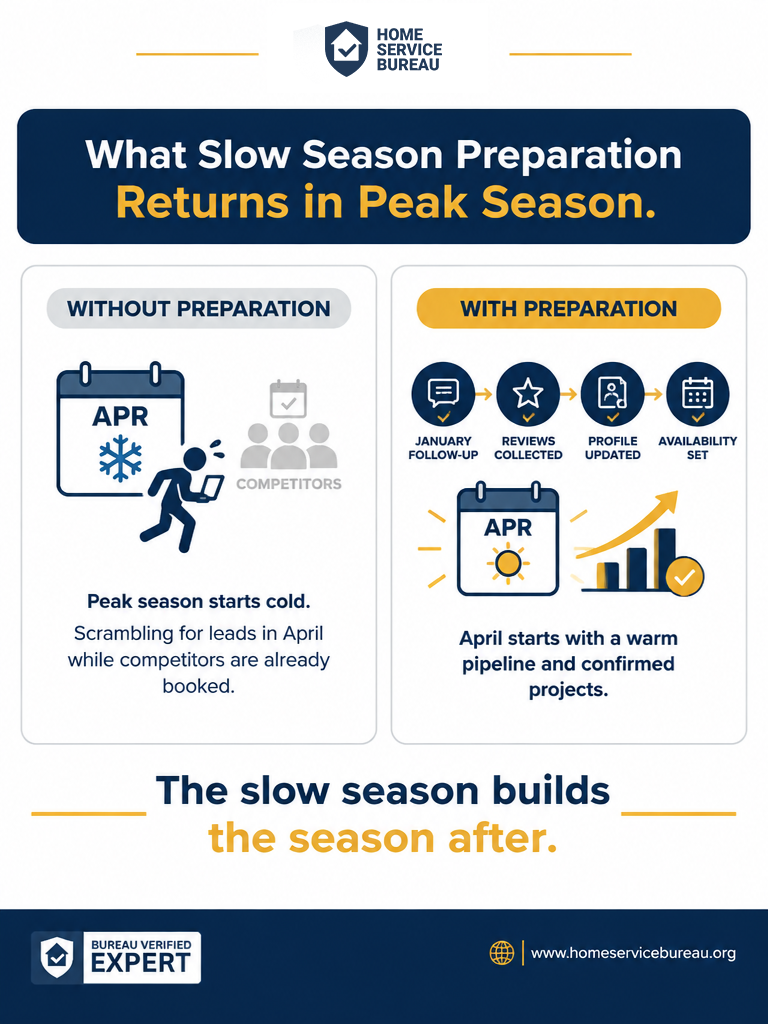
5 Actions That Build Your Peak Season Pipeline Now
Start with these five actions. Each one takes time rather than money, and each one strengthens your contractor pipeline building Ontario efforts.
1. Review and Update Your Regional Profile and Verified Documentation
Your online profile acts as your storefront. Check that your service areas, trade categories, and contact details stay accurate. Upload current licences, insurance, and verification documents. Homeowners trust businesses that prove their credentials, and outdated records raise doubts.
2. Request Reviews from All Completed Jobs
Reviews give new customers evidence of your quality. Contact every homeowner from the prior season and ask for honest feedback. Keep the request short and make the process easy. Fresh reviews strengthen your reputation exactly when buyers begin comparing options.
3. Follow Up with Homeowners Who Did Not Move Forward
Many estimates go unanswered because of timing, not rejection. Budgets shift, priorities change, and holidays interrupt decisions. Send a friendly message that offers help and answers questions. This single habit often recovers projects that you assumed were lost.
4. Set Your Availability Windows for the Upcoming Peak Season
Clear availability tells homeowners when you can start. It also protects your schedule from overbooking. Define the months you accept new work, the services you prioritize, and your realistic weekly capacity.
5. Plan Your Project Capacity Targets for the Next Six Months
Look at your crew size, supplier lead times, and typical project length. Then set a target number of projects for each month. Specific targets turn vague goals into measurable plans, and they show you early when your pipeline needs more leads.
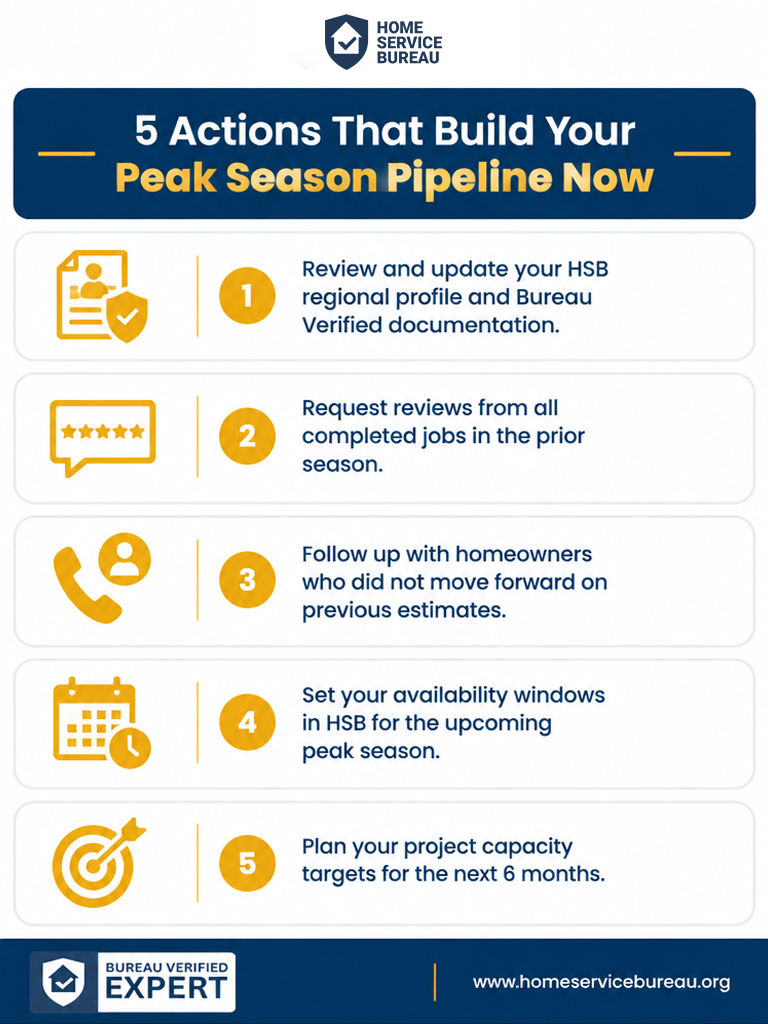
Your 3-Month Slow Season Action Plan
A plan works better when you spread tasks across weeks. Use this three-month structure to stay organized.
December: Close the Year Strongly
- Complete your season wrap-up and review what worked.
- Request all outstanding reviews while customers still remember the work.
- Update your verified documentation so your credentials stay current.
January: Reconnect and Reset
- Follow up with unbooked estimates from the fall.
- Set your spring availability on your profile.
- Review and update your project pricing to reflect material and labour costs.
February: Launch Your Spring Push
- Confirm your spring project backlog.
- Prepare quote templates for high-demand spring services, so you respond quickly.
- Begin outreach for early spring bookings.
Notice how each month builds on the one before. December creates trust signals, January restarts conversations, and February converts that attention into scheduled work.
A GTA Contractors Off-Season Strategy
The Greater Toronto Area presents a unique challenge. Dense neighbourhoods, high housing activity, and many competing trades mean homeowners can choose from countless options. A strong GTA contractors off-season strategy therefore focuses on differentiation.
First, respond fast. Homeowners in busy markets often contact several trades at once, and the first helpful reply usually earns the conversation. Second, show proof. Verified credentials, recent reviews, and a complete profile separate serious professionals from the crowd. Third, communicate availability clearly, so homeowners know you can start when they need you.
Contractors who pursue HSB leads slow season GTA opportunities in winter also face less competition for attention. Fewer trades actively market themselves in January, so your follow-ups and profile updates stand out more than they would in June.
Building Trust the Way Homeowners Expect
Google’s quality guidelines value experience, expertise, authoritativeness, and trustworthiness. Homeowners apply the same standards when they hire. They want proof that you have done the work before, that you hold the right licences, and that other customers vouch for you.
Strengthen each element deliberately:
- Experience: Document completed projects with accurate descriptions.
- Expertise: Keep licences, certifications, and insurance current.
- Authoritativeness: Earn reviews and verification from recognized sources.
- Trustworthiness: Communicate honestly about pricing, timelines, and availability.
A licensed contractors in Ontario slow season lead pipeline grows faster when these trust signals stay visible and consistent.
Measure Your Progress
Track a few simple numbers each month: estimates followed up, reviews collected, inquiries received, and projects confirmed. Compare them against your capacity targets. If confirmed projects trail your goals, increase outreach early instead of waiting for spring pressure to expose the gap.

Conclusion: Turn Quiet Months into Your Strongest Advantage
The slow season rewards contractors who act while others wait. When you update your profile, collect reviews, follow up on estimates, set availability, and plan capacity, you build a licensed contractors in Ontario slow season lead pipeline that delivers confirmed projects the moment spring arrives.
The Home Service Bureau (HSB) supports this work. Its platform helps contractors showcase Bureau Verified credentials, manage regional profiles, display homeowner reviews, and set availability, so homeowners can find and trust the right professional. Start your preparation today, join HSB, and make this slow season the foundation of your busiest year yet.
Visit www.homeservicebureau.org to get started.
Frequently Asked Questions
1. When does the slow season start for Ontario contractors?
Most Ontario contractors notice demand dip from late November through February, when cold weather limits exterior work. Indoor services stay steady, but new project inquiries slow, so December is the ideal month to begin planning.
2. How soon should I follow up on unbooked estimates?
Follow up within two to four weeks of sending an estimate, then again in January. Homeowners often pause decisions over the holidays, so a polite, helpful message restarts the conversation without pressure and builds trust.
3. Why do reviews matter during the slow season?
Reviews act as trust signals that homeowners check before they call. Collecting them from every completed job during quiet months gives you fresh proof of quality, which improves your profile and conversion rate in spring.
4. How do GTA contractors compete in a crowded market?
GTA contractors stand out by responding quickly, keeping verified documentation current, and showing clear availability. Homeowners in dense markets compare many options, so visible credentials and fast communication often decide who ultimately wins each job.
5. What should I include in my availability windows?
Include the months you accept new projects, the service types you prioritize, and your realistic weekly capacity. Clear windows set homeowner expectations, reduce scheduling conflicts, and help you avoid overbooking when seasonal demand surges sharply.
6. How many months ahead should I plan project capacity?
Plan capacity at least six months ahead. This window lets you match crew availability, materials, and scheduling to expected demand, so you accept the right number of projects without stretching your team or hurting service quality.
7. Can small contractors build a pipeline without big budgets?
Yes. Follow-ups, review requests, and profile updates cost time rather than money. Small teams gain the most because consistent, low-cost habits build trust and keep a steady stream of quality inquiries arriving throughout the year.
8. How does HSB help contractors during slow months?
HSB gives contractors a verified regional profile, homeowner reviews, and availability tools that keep them visible year-round. These features help contractors attract serious inquiries and convert them into booked work even when overall demand softens.