


For years, open directories were the default starting point for contractors trying to win local work. You built a profile, added a few photos, paid a listing fee, and waited for the phone to ring. That model worked when competition was thin. It does not work as well today. Across the Greater Toronto Area, the shift from GTA contractors open directory to allocation platform models has become one of the most talked-about changes in the home services industry, and the reasons behind it are practical, not trendy.
Homeowners have changed how they search, vet, and hire. Contractors have changed how they want to spend their time. And the platforms connecting the two have changed to match. This article looks at why that shift is happening, what it means for licensed trades across Ontario, and how contractors can position themselves to benefit from it.
The Problem With Open Directories
Open directories list every contractor who signs up, often with little to no verification beyond a name and a phone number. Homeowners scroll through dozens of similar-looking profiles, unsure who is licensed, insured, or actually available for their project. Contractors, meanwhile, compete purely on visibility and price rather than skill or reliability.
This creates two frustrations at once. Homeowners waste time filtering through unqualified leads. Contractors pay for exposure that rarely converts into real jobs. As directories became crowded with low-effort listings, the signal-to-noise ratio dropped, and both sides started looking for something better.
Turning Objections Into Opportunities With Confidence
One reason structured platforms are gaining ground is that they help contractors handle the conversations that actually close jobs, not just generate them. A confident, well-supported response to a homeowner’s hesitation matters far more than another lead in an inbox.
Contractors who succeed on structured platforms tend to follow a consistent approach when a homeowner raises a concern:
- Listen first. Understand the real concern behind the question before responding.
- Stay calm. A composed, respectful tone builds trust faster than a rushed sales pitch.
- Provide clarity. Back up your answer with facts, documentation, or a clear explanation.
- Focus on value. Reinforce long-term benefits instead of getting stuck defending the price alone.
- Move forward. Turn the conversation into a next step, such as a site visit or a written quote.
Open directories rarely support this kind of structured interaction. They connect names to numbers and leave the rest to chance. Allocation platforms, by contrast, are built around matching contractors with homeowners who are already further along in the decision process, which makes these conversations more productive from the start.

Objections Are a Sign of Interest, Not Rejection
A theme worth highlighting for any contractor navigating the licensed contractors in Ontario platform shift is that objections should be read as engagement, not resistance. Homeowners who ask detailed questions about pricing, timelines, or materials are usually the ones seriously considering the project.
This reframing matters because it changes how contractors show up in conversations:
- Questions mean the homeowner cares about getting the project right.
- Objections give contractors a chance to educate and demonstrate expertise.
- A thoughtful, well-informed response builds credibility and trust.
- Every objection handled well brings the conversation closer to a signed agreement.
Structured allocation platforms tend to attract homeowners who are already comparing qualified options rather than casually browsing, so the objections raised are typically specific and answerable. This is very different from the open directory experience, where much of the traffic never intends to hire at all.

Five Common Objections GTA Homeowners Raise
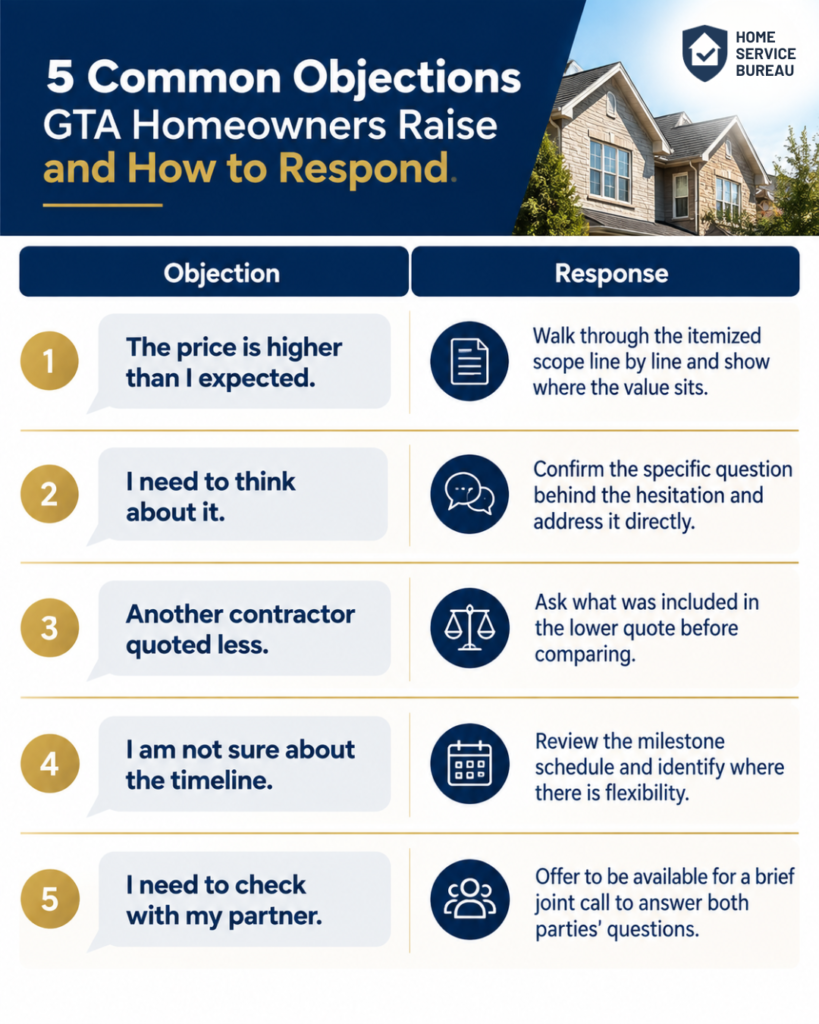
Understanding what homeowners actually say helps explain why Canadian home services structured allocation models are becoming the preferred way to manage leads across Ontario. Based on patterns seen across the GTA, five objections come up repeatedly:
- “The price is higher than I expected.” Walk through the itemized scope line by line so the homeowner sees exactly where the value sits.
- “I need to think about it.” Confirm the specific question behind the hesitation and address it directly rather than letting it sit unanswered.
- “Another contractor quoted less.” Ask what was actually included in the lower quote before comparing numbers side by side.
- “I am not sure about the timeline.” Review the milestone schedule together and identify where there is genuine flexibility.
- “I need to check with my partner.” Offer to be available for a short joint call so both decision-makers get their questions answered at once.
Contractors relying on open directories often face these same objections with far less context about the homeowner’s budget, timeline, or intent. Structured platforms typically pre-qualify leads, which means contractors spend less time re-explaining basics and more time closing.
Why the Move From Open Directory to Allocation Platform Is Accelerating
The move from open directory contractor GTA professionals are not happening in isolation. It reflects a broader change in how Ontario’s home services market operates.
Verification matters more than ever. Homeowners want to know a contractor is licensed, insured, and reviewed by a credible source before inviting them into their home. Open directories rarely enforce this consistently.
Allocation reduces wasted effort. Instead of every contractor chasing every lead, structured platforms match jobs to qualified contractors based on trade, location, and availability. This reduces duplicate quoting and improves close rates.
Data improves outcomes over time. A structured lead platform contractor Ontario professionals use can track which leads convert, which objections come up most often, and where follow-up is falling short. Open directories offer no such feedback loop.
Reputation is portable. On a structured platform, verified reviews and completed-project history follow the contractor, making it easier to stand out based on real performance rather than ad spend alone.
When homeowners compare a contractor directory vs HSB-style structured platform, the difference becomes clear. Directories offer volume without context. Structured platforms offer fewer, better-matched opportunities backed by verification and support.
What This Means for Contractors Right Now
Contractors do not need to abandon every existing lead source overnight, but the direction is clear. Structured allocation platforms reward contractors who invest in verification, respond professionally to objections, and treat every conversation as a chance to build trust rather than just close a sale. Those habits, paired with a platform built around quality matching instead of open listings, consistently produce stronger results across the GTA.

Bottom Line
The shift away from open directories is not a passing trend. It reflects what homeowners and contractors both want: fewer wasted conversations, more qualified matches, and a process built on trust rather than volume. Contractors who adapt early position themselves ahead of a market that is only going to demand more accountability.
Home Service Bureau (HSB) was built for exactly this shift. HSB verifies contractors, structures leads around real homeowner intent, and gives licensed professionals across the GTA and Ontario the tools to handle objections with confidence and win more of the right jobs. If you are ready to move beyond the open directory model, HSB is where serious contractors are heading next.
Frequently Asked Questions
1. What does it mean to move from an open directory to an allocation platform?
It means shifting from unfiltered public listings to a system that matches verified contractors with pre-qualified homeowners based on trade, location, and project needs, reducing wasted leads on both sides.
2. Why are licensed contractors in Ontario shifting platforms now?
Rising competition and homeowner demand for verification are pushing contractors toward platforms that confirm licensing and insurance upfront, rather than relying on unverified directory listings alone.
3. How does structured allocation improve lead quality?
Structured allocation matches contractors to homeowners who are already further along in their decision process, so conversations start with real intent instead of casual browsing.
4. Is a contractor directory vs HSB really that different?
Yes. Directories list everyone equally, while HSB verifies contractors and structures leads around actual homeowner readiness, resulting in fewer but more meaningful conversations.
5. Do structured platforms cost more than open directories?
Pricing varies, but many contractors find the return higher since leads are pre-qualified, reducing time spent chasing unqualified prospects compared to open directory listings.
6. How should contractors handle price objections on these platforms?
Walk homeowners through the itemized scope line by line, showing exactly where costs go, rather than defending the total price number alone.
7. Can small or independent contractors join structured allocation platforms?
Yes, most platforms, including HSB, welcome independent and small-team contractors, provided they meet licensing, insurance, and verification requirements set by the platform.
8. What is the biggest advantage of Canadian home services structured allocation models?
They combine verification, homeowner intent, and objection-handling support into one system, helping contractors close more jobs with less wasted effort than open directories allow.