

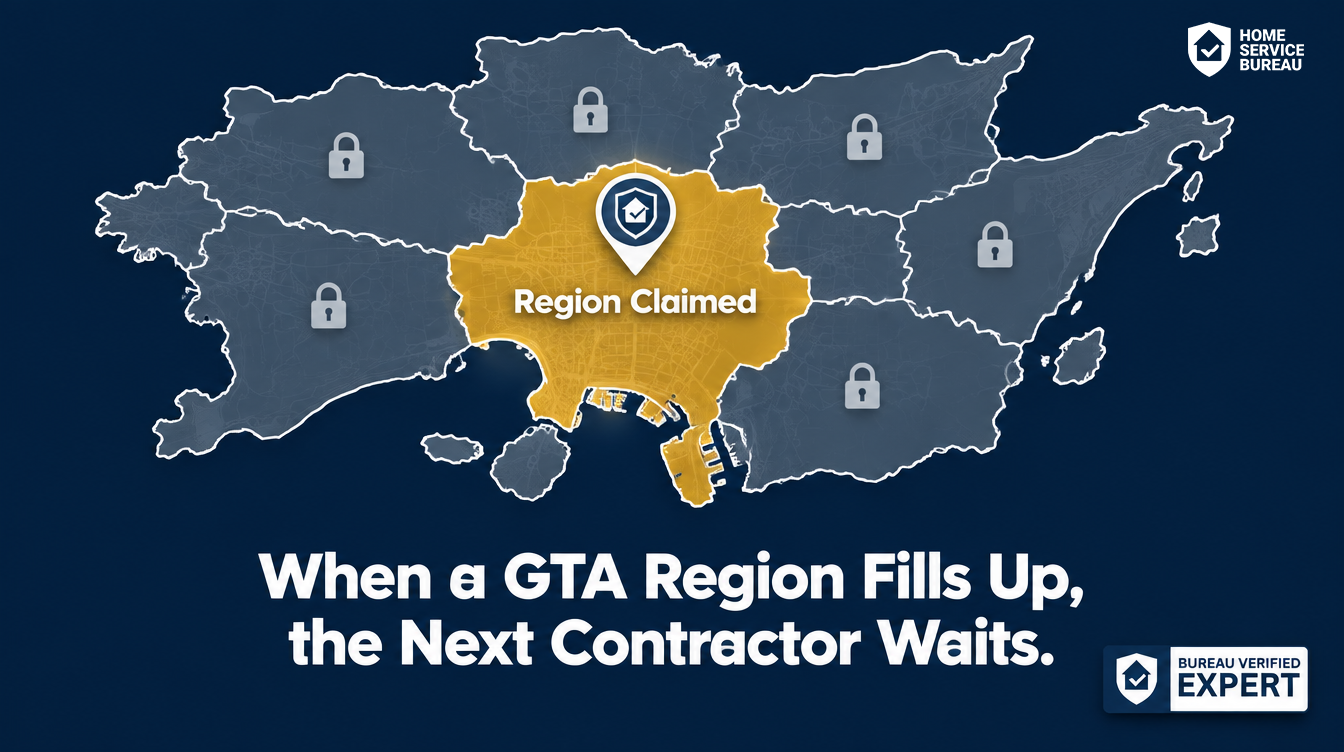
Busy seasons bring a problem every growing contractor eventually faces: more homeowner requests than your crew can handle. How a platform treats GTA contractors region at capacity leads decides whether that demand builds your business or damages it.
Open marketplaces keep sending leads no matter how full your calendar gets. You either turn homeowners away or stretch your team too thin. Home Service Bureau (HSB) takes a different approach. It checks your capacity before routing, holds requests when you are full, and times new leads to match your open project slots.
This guide explains how routing works when your region fills up, what capacity means for your business, and how to manage it before overflow hurts your reputation.
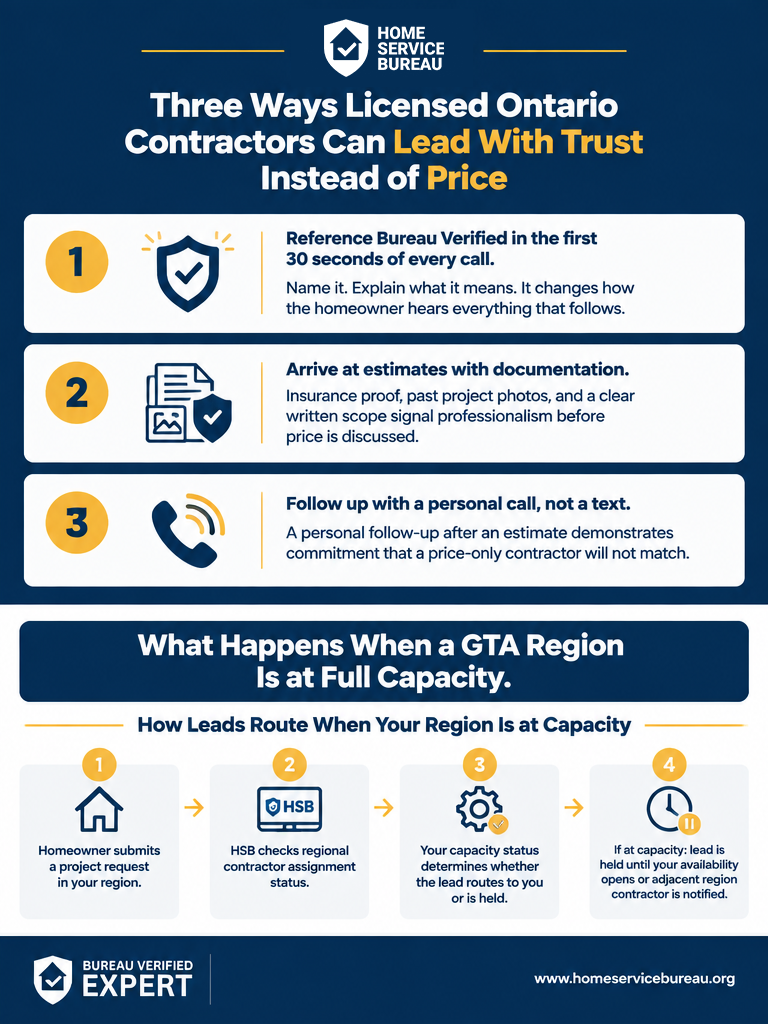
What Happens When a GTA Region Is at Full Capacity
Many contractors ask what happens when HSB region full status applies to their territory. HSB follows a clear four-step process.
How Leads Route When Your Region Is at Capacity
- A homeowner submits a project request in your region. The request enters HSB with the project scope, location, and preferred timeline.
- HSB checks the regional contractor assignment status. Each region has one assigned Bureau Verified contractor, so HSB looks at your current status first.
- Your capacity status determines the next step. If you have open availability, the lead routes to you. If you are at capacity, HSB does not push it onto your full schedule.
- HSB holds the lead or notifies an adjacent contractor. The lead waits until your availability opens, or HSB notifies a contractor in an adjacent region so the homeowner still gets timely help.
This process gives HSB region at capacity contractor status real meaning. You receive leads you can actually serve, and homeowners avoid long silences from a contractor who cannot take their job.

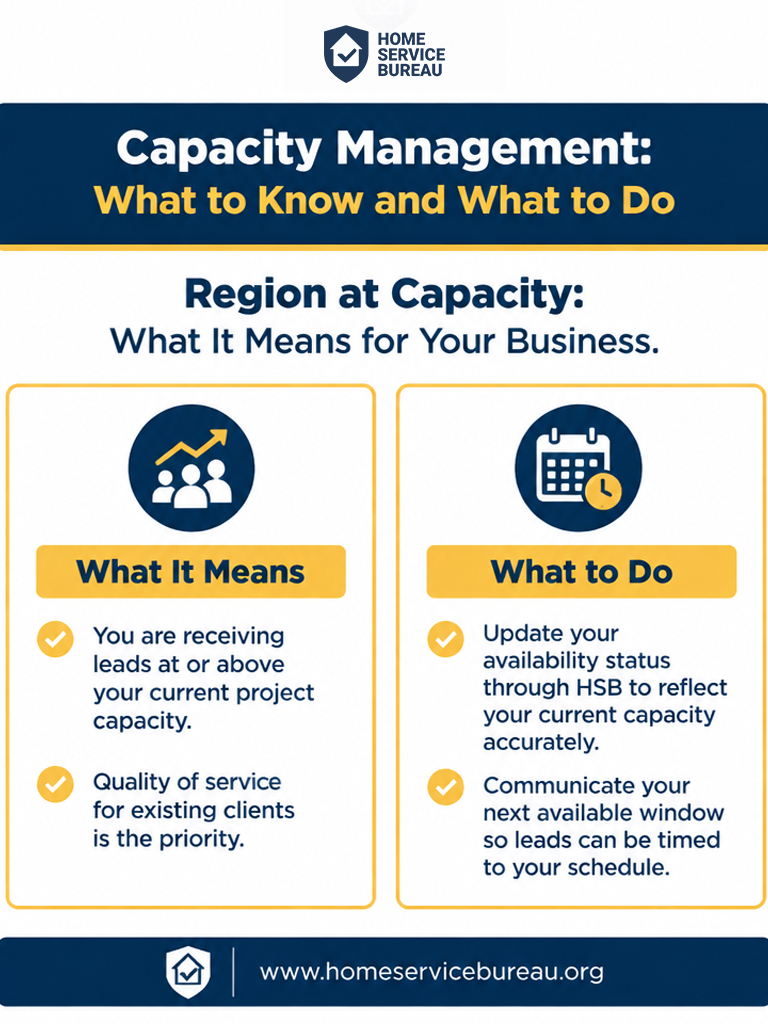
Region at Capacity: What It Means for Your Business
Regional capacity contractor GTA status reflects a simple reality: your crew has limits, and demand in the GTA often exceeds them during peak months. Canadian home services region capacity works the same way across the industry. Skilled trades take years to develop, so contractors cannot add qualified workers overnight.
What It Means
- You receive leads at or above your current project capacity. Demand in your region has caught up with your schedule.
- Service quality for existing clients becomes the priority. Clients already under contract deserve your full attention, consistent communication, and the workmanship you promised.
Reaching capacity is usually a good sign. It shows strong regional demand and a reputation homeowners trust. The risk only appears when you keep accepting work you cannot deliver well.
What to Do
- Update your availability status through HSB. Make sure your status reflects your current capacity accurately, so routing decisions match your real schedule.
- Communicate your next available window. When HSB knows when you can take new work, it can time leads to your schedule instead of holding them indefinitely.
For licensed contractors in Ontario region full situations, these two actions do most of the work. They take minutes and protect both your current clients and your future pipeline.
Why Managing Capacity Early Beats Reacting to It
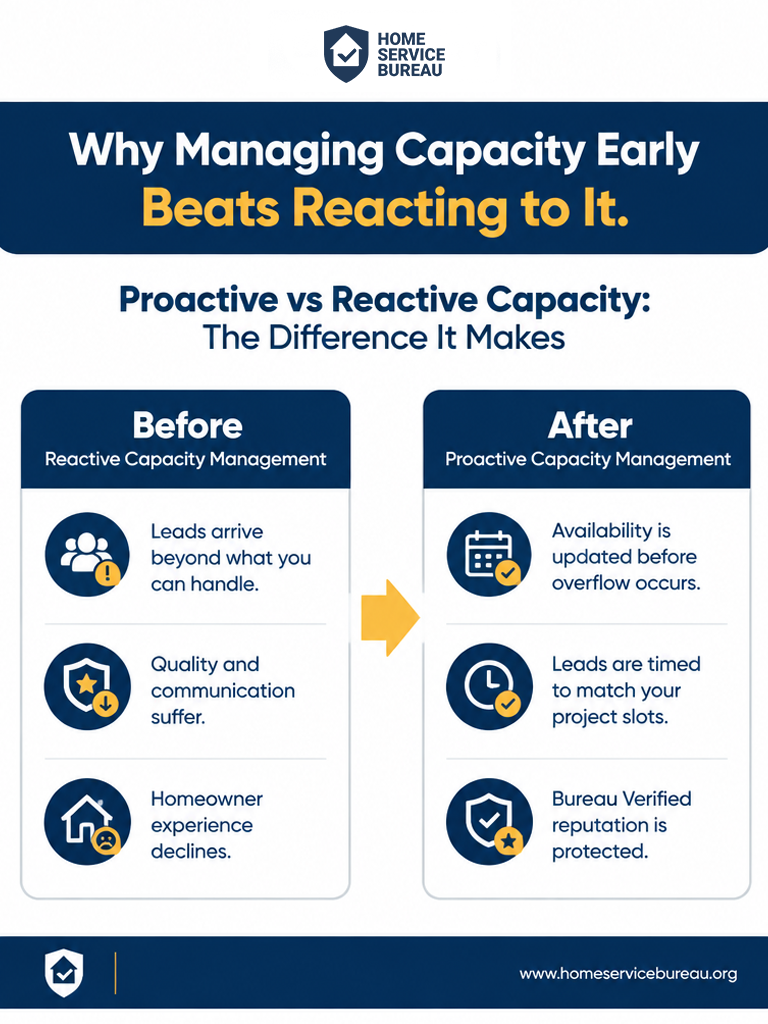
Contractors handle capacity in one of two ways. The difference shows up quickly in reviews, referrals, and repeat business.
Before: Reactive Capacity Management
- Leads arrive beyond what you can handle. Without updated availability, requests keep coming even after your calendar fills.
- Quality and communication suffer. Response times slip, site visits get rushed, and existing clients wait longer for updates.
- Homeowner experience declines. Frustrated homeowners leave weaker reviews and stop referring friends and neighbours.
After: Proactive Capacity Management
- You update availability before overflow occurs. You adjust your status as soon as your workload shifts, ahead of the crunch.
- Leads arrive timed to your project slots. New requests line up with the windows you can actually fill.
- You protect your Bureau Verified reputation. HSB grants the Bureau Verified badge after reviewing licensing and insurance, and your service record keeps that badge meaningful to homeowners.
Proactive management takes less effort than damage control. One status update can save weeks of apologising to clients you could not serve properly.
Three Ways Licensed Ontario Contractors Can Lead With Trust Instead of Price
When your availability opens and leads start routing to you again, the first conversation matters. Homeowners who waited for you expect a professional experience. These three habits help you win the job on trust.
1. Reference Bureau Verified in the First 30 Seconds of Every Call
Name your Bureau Verified status early and explain what it means: HSB reviewed your licensing and insurance before approving you. That context changes how the homeowner hears everything that follows, including your price.
2. Arrive at Estimates With Documentation
Bring proof of insurance, photos of past projects, and a clear written scope. Your WSIB clearance certificate also answers a question many Ontario homeowners now ask. Documentation signals professionalism before anyone discusses price.
3. Follow Up With a Personal Call
Choose a personal phone call over a text after every estimate. A direct conversation shows commitment that a price-only competitor will rarely match, and it gives the homeowner space to ask questions before deciding.
Final Words: Let Your Capacity Work for You
Capacity limits will always exist in the trades. What matters is how your platform handles GTA contractors region at capacity leads when your calendar fills. Pushing every request onto a full schedule erodes quality. Holding and timing leads protects it.
Home Service Bureau builds its model around that principle. HSB assigns one Bureau Verified contractor per region, reviews licensing and insurance before approval, and checks your capacity status before routing every request. You keep control of your schedule, your existing clients get your best work, and new leads arrive when you can serve them well.
Ready to grow without overloading your crew? Apply to become a Bureau Verified Expert at HSB and claim your region before another contractor does.
Frequently Asked Questions
1. What happens to my leads when my HSB region is at capacity?
HSB checks your capacity status before routing any homeowner request. If you are at capacity, HSB holds the lead until your availability opens, or notifies a contractor in an adjacent region so the homeowner still gets help.
2. What does “region at capacity” mean for a contractor?
It means you receive leads at or above your current project capacity. At that point, protecting service quality for existing clients becomes the priority, and HSB adjusts lead routing to match your actual schedule.
3. How do I update my availability with HSB?
Update your availability status through HSB whenever your workload changes. Share your next available project window so HSB can time incoming leads to open slots instead of sending requests you cannot accept right now.
4. Why does reactive capacity management hurt contractors?
When leads arrive beyond what you can handle, response times slip, communication suffers, and homeowners notice. Over time, those poor experiences damage the reputation your Bureau Verified status helps you build and protect.
5. How often should I update my capacity status?
Update it whenever your project load shifts, such as after signing a large job or finishing one early. Proactive updates before overflow occurs keep lead timing accurate, especially during peak GTA demand seasons.
6. Does being at capacity mean I am doing something wrong?
No. Reaching capacity usually signals strong regional demand and a healthy reputation. Problems start only when you keep accepting leads beyond your capacity instead of updating your status and communicating your next available window.
7. How can I compete on trust instead of price?
Reference your Bureau Verified status early in every call, bring insurance proof, project photos, and a written scope to estimates, and follow up personally by phone. These steps build confidence before price enters the conversation.
8. Why does HSB assign one contractor per region?
One contractor per region means HSB never shares a homeowner’s request across competing contractors. You avoid bidding wars, and homeowners get a verified professional they can trust. Capacity management keeps that model working during high-demand periods.