

A renovation changes how you live in your home, and the contractor you choose shapes the result. Yet many homeowners start hiring without knowing which trades need a licence and which do not. Understanding Ontario homeowner contractor licensing requirements helps you avoid costly mistakes, protect your property, and hire with confidence.
This guide explains why licensing matters, which trades need it, and what you should verify before you sign anything. Each point reflects Ontario’s regulatory framework and widely accepted hiring practice. Always confirm current rules with the relevant authority before you start a project, because requirements can change.
The Benefits of Hiring a Licensed Contractor
Licensed contractors in Ontario licensing explained comes down to one idea: a licence shows that a tradesperson has met a recognized standard. That standard delivers real benefits to you as a homeowner.
- Quality workmanship: Licensed contractors meet industry standards, so you receive work built on proven training.
- Code compliance: Licensed professionals complete work to Ontario’s building and safety codes, which protects your household.
- Accountability: Licensed contractors are easier to verify and hold responsible if problems arise.
- Protection for your home: Proper work reduces the risk of costly issues later, such as leaks, faulty wiring, or failed inspections.
- Peace of mind: You can feel confident that you work with a qualified professional.
A safer home starts with the right contractor. Unlicensed work may look cheaper at first, but repairs, failed inspections, and insurance disputes often cost far more in the end.

Which Trades Require Licensing in Ontario?
Not every trade follows the same rules. Ontario regulates some trades strictly and leaves others to municipal permits and insurance requirements. Knowing the difference is central to any contractor licensing homeowner guide GTA residents can rely on.
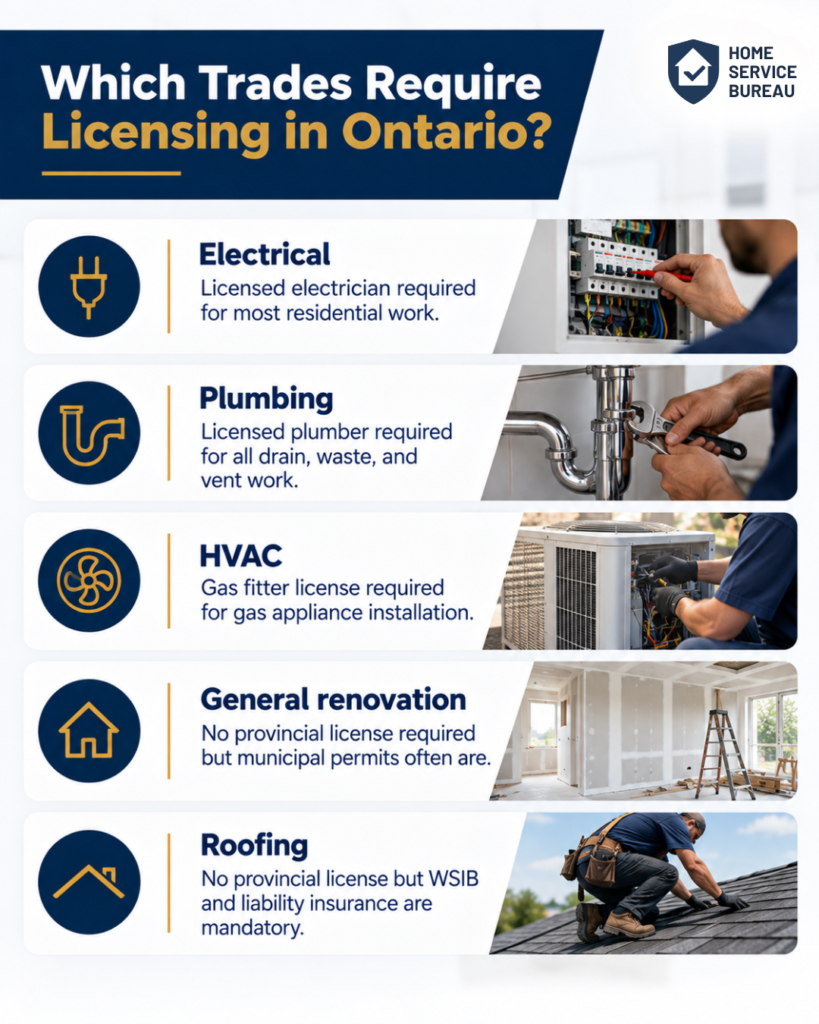
Electrical
Ontario requires a licensed electrician for most residential electrical work. Wiring errors create fire and shock hazards, so the province treats this trade seriously.
Plumbing
Ontario requires a licensed plumber for all drain, waste, and vent work. Poor installation can cause leaks, sewer problems, and water damage that spreads quickly.
HVAC
Installing gas appliances requires a gas fitter licence. Furnaces, boilers, and other gas-fired equipment demand trained professionals because errors can release dangerous gas.
General Renovation
General renovation does not require a provincial licence, but municipal permits often apply. Structural changes, additions, and some interior alterations usually need a permit from your local building department. A contractor with experience in your municipality will know what your project needs.
Roofing
Roofing does not require a provincial licence, but WSIB coverage and liability insurance are mandatory for contractors who meet the requirements. Without them, you may carry the risk if a worker gets hurt on your property.
This is a Canadian home services contractor license reality that surprises many homeowners: the absence of a provincial licence does not mean the absence of rules. Insurance, permits, and local bylaws still apply.
What Ontario Homeowners Should Verify Before Hiring
A good verification routine takes a few hours and can save you thousands of dollars. Follow these five checks every time.
1. Valid Licence
Confirm that the contractor holds the proper licence for their trade. Ask for the licence number and check it with the issuing authority. Learning how to verify contractor license Ontario wide takes only a few minutes, and it gives you direct proof instead of a verbal promise.
2. Insurance Coverage
Ask for proof of WSIB coverage and liability insurance. Request a current certificate instead of accepting a statement. Coverage protects you if an accident, injury, or property damage occurs during the project.
3. Required Permits
Check whether your municipality requires permits for your project. Ask your contractor who will apply for them and how inspections will work. Skipped permits can create problems when you sell your home or file an insurance claim.
4. References
Ask for recent homeowner references or reviews. Speak with past customers when possible. Consistent positive feedback about communication, timelines, and cleanup tells you more than any sales pitch.
5. Written Contract
Get a detailed written contract that outlines the scope of work. Include the start date, completion date, payment schedule, materials, and warranty terms. A clear contract protects both sides and prevents disputes.
Do your research and hire with confidence. These checks work for every project size, from a small repair to a major renovation.

A GTA Contractors Licensing Check That Works
The Greater Toronto Area has a large and varied contractor market. Many trades compete for your project, and quality varies widely. A reliable GTA contractors licensing check therefore follows a simple order.
First, identify the trade your project requires. Second, confirm the licence for that trade. Third, request insurance documents. Fourth, ask your municipality about permits. Finally, compare written quotes from more than one qualified professional.
Be cautious if a contractor pressures you to skip permits, demands large payments upfront, or avoids showing documents. Reputable professionals welcome your questions because they know verification builds trust.
How This Guide Reflects Trusted Standards
Google’s quality guidelines reward content that shows experience, expertise, authoritativeness, and trustworthiness. This guide follows those principles by explaining requirements in plain language, separating provincial licences from municipal permits, and encouraging you to confirm details with official sources. Rules vary by trade and municipality, so treat this article as an educational starting point, not legal advice.

Final Words: Hire With Knowledge, Not Guesswork
Understanding Ontario homeowner contractor licensing requirements protects your home, your budget, and your family. Know which trades need licences, confirm credentials and insurance, check permit needs, review references, and sign a detailed contract. These steps turn a stressful hiring decision into a confident one.
The Home Service Bureau (HSB) makes this process easier. Its platform helps homeowners find professionals with Bureau Verified credentials, review regional profiles, and read genuine customer feedback in one place. Start your search with HSB and hire a contractor you can trust.
Visit HSB to find a verified professional today.
Frequently Asked Questions
1. Does every contractor in Ontario need a licence?
No. Electrical, plumbing, and gas work require licensed professionals, but general renovation and roofing do not need a provincial licence. Municipal permits, WSIB, and liability insurance may still apply to those projects.
2. How can I check a contractor’s licence?
Ask the contractor for their licence number, then confirm it with the issuing authority. Compare the name, trade, and status on the record with the person you plan to hire before signing.
3. Why does WSIB coverage matter to homeowners?
WSIB coverage protects workers who suffer injuries on the job. Without valid coverage, you may face financial exposure if someone gets hurt on your property, so always request a current clearance certificate.
4. Do I need a permit for a renovation?
Many renovations need a municipal permit, especially structural changes, additions, and major mechanical work. Contact your local building department before work begins, and confirm who will apply for the permit and book inspections.
5. What should a written contract include?
A strong contract lists the scope of work, materials, start and completion dates, payment schedule, warranty terms, and change-order process. Detailed terms prevent misunderstandings and give you a clear reference if disputes occur.
6. Are licensed contractors always more expensive?
Licensed contractors may charge more upfront, but they reduce the risk of failed inspections, repeat repairs, and insurance problems. The long-term value and protection usually outweigh the lower price of unverified work.
7. What are red flags when hiring a contractor?
Watch for pressure to skip permits, large upfront payments, missing documents, vague quotes, and reluctance to provide references. Any one of these signs should make you pause and verify more before you commit.
8. How does HSB help homeowners find qualified contractors?
HSB connects homeowners with verified professionals through regional profiles, documented credentials, and customer reviews. These tools help you compare qualified options and make informed decisions before you start your project.